
Revolut’s Yatsenko Steps Back: The Inevitable Cost of Fintech Hypergrowth
- Startups
Arjun Vedanta
- 0
- 4 minutes read
The Architect’s Pivot: Beyond Simple Delegation
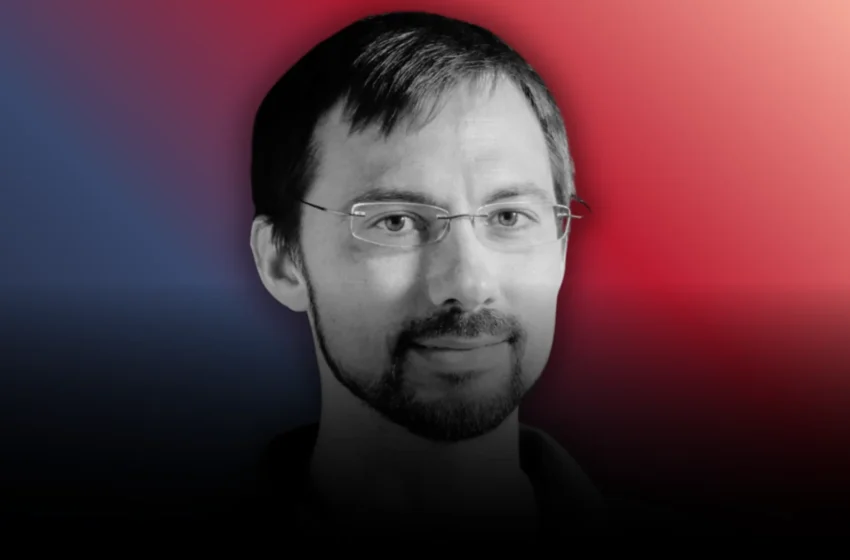
A co-founder stepping back from day-to-day operations is rarely just about ‘focusing on strategy.’ When Vlad Yatsenko, the influential co-founder and CTO who forged Revolut’s technology stack from the ground up over ten years, shifts to a ‘Chief Technology Advisor’ role, it signals a deeper transformation within one of Europe’s most ambitious fintechs. This isn’t merely a graceful professional evolution; it’s a symptom of the perennial tension between the insurgent startup ethos that propelled Revolut to a nearly $900 million valuation and the institutional demands of managing a global enterprise.
The announcement, framed positively by both Yatsenko and CEO Nikolay Storonsky, is designed to project continuity and strategic foresight. The incentive here is clear: reassure investors and customers that Revolut remains visionary, even as the messy reality of hypergrowth necessitates a more distributed technical leadership. What goes unsaid is the profound challenge for a company whose very identity was built on a co-founder’s direct technical mastery, now needing to operate as a sprawling corporate entity with 3,000 engineers.
The Noise and the Vision: Reconciling Scale with Agility
Yatsenko’s own words underscore this underlying tension. In 2014, Revolut was founded on the principle of identifying and solving problems that competitors missed – a classic disruptive playbook. Fast forward a decade, and his current sentiment is starkly different: “There’s just too much noise. It doesn’t matter.” This isn’t the voice of a founder energized by a vibrant competitive landscape; it’s the voice of someone grappling with internal complexity and external distractions, a world away from the scrappy early days of mobile banking innovation against incumbents like N26 and Starling.
For years, Revolut’s aggressive global expansion, including securing a banking license in Lithuania in 2021, has been its defining characteristic. This rapid scaling demands immense technical infrastructure and rigorous regulatory compliance, a far cry from nimble feature development. The very operational ‘weeds’ that Storonsky suggests Yatsenko is now above, are the critical substrata of a digital bank. The notion that a technical founder, who built the core product, can smoothly transition to a purely ‘advisory’ role without losing direct influence or feeling disconnected from the actual engineering trenches is often a convenient narrative, not a guaranteed reality. It’s a delicate balancing act, attempting to retain the founder’s genius while shedding the operational burden.
European Ambition Meets Operational Reality
From Geneva to Singapore, I’ve watched how European challenger banks face a unique set of pressures that often go unnoticed by their Silicon Valley counterparts. Unlike US startups, which frequently benefit from a larger, more homogenous domestic market and deeper venture capital pools, European fintechs like Revolut often scale across diverse markets and regulatory landscapes simultaneously. This necessitates a more centralized, almost autocratic, technical control in the early years to achieve escape velocity.
Yatsenko’s shift signals an organizational maturity that is both necessary and, for founder-led companies, often bittersweet. It reflects an industry-wide trend where the sheer scale required for digital payments and financial services necessitates evolving beyond hero founders into robust, multi-layered organizations. The challenge for Revolut now is to ensure that its newfound institutional depth, capable of leveraging advanced AI and machine learning for everything from fraud detection to personalized financial advice, doesn’t dilute the very disruptive spirit that Yatsenko’s focused vision embodied. This pivot is not just about one person’s role; it’s about Revolut confronting the ultimate question for any hypergrowth company: how do you keep innovating when you’ve become the establishment?
