
Rocket Lab’s 16-Hour Launch: A New Era in Tactical Space Power Projection
- Tech
Arjun Vedanta
- 0
- 5 minutes read
The New Calculus of Orbital Warfare
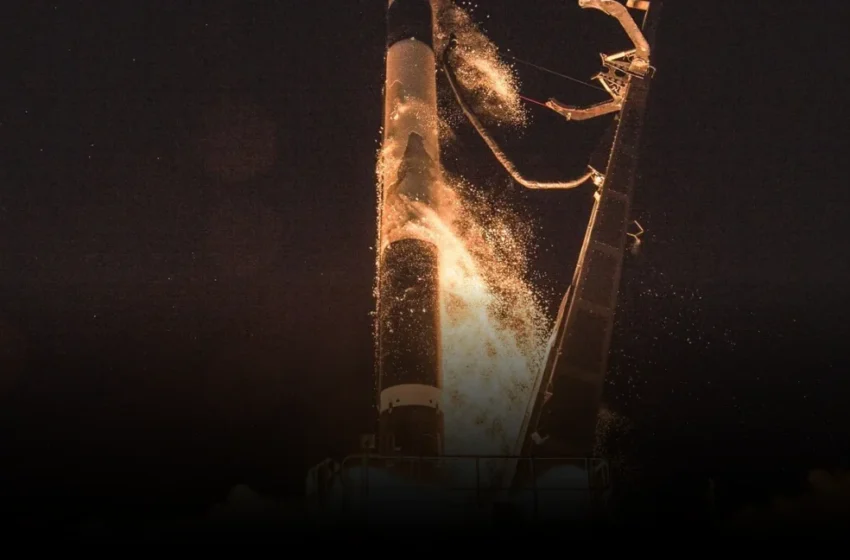
Rocket Lab’s recent launch for the US Space Force was not just a speed record; it was a profound, understated declaration of a new era in tactical space operations. Completing the Victus Haze mission in a mere 16 hours and 42 minutes from notification to liftoff, the company didn’t just beat a previous benchmark; it fundamentally altered the strategic calculus of contested orbital domains. This isn’t about merely putting a satellite into space; it’s about the ability to deploy assets on demand, a capability that renders traditional, weeks-long launch preparations strategically obsolete for critical military applications.
Consider the implications: a nation’s critical observation satellite is disabled, or a sudden, unexpected gap emerges in crucial intelligence gathering. Where a response once took months of planning, scheduling, and logistical coordination, Rocket Lab has demonstrated that an orbital asset can now be in position within a single day. This agility creates an entirely new layer of deterrence and response in low-Earth orbit, allowing for rapid reconstitution of capabilities, dynamic surveillance adjustments, or even the deployment of countermeasures against adversarial actions. It shifts the calculus from pre-planned, static space architecture to a fluid, responsive orbital presence.
The ‘Victus Haze’ mission, shrouded in the operational discretion typical of such rapid military exercises — no livestream, minimal public announcement beyond flight path warnings — underscores its tactical nature. The name itself suggests a deliberate obfuscation, a ‘haze’ over the precise purpose, yet promising ‘victory.’ But is this speed a net positive for orbital stability, or merely an accelerant in a spiraling arms race that no one truly wins, especially when the lines between commercial capability and military might become ever more indistinct?
Beyond Records: Geopolitical Stakes and Market Realities
This achievement isn’t just about technical prowess; it’s a stark illustration of the evolving geopolitical landscape where commercial space companies are becoming indispensable actors in national security. The capacity to launch a dedicated payload on such short notice provides an asymmetric advantage, especially against adversaries who rely on less responsive state-controlled launch infrastructure or whose commercial space sector lacks this level of integration with military command structures. We are seeing a blurring of lines where a private entity, through its technological advancement, becomes a crucial component of a nation’s defense posture.
For the US Space Force, demonstrating this rapid response capability serves as a potent, immediate signal of deterrence and readiness to potential adversaries, while for Rocket Lab, it solidifies its position as a critical, high-value partner in national security infrastructure and unlocks lucrative government contracts. This isn’t just a PR stunt; it’s a live demonstration of a strategic asset. While other highly-touted American rocket startups like Stoke Space, Relativity Space, and Astra continue to grapple with development timelines for their next-generation vehicles, Rocket Lab has repeatedly proven its execution capabilities with its existing Electron rocket fleet, a stark contrast to ambitious roadmaps that frequently slip past their 2026 debut targets.
The global race for orbital dominance is no longer solely about heavy-lift capacity or mega-constellation deployments; it’s increasingly about tactical agility. Nations like China, rapidly advancing their own space capabilities, are undoubtedly taking note. The ability to deploy satellites on-demand for intelligence, communications, or even anti-satellite purposes fundamentally changes how military strategists approach orbital defense and offense. It creates a dynamic environment where the ‘fog of war’ extends into the vacuum of space, necessitating constant vigilance and responsive counter-capabilities.
The Erosion of ‘Peaceful’ Space and Emerging Doctrine
The rapid response launch highlights a critical tension in the international understanding of space. For decades, there has been an aspirational, if often breached, notion of space as a ‘peaceful domain.’ However, when a company can deploy a classified payload for a military branch in less than 24 hours, that ideal becomes harder to uphold. This capability isn’t designed for meteorological research; it’s for strategic advantage in a potentially hostile environment.
The operational secrecy surrounding Victus Haze—the absence of a public livestream, the minimal announcements—speaks volumes. It suggests that the mission itself, or its specific payload and objective, carried a level of sensitivity that precluded the typical transparency Rocket Lab usually offers for its commercial launches. This shift from ‘space exploration’ to ‘space power projection’ is not theoretical; it is happening now, driven by the convergence of private innovation and national security imperatives. It forces a reassessment of international space law and arms control treaties, many of which were drafted in an era when such rapid, tactical orbital deployments were purely science fiction.
What Rocket Lab has demonstrated isn’t merely an engineering feat; it’s a harbinger of a new military doctrine where the battlefield extends unequivocally into orbit. The era of static, predictable satellite constellations is receding, replaced by a future demanding dynamic, on-call access to space. This capability will fundamentally reshape strategic thought processes in Washington, Beijing, and beyond, turning low-Earth orbit into a crucial, and increasingly contested, theater of operations.
