
Roman Telescope’s Extended Lifespan: A Blessing or a Budgetary Albatross?
- Space
Arjun Vedanta
- 0
- 5 minutes read
The Mirage of More Years: Beyond the Launch Hype
The celebration of NASA’s Nancy Grace Roman Space Telescope achieving a mission lifetime estimate of 22 years – more than doubling initial expectations – feels almost… too neat. It’s a remarkable engineering feat, certainly, the kind of precision that makes headlines and warms congressional hearts. But for those watching the tectonic shifts in global space exploration and astrophysics, this isn’t just about extra scientific observation time; it’s about a complex, long-duration program further embedding itself into the already strained fabric of future space budgets, potentially crowding out innovation elsewhere.
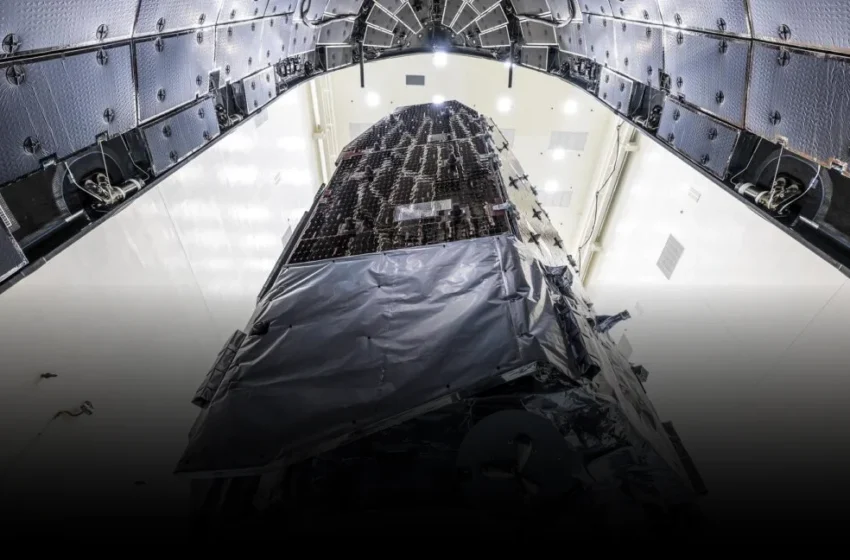
A $4.3 billion space observatory, the Nancy Grace Roman Space Telescope, has secured an estimated 22 years of operational life thanks to an exquisitely precise launch by SpaceX and impeccable orbital dynamics planning by NASA’s teams. This astonishing fuel efficiency, announced by Goddard Space Flight Center director Jamie Dunn, means the telescope has propellant for well over two decades of science, far exceeding the original five-year minimum plus a potential five-year extension. While Silicon Valley reporters might laud this as a simple triumph of engineering, the reality is far more layered.
The immediate cheer ignores the deeper implications of such extended lifespans on future astrophysical initiatives and the broader political economy of space. This isn’t just a bonus; it’s a commitment, demanding sustained funding and attention that could otherwise flow to emerging concepts. The announcement positions Roman as a long-term sentinel, promising decades of insights into dark energy, exoplanets, and galaxy evolution.
But the additional years of operation aren’t just more science; they’re more years of political wrangling, budget battles, and potential program inertia, stretching decision points further into a future that is rapidly changing. It’s an interesting play, considering the telescope, designed to capture a field of view 100 times larger than Hubble’s Wide Field Instrument 3, hasn’t even begun its primary science mission. The premature celebration of the Roman Telescope’s extended lifespan, before any actual new science has been delivered, serves as a powerful pre-emptive justification for its substantial investment and potentially softens future requests for operational funding.
Navigating the New Celestial Commons
The global space landscape of 2024 is vastly different from when the Roman mission was conceived. It’s a field increasingly dominated not just by government agencies like NASA and ESA, but by powerful commercial players and national programs from China, India, and the UAE, each with their own ambitious agendas. Every long-term mission, no matter how successful, inherently demands sustained budgetary allocation, drawing resources that could otherwise seed novel, potentially high-risk, high-reward projects.
Think of the intense competition for funding that already exists between flagship observatories like Roman and the James Webb Space Telescope, or even conceptual missions further down the line. The longevity of Roman presents a unique tension: while continuity is invaluable for certain scientific objectives, it also risks ossifying priorities. A program expected to run for over two decades will necessarily require a significant portion of NASA’s astrophysics budget for operations, maintenance, and data analysis.
This is not a zero-sum game, but it’s certainly a constrained one. For other nations, and even other departments within NASA, the sheer gravitational pull of such a long-duration, high-profile project means less room to maneuver, less budget flexibility to chase entirely new discoveries that might emerge from different technological paradigms or strategic partnerships with companies in the burgeoning commercial space sector. The question, then, is not merely how much science Roman will deliver, but what kind of science the world might not pursue because Roman will still be commanding resources.
The Unseen Cost of Perpetual Missions
The Roman Space Telescope’s extended gas tank is a testament to meticulous engineering, yet it also subtly pushes the problem of scientific obsolescence down the road. While its wide-field capabilities are unparalleled, astrophysics, like all technology fields, evolves. New detector technologies, novel mission architectures, or even entirely different observing strategies might emerge within Roman’s projected 22-year lifespan.
Will NASA be agile enough to pivot, or will the sheer momentum of an existing, functional (and expensive) mission keep it on its original trajectory, even if more groundbreaking alternatives surface? This isn’t to diminish the incredible work behind Roman; it is merely to inject a dose of reality into what is often presented as unadulterated good news. Every agency faces finite resources, and strategic decisions about new programs often hinge on the projected end-of-life of existing ones.
An unexpected doubling of mission life, while economically efficient in one sense, also defers the tough choices about when and how to sunset a program to free up capacity for the next generation of instruments. The real story isn’t just that Roman will last longer; it’s how this longevity shapes the entire landscape of astronomical exploration for the next quarter-century, forcing a strategic reappraisal for not just NASA, but for all international partners navigating the intricate dance of scientific ambition and fiscal pragmatism.
