
Russian Drones Near EU Gas Hub: A Silent Escalation in Black Sea Energy War
- Military Technology
Arjun Vedanta
- 0
- 4 minutes read
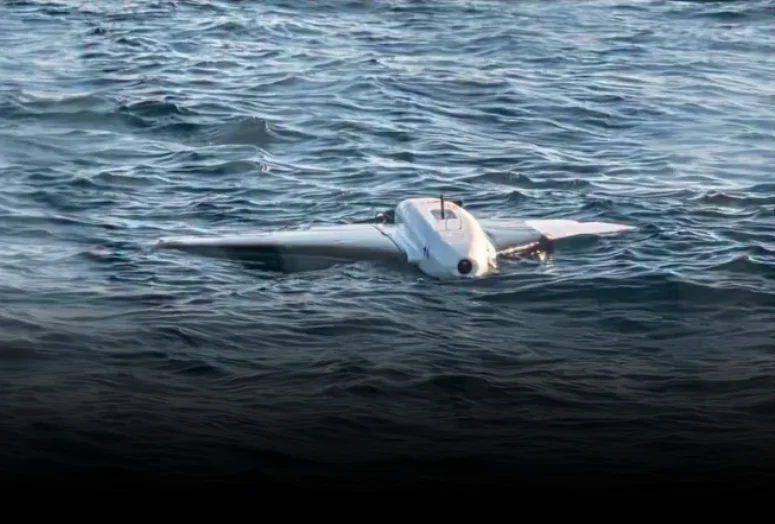
The Gerbera’s Shadow Over Neptun Deep
Two seemingly innocuous Russian-made drones, destroyed this month by Romanian military divers in the Black Sea, represent far more than a clean-up operation; they are a stark, low-signature warning. Found perilously close to Romania’s Neptun Deep — an offshore gas project poised to make the nation the European Union’s largest gas producer — these devices underscore a calculated, ongoing threat to the continent’s fragile energy security.
Defense Minister Radu Miruță confirmed the August 11 operation, sharing a video of explosives detonating one of the drones. The fact that Ukraine, when consulted, disavowed ownership of these “Gerbera-type” systems, leaves little doubt as to their provenance. These aren’t mere derelict munitions adrift; the Gerbera, a known variant of the Iranian Shahed-136, is not designed for passive drift but for targeted reconnaissance or kamikaze attacks.
This specific deployment near the Neptun Deep facility elevates the incident beyond a casual discovery. It suggests a deliberate probing of critical European infrastructure, an insidious form of grey-zone warfare. The Black Sea, already a theatre of conventional conflict, is increasingly becoming a vector for subtle, technologically-enabled disruption.
The New Calculus of Hybrid Warfare in the Black Sea
The destruction of these Russian-designed drones near a NATO member’s vital energy assets highlights a deepening strategic dilemma for Europe. While not an overt act of war, their presence serves as an implicit threat, forcing NATO allies like Romania to expend resources on defensive measures against ambiguous incursions. This is a classic example of hybrid warfare, where advanced unmanned systems are leveraged for reconnaissance, deterrence, and psychological pressure without direct military confrontation.
The motivation here is clear: to sow uncertainty and test response mechanisms. Russia benefits from ambiguity, causing unease and forcing defensive spending without overt conflict. It’s naive to believe these were merely stray munitions; the pattern suggests a systemic, low-cost intelligence gathering strategy designed to test responses and identify vulnerabilities. The Romanians acted decisively, but every such incident adds to the operational burden of securing vast maritime zones against persistent, low-grade threats.
For a continent still grappling with the fallout from the Nord Stream sabotage, the notion of easily penetrable offshore assets is deeply unsettling. The Gerbera’s capability, whether for surveillance or attack, makes its proximity to Neptun Deep a serious matter, demanding a robust, technologically informed counter-strategy, rather than just reactive destruction.
Beyond the Black Sea: Europe’s Uneasy Energy Transition
Europe’s desperate pivot away from Russian pipeline gas has thrust offshore projects and liquefied natural gas (LNG) terminals into unprecedented strategic importance. Neptun Deep symbolizes this shift; its output promises a significant boost to EU energy independence. Yet, this very importance makes such sites prime targets for the kind of hybrid aggression seen this month.
The implications extend far beyond gas platforms. The Black Sea incident serves as a blueprint for similar operations against other critical infrastructure: subsea data cables, wind farms, and port facilities across Europe. Maintaining the security of these sprawling, often remote assets against sophisticated yet inexpensive drone technology presents an enormous challenge. Investing in advanced maritime surveillance, anti-drone technologies, and AI-driven threat detection becomes not just an option, but a strategic imperative.
The broader silence around the specific capabilities of these drones is perhaps the most telling aspect, obscuring the true strategic intent behind their deployment. This isn’t just about blowing up a few drones; it’s about acknowledging a new, persistent front in the undeclared war on European stability. The world watches not just for what Russia does, but how Europe responds to these increasingly subtle acts of digital and physical encroachment.
