
Samsung’s Three-Tier Foldable Play: A Calculated Bet on Ultra-Premium Segmentation
- Hardware
Arjun Vedanta
- 0
- 5 minutes read
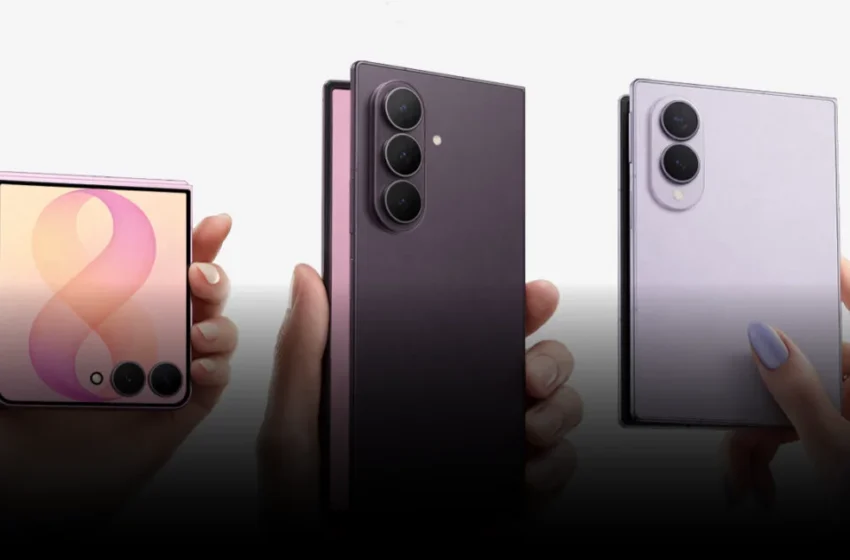
Samsung’s New Foldables: More Models, Higher Stakes
The latest Galaxy foldables from Samsung aren’t just an iterative update; they’ve landed in a three-model spread, topped by an ‘Ultra’ variant commanding an eye-watering $2,100. This isn’t merely about pushing new technology. It’s about a clear, deliberate strategy to segment the most premium end of the smartphone market with foldable form factors, a move that Western tech observers, often fixated on hardware specs, routinely understate.
Samsung, with its new Galaxy Z Flip 8 at $1,200, the Z Fold 8 at $1,900, and the flagship Z Fold 8 Ultra breaking past the two-grand mark, isn’t just selling phones. It’s testing the limits of consumer appetite for ultra-premium devices in an era where component shortages, as the company states, already inflate prices. The inclusion of a new wide-body Z Fold 8, explicitly designed for “media over multitasking,” is particularly telling. This isn’t a minor tweak; it’s an admission, albeit subtle, that the productivity promise of prior Folds didn’t quite resonate universally, and the company is now casting a wider net for high-spending users who prioritize immersive content consumption on a larger, though still portable, canvas.
These are not phones for the mass market, nor are they positioned to be. They represent Samsung’s continued bid for market dominance in a niche segment it largely created. With devices running Android 17 and One UI 9, powered by the Snapdragon 8 Elite Gen 5 for Galaxy, the technical foundation is undeniably robust. But the story here isn’t chipset improvements or camera megapixels, even if the Z Fold 8 Ultra boasts a 200MP wide-angle lens. The real story is the audacious market-making unfolding.
The Ultra-Premium Arms Race in the Foldable Niche
For years, foldables were a single, experimental tier, an expensive novelty. Now, Samsung has constructed a clear hierarchy within this nascent category, from the relatively ‘affordable’ Flip to the absolute top-tier Ultra. This strategy mirrors the traditional smartphone market, where OEMs offer standard, ‘Pro,’ and ‘Ultra’ tiers, but applies it to devices that are still inherently premium due to their complex engineering and limited production scale. The implicit message? Foldables are no longer a single, monolithic experiment; they are a valid, if expensive, spectrum of choice.
The Z Fold 8 Ultra, with its 8-inch main display and 6.5-inch cover screen, maintains a form factor consistent with previous large Samsung foldables, while the new wide-body Z Fold 8 expands the screen dimensions in a different direction. This diversification isn’t random; it’s an attempt to capture specific high-value user segments. The Flip 8 remains the fashion-conscious, compact option, while the two Folds target different aspects of large-screen utility. This aggressive segmentation helps Samsung solidify its position and dictate pricing in a category where rivals like Huawei and Xiaomi, particularly in Asian markets, are increasingly competitive with their own folding designs, often at different price points.
Samsung is clearly leaning into the fact that the ‘foldable’ itself is the premium attribute, allowing it to justify prices significantly above traditional slab phones. The market incentive is clear: by creating distinct foldable tiers, Samsung can capture more diverse high-end use cases, drive higher average selling prices (ASPs), and consolidate its leadership in a segment that still represents significant growth potential, even as overall smartphone sales plateau. This also serves as a defensive move against potential entrants and existing rivals by mapping out the foldable landscape before others can fully define their own territories.
The Long Game: Normalization at a Price
A critical question often overlooked by those focusing on the raw specs is whether this tiered approach genuinely expands the foldable market or merely allows Samsung to extract more value from its existing, affluent customer base. Is the demand for a wider, media-centric foldable truly organic, or is Samsung trying to create it by offering another variation at a premium? This aggressive internal competition, while appearing innovative, could also simply be Samsung’s way of normalizing high prices and limited adoption by making foldables seem like a natural evolution of the smartphone market, rather than a niche curiosity.
The fact that the component shortage is cited as a reason for increased prices — the Z Flip 8 now over a grand, the Ultra nearly double — underscores a fundamental tension. While manufacturing challenges persist, Samsung benefits from the prevailing scarcity narrative to anchor foldable prices at levels that would be unthinkable for a traditional smartphone. This strategy is less about technology for technology’s sake, and more about shrewd market control. By introducing three distinct models, Samsung expands the total addressable market within the foldable category, however incrementally, offering a progression path for consumers and presenting a fuller product line to distributors.
Ultimately, these new Galaxy Z8 foldables, arriving with August 7 availability for those ready to preorder, represent Samsung’s calculated bet on the future of premium mobility. It’s a future where consumers pay for flexibility, novelty, and increasingly, choice within a foldable ecosystem. But it’s also a future where the definition of ‘mainstream’ in foldables remains stubbornly elusive, even as the price tags continue their relentless climb.
