
SoftBank’s €75 Billion French AI Bet: Europe’s Risky Energy Gamble
- AI Infrastructure
Arjun Vedanta
- 0
- 5 minutes read
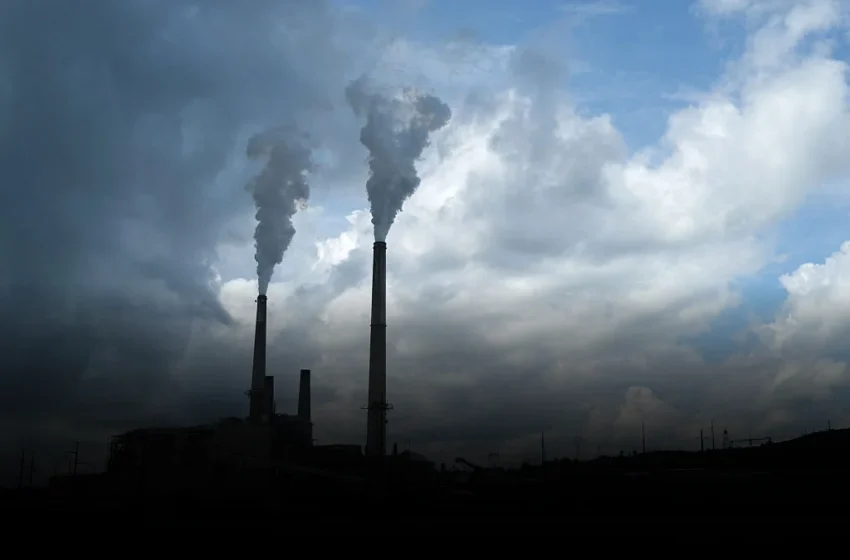
France courts AI, despite the grid’s silent strain
The numbers from SoftBank are stark, undeniable: up to €75 billion, earmarked for French data centers. This isn’t just another venture capital play; it’s a commitment to deploy 5 gigawatts of new capacity, beginning with 3.1 gigawatts in the Hauts-de-France region by 2031. What the headline doesn’t fully capture, however, is the geopolitical calculus embedded in this colossal investment. As the United States grapples with a burgeoning public backlash against the energy and environmental footprint of data centers, France, under President Emmanuel Macron, is actively rolling out the red carpet, betting that a concentrated embrace of AI infrastructure will vault it into a leading position in the global AI race.
This aggressive courtship presents a fascinating, and potentially troubling, contradiction. Europe often prides itself on its green credentials and ambitious decarbonization targets. Yet, here is France, enthusiastically welcoming a colossal energy drain. SoftBank, an investor in and customer of OpenAI, is not merely building server farms; it is erecting the physical backbone for the next generation of generative AI, a technology notoriously hungry for power. While economic minister Roland Lescure hails this as a “testament to President Emmanuel Macron’s ambition to position France as a leading destination all along the AI value chain,” the unspoken cost is a profound and perhaps unquantifiable strain on the nation’s energy infrastructure and climate goals.
The truth is, someone has to host these data centers, and if Silicon Valley increasingly doesn’t want them in its backyard, Europe is proving surprisingly eager to step into the breach.
The unexamined burden of AI infrastructure
The sheer scale of 5 gigawatts is difficult to contextualize. For perspective, the proposed first phase alone, 3.1 gigawatts, is roughly equivalent to powering several million homes continuously. The source article, almost as an aside, noted US opposition to data center construction is escalating due to environmental concerns, electrical grid stress, and utility price impacts. Meanwhile, SoftBank simultaneously announced plans for a data center in Ohio, powered by a new 9.2 gigawatt natural gas plant. This bifurcation is critical: the US is encountering citizen resistance and regulatory friction, while parts of Europe are effectively saying, ‘Send them here.’
This isn’t merely about land or labor; it’s fundamentally about available, reliable, and affordable energy. France, with its significant nuclear power capacity, might appear better positioned than some to absorb such a load. But even nuclear power has limits, and the rapid, exponential growth of AI means these facilities are not just a static draw but a growing demand curve. The incentive for France is clear: establish itself as an indispensable nexus for AI, attracting talent, fostering innovation, and cementing its strategic relevance in a technologically driven world. But the long-term energy security implications, and the potential for a populist backlash against rising energy prices – perhaps partially attributable to these massive, energy-intensive projects – remain largely unexplored by the cheerleaders of this investment.
Building out this infrastructure is a strategic play in an era of digital sovereignty and data locality. But this also means that the environmental impact—the heat generated, the vast quantities of water for cooling, and the sheer electricity consumption—becomes a French, and by extension, European, problem.
A global rebalancing of AI’s physical footprint
We are witnessing a quiet, yet profound, rebalancing of AI’s physical footprint. For years, the global tech narrative has been dominated by Silicon Valley, a cognitive bias that often obscures infrastructure decisions made elsewhere. This SoftBank deal signals that the locus of compute power, the literal engines of AI, is becoming a matter of international competition and burden-sharing. As nations like Germany push for more stringent environmental standards and others like Ireland face their own grid overloads from data center proliferation, France is making a calculated bet to absorb the demand.
The critical question for the coming decade isn’t just who innovates fastest in AI models, but who can reliably and affordably provide the compute muscle to run them. And more importantly, who is willing to pay the associated environmental and societal costs. While the immediate focus is on the jobs created and the technological prestige, the larger narrative is about which economies are prepared to internalize the externalities of the AI boom. SoftBank’s €75 billion is not just an investment; it’s an invitation to take on a challenge that others are increasingly trying to offload.
