
Solar-Powered Drone Crash Reveals Stratospheric Militarization, Not Just Tech Failure
- Artificial Intelligence
Arjun Vedanta
- 0
- 5 minutes read
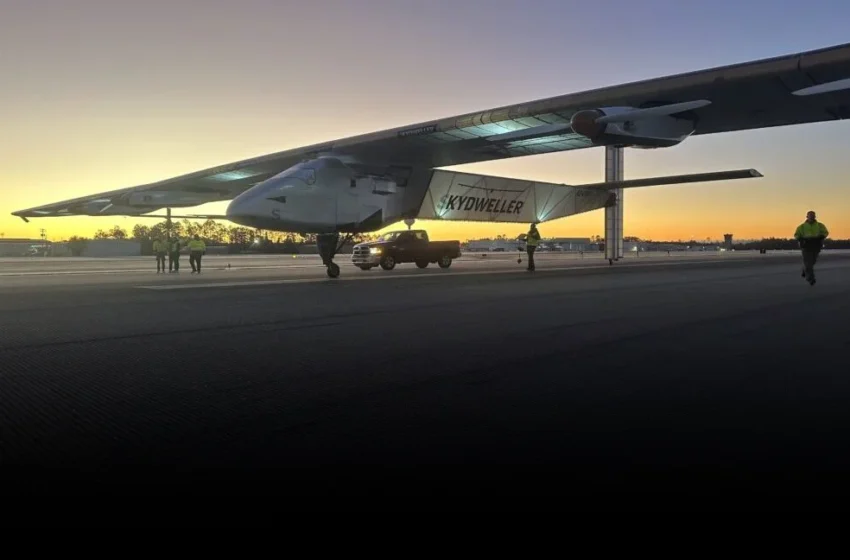
The Sky’s New Battlefield Takes Another Casualty
Eight days of unbroken flight, a record for an uncrewed solar-powered aircraft, ended not in a triumphant landing, but a silent plunge into the sea. The demise of the Skydweller drone, a heavily modified Solar Impulse 2, during a US military maritime patrol test in late April and early May, isn’t merely a tale of a technical failure; it’s a stark illustration of how rapidly civilian-pioneered breakthroughs in endurance flight are being absorbed and repurposed by global powers for persistent surveillance and strategic advantage.
This particular crash, which saw an aircraft originally celebrated for its trans-oceanic solar flights become a military test platform, embodies the inherent tension between the environmental dream of perpetual solar flight and its accelerating militarization. The original Solar Impulse 2, a carbon-fiber marvel with a 236-foot wingspan studded with over 17,000 solar cells, once represented the pinnacle of sustainable aviation. Now, its descendant, the Skydweller, signals a new era where the sky above us is less about clean energy and more about constant eyes.
From Sustainable Flight to Persistent ISR
The transformation of Solar Impulse 2 into a military asset by Skydweller Aero is not an anomaly, but a trend. What was once seen as a symbol of human ingenuity for peaceful, sustainable applications – charting weather, providing internet to remote areas, monitoring environmental change – is swiftly becoming a tool for persistent intelligence, surveillance, and reconnaissance (ISR). The US military, with its contracts across the Navy and Air Force, understands the immense value proposition of a platform that can loiter for weeks or even months at high altitudes, carrying up to 800 pounds of payload, without needing to refuel or land.
This isn’t merely about cost savings compared to traditional crewed aircraft; it’s about establishing an omnipresent eye in the sky, an unblinking gaze that satellites, with their orbital limitations, cannot replicate over specific areas. The narrative of ‘perpetual uncrewed flight’ often glosses over the perpetual purpose of such endurance. It’s not about being endlessly airborne for its own sake, but for the persistent collection of data, the continuous monitoring of adversaries, or the unwavering oversight of a maritime zone.
This incident is a reminder that the innovation cycle in fields like stratospheric platforms is increasingly driven by defense spending, shifting focus away from commercial applications. The market for these high-altitude, long-endurance (HALE) systems is maturing, but predominantly within the defense sector, leaving fewer pathways for the civilian, humanitarian ambitions that often spark such technological leaps.
Endurance Versus The Edge of Reliability
While the eight-day flight was a record, the subsequent loss of the Skydweller drone underscores the razor-thin margins and immense engineering challenges inherent in true perpetual flight. Reaching the stratosphere, managing power from 17,000 solar cells to both propel the aircraft and charge batteries for night flight, all while carrying a significant payload, pushes aeronautical engineering to its absolute limits. Every gram, every watt, every sensor must perform flawlessly for extended periods.
The crash is a sobering checkpoint, signaling that while the *capability* for multi-day flight is proven, the *reliability* required for widespread, long-term deployment – especially in demanding military scenarios – remains an active challenge. Skydweller Aero’s pursuit of such ambitious flight durations, backed by military contracts, reveals a powerful incentive structure where the risk of losing a platform is outweighed by the strategic value of proving persistent presence.
This incident also highlights the operational vulnerabilities of these systems. Unlike satellites, which operate in the vacuum of space, stratospheric drones face weather, turbulence, and the complexities of extended autonomous flight within Earth’s atmosphere. Their physical presence, while offering unique advantages for remote sensing and communication, also makes them susceptible to environmental hazards or, potentially, adversarial actions.
Who Ultimately Controls the Stratosphere?
The loss of the Skydweller drone, a direct descendant of a global circumnavigation pioneer, is a bellwether for the future of the stratosphere. What began with the noble ambition of demonstrating clean energy’s potential is rapidly becoming a contested zone of dual-use technology. This isn’t just about one crash; it’s about the accelerating privatization and militarization of an entire layer of Earth’s atmosphere.
As other HALE projects like Airbus Zephyr continue their development, the global conversation needs to shift beyond mere technical achievements. We must critically examine the structural implications of these platforms being primarily funded and deployed by military organizations. The precedent being set is that the most persistent and powerful presences in the near-space environment will be state-controlled, raising complex questions about airspace governance, international law, and the transparency of surveillance operations.
The vision of a clean, quiet, solar-powered future for stratospheric flight is fading, replaced by the reality of an increasingly crowded, strategically vital domain. The crash of the Skydweller is a small ripple in a much larger, global current – one that is undeniably pulling the future of high-altitude autonomy into the hands of those seeking an enduring tactical advantage.
