
South Korea’s Drone Warrior Vision: A Logistical Minefield for Military Doctrine
- Military Technology
Arjun Vedanta
- 0
- 5 minutes read
The Unspoken Burden of “Universal Combat Tools”
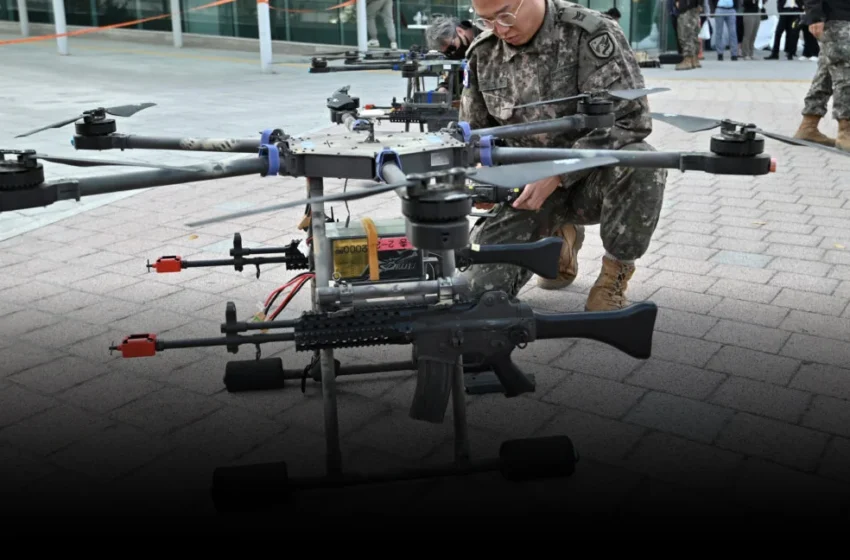
The sheer scale of it arrests the mind: nearly half a million South Korean troops, from green recruits to grizzled veterans, will soon wield combat drones with the same reflexive ease as their rifles. This isn’t a specialist unit or an elite corps; Seoul’s defense ministry intends for every single soldier to become a “drone warrior,” a universal operator of cheap, expendable unmanned aerial systems. While the pronouncement by Defense Minister Ahn Gyu-back on June 26 echoes a clear strategic urgency, inspired by the drone-saturated battlefields of Ukraine and the Middle East, the actualization of this vision represents a logistical and doctrinal earthquake for a modern conscript army, an implication far more profound than the immediate headlines suggest.
Transforming a drone into a “second personal weapon” is a captivating phrase, one designed to convey agility and ubiquity. Yet, the reality of integrating complex, rapidly evolving technology into an entire armed force — a sprawling organization built on standardized equipment and rigid training cycles — is anything but simple. Silicon Valley often grapples with the ‘last mile’ problem for consumer tech; militaries face a ‘first million miles’ problem for every piece of combat hardware. Each drone, from its procurement to its deployment, maintenance, and ultimate replacement, represents a specific node in an already overburdened supply chain. Equipping every individual unit with these systems, as planned, sounds efficient on paper, but in practice, it decentralizes an immense logistical burden down to the lowest echelons, where the expertise and infrastructure for rapid tech refresh cycles are conspicuously absent. This isn’t merely about handing out joysticks; it’s about building a parallel, hyper-flexible sustainment ecosystem within an inherently inflexible structure.
The incentive for framing this initiative so broadly and publicly extends beyond pure military necessity. By declaring such an ambitious, tech-forward goal, South Korea signals its resolve and technological prowess to North Korea, while simultaneously galvanizing its domestic defense industry. It’s a strategic communication move as much as a tactical one, designed to project an image of rapid adaptation in the face of evolving threats.
Training a Conscript Army in Agile Warfare
South Korea’s military relies heavily on conscription, meaning a constant churn of young men cycling through mandatory service, often for less than two years. This demographic reality presents a monumental challenge to the “drone warrior” concept. Mastering drone operation for reconnaissance is one thing; effectively integrating offensive strike drones into fluid, high-stress combat scenarios, making tactical decisions under fire, and understanding the nuances of electronic warfare countermeasures is another entirely. Military doctrine, by its nature, values predictability and repeatable processes. The true irony here is that the conflicts inspiring this shift – Ukraine in particular – showcase highly agile, often ad-hoc drone adaptations by motivated volunteers and specialists, not mass-trained conscripts following a rigid manual. Can South Korea truly instill this level of adaptability and operational sophistication into hundreds of thousands of rotating personnel, or will this become a broad, shallow proficiency that falls apart under pressure?
The planned reorganization of the former drone operations command headquarters to focus on industry collaboration is a necessary step, but it also highlights the systemic challenge. This pivot acknowledges that the military itself lacks the internal velocity to keep pace with commercial drone development. Bridging the gap between the rapid innovation cycles of South Korean commercial tech and the deliberate, often glacial pace of military procurement and training will require unprecedented levels of bureaucratic agility. Companies like DJI, Parrot, and countless smaller startups iterate on hardware and software at a pace no government-led defense program can match. The risk is that by the time 500,000 soldiers are proficient on one generation of drones, the market will have moved two generations ahead, leaving the “universal combat tool” concept perpetually out of date.
The Hidden Costs of Distributed Tech Adoption
The concept of “cheap and expendable drones” is attractive, especially for surveillance and strike missions. However, “cheap” is relative, and “expendable” doesn’t mean free. When scaled to a half-million-person force, the cumulative cost of even inexpensive hardware, coupled with the necessary maintenance, spare parts, software licenses, and secure data infrastructure, becomes astronomical. Furthermore, the deployment of more counter-drone lasers and microwave weapons speaks to the double-edged sword of this strategy: an arms race is not just about having the best tools, but also about defending against them. As every soldier becomes a potential drone operator, they also become a target, and the air above the battlefield becomes an increasingly congested, contested battlespace demanding sophisticated air defense and electronic countermeasures, far beyond the capabilities of individual troops.
The U.S. military, with its often slower, deliberate integration of new technologies, typically rolls out such systems to specialized units first, allowing for focused doctrine development and logistical refinement. South Korea’s ambition to go straight to universal adoption is a bold leap, driven by its unique geopolitical pressures. But this aggressive timeline risks overwhelming its training infrastructure and resource allocation, potentially creating a “drone-armed” force that is more burdened by its new tools than empowered by them. The true test for Seoul will not be in announcing the vision, but in navigating the brutal realities of mass technical integration, where hardware meets the messy, unpredictable human element on an unprecedented scale. It’s a gamble that pits the imperative for rapid technological parity against the fundamental inertia of a large, conscript-based military.
