
Tesla’s Convenient Truth: How Driver ‘Override’ Obscures Deeper Autonomy Flaws
- Artificial Intelligence
Arjun Vedanta
- 0
- 5 minutes read
The Convenient Narrative of Driver Error
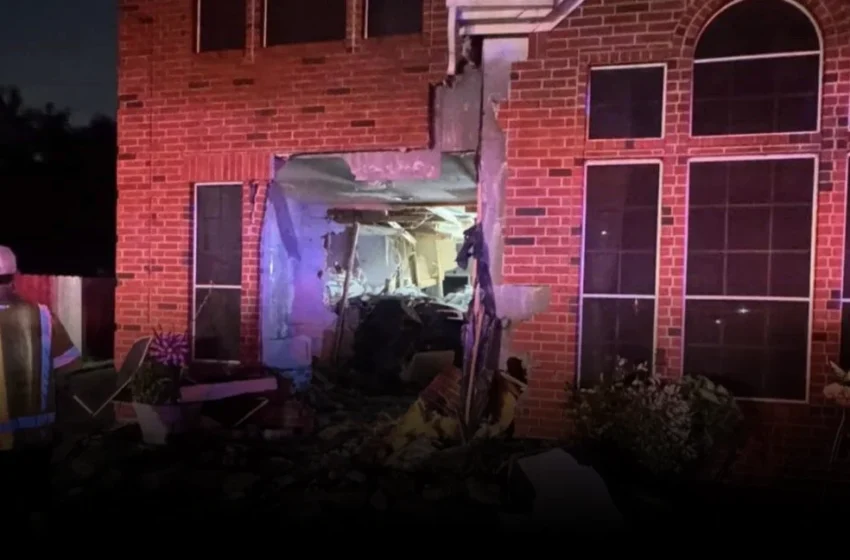
In the wake of a fatal collision in Texas, the National Transportation Safety Board’s (NTSB) preliminary finding that a Tesla driver overrode the vehicle’s Full Self-Driving (FSD) system by flooring the accelerator seems, on its surface, a tidy conclusion. It confirmed Tesla’s own telemetry and swiftly absolved the automaker of direct blame for the tragic outcome that killed a grandmother. Yet, for anyone watching this industry beyond the Silicon Valley echo chamber, the speed and framing of this narrative resolution are deeply troubling, spotlighting a persistent, critical flaw in how we understand — and regulate — autonomous vehicle technology.
The initial report from the NTSB, affirming that Michael Butler, 44, manually pressed the accelerator to 100% despite FSD (Supervised) being engaged, felt less like an independent discovery and more like an official rubber stamp on a story Tesla had already meticulously crafted. Elon Musk had publicly disputed Butler’s initial claim of autopilot engagement, stating on X, “FSD drives slowly through neighborhood streets, and this was a high-speed crash!” Tesla’s VP of AI software, Ashok Elluswamy, further buttressed this, citing internal data weeks before the NTSB’s preliminary release. The incentive here is clear: control the narrative, especially when a system branded as “Full Self-Driving” is involved in a fatality. This rapid, public confirmation of manufacturer data by a regulatory body sets a dangerous precedent, making it incredibly difficult for the public, or even future investigations, to critically assess underlying systemic issues when the primary evidence is proprietary and interpreted by the party with the most to lose.
This isn’t merely about one crash or one driver’s action. It’s about how the entire ecosystem of partially autonomous systems—what many call Advanced Driver-Assistance Systems or ADAS—is being framed. When a system explicitly requires human supervision but is marketed with a name like “Full Self-Driving,” the lines of responsibility are intentionally blurred. The immediate pivot to driver override, while potentially factually correct in isolation, deflects from the critical question of how human-machine interface design itself might contribute to such overrides. Does the system provide clear, unambiguous feedback? Does its erratic behavior sometimes provoke “corrective” human intervention? These are questions rarely explored with the same urgency as assigning direct driver blame, precisely because they probe the heart of a manufacturer’s design philosophy and liability.
Data Asymmetry and Regulatory Reliance
The reliance on manufacturer-provided telematics data in investigations like this is a global issue, but it’s particularly acute in the US. Unlike some European or Asian regulatory bodies that often demand more independent data verification or even black-box-like recorders with standardized outputs, American agencies frequently operate under a framework that presumes good faith from the manufacturer’s data dumps. This incident serves as a stark reminder that while the NTSB conducts a thorough investigation, its preliminary findings often hinge on information originating from the very company whose product is under scrutiny. It’s a structural vulnerability in oversight: independent validation of such critical proprietary data remains an outlier rather than a standard practice. The fact that the NTSB’s initial finding aligns so perfectly with Tesla’s pre-existing public statements should raise more eyebrows than it currently does, highlighting a significant imbalance in information access and analysis.
Consider the potential for nuance lost. Even if Butler pressed the accelerator, the operational state of FSD (Supervised) at that exact moment—its trajectory, its object detection, its planned action—is paramount. Was the system performing an action that the driver perceived as unsafe or unexpected, prompting an aggressive override? Or was the driver simply reckless? Without robust, independent analysis of the full operational context of the software, we are left with a one-sided interpretation. The industry’s penchant for pushing the envelope on features, often ahead of robust regulatory frameworks for safety validation or independent liability assessment, means incidents like these become test cases not just for technology, but for the very limits of our oversight.
The Elusive Search for Systemic Safety
The core challenge, missed by many US reporters caught in the immediate news cycle, is that these crashes are less about individual failures and more about the systemic friction between human unpredictability and nascent AI capabilities. The term “autopilot” itself, used by Butler, creates a false sense of full automation, leading to overreliance or inappropriate intervention. This incident underscores a critical tension: the technology is advanced enough to tempt drivers into complacency, yet not robust enough to reliably handle every complex scenario without human intervention, particularly in “residential areas” as Elluswamy mentioned.
This ambiguity isn’t accidental; it’s a design choice that shifts liability. Until regulators worldwide demand clearer distinctions between driver assistance and full automation, along with independent validation of all system data, we will continue to see these cycles where tragic incidents are swiftly attributed to “driver error.” The critical question is not just whether the driver hit the pedal, but why the system, branded with such aspirational capabilities, permits such a disastrous interaction to occur, or fails to mitigate it. We need to move beyond accepting manufacturer-dictated narratives and toward an independent, data-driven approach to understanding the true safety envelope of these systems, recognizing that a human factor is often a symptom, not the root cause, of an inadequate human-machine integration.
