
The $300 Million Blind Spot: Tech Wealth vs. Civic Duty at Sea
- Tech
Arjun Vedanta
- 0
- 6 minutes read
The Mirage of Tech’s Moral Exception
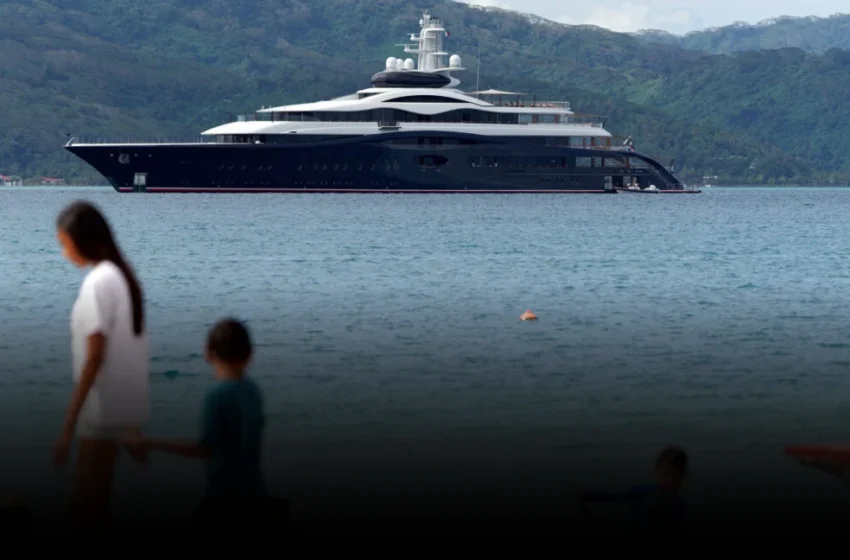
The incident of Mark Zuckerberg’s superyacht, Launchpad, allegedly ignoring a distress call off the coast of Alaska isn’t just celebrity gossip or a fleeting moment of schadenfreude. It’s a stark, almost absurd, physical manifestation of the invisible walls ultra-wealthy tech figures are building between themselves and fundamental civic duties. This isn’t about code, algorithms, or content moderation; it’s about the ancient, universal laws of the sea, and the growing chasm between a tech billionaire’s insulated existence and the public’s expectation of shared responsibility.
The details, as reported and partially corroborated by ship-tracking data, are simple enough: a stranded 21-foot skiff with two women, a child, and a dog, a US Coast Guard radio call, and the alleged non-response from a vessel that cost its owner $300 million. It took a replica steamship, the Wilderness Legacy, to detour and complete the rescue. Michael Love, a passenger on the Legacy, posted about the “near unanimous booing” among cruise passengers on Bluesky, and the story went viral, prompting belated statements from both the Coast Guard and Zuckerberg’s camp. Yet, the rapid public condemnation wasn’t merely about a rich man failing to help; it was about the implied sovereignty of his isolation.
For years, the tech industry has operated under an implicit, often explicit, assumption of exceptionalism. We’ve seen it in debates over antitrust, data privacy, and labor laws, where the argument often boils down to “tech is different.” This incident, however, rips that curtain back on a far more primal expectation: the unwritten social contract that dictates mutual aid, especially when lives are at stake. Maritime law, a framework far older than any digital platform, makes it abundantly clear that a vessel has a duty to render assistance to anyone in peril at sea. It is a universal expectation, irrespective of net worth.
The immediate public outrage, amplified on platforms like Bluesky, wasn’t just about the optics of a tech titan’s vessel being indifferent. It was a visceral reaction to the perception that the kind of wealth Mark Zuckerberg commands creates an almost impenetrable bubble, not just of luxury, but of presumed immunity from common human obligation. This isn’t about a bug in the code; it’s a bug in the social fabric. It exposes a deeper societal anxiety that as tech’s influence grows, its most powerful figures might believe they exist outside the very rules and norms that govern everyone else.
It’s worth asking if this story would have garnered the same level of attention if the owner of the superyacht were an oil magnate or a hedge fund manager, rather than the face of a company that controls significant portions of our digital public square. The scrutiny here isn’t solely about wealth; it’s about the perceived hypocrisy of a figure who champions “community” and “connection” online, yet whose physical presence seems to embody an extreme disconnect.
The Incentive: Reframing Public Opinion and Distraction
Every major incident, particularly one involving a high-profile individual, comes with its own set of incentives for those involved and those observing. Why does this particular maritime misstep become front-page news, dwarfing other, arguably more impactful, tech stories? Part of it is the sheer relatability of the emergency: anyone can imagine being stranded at sea. This incident offers a clean, unambiguous moral failure that requires no technical expertise to grasp, unlike the complexities of content moderation or algorithmic bias. The fact that responses were eventually issued by the US Coast Guard and Zuckerberg’s spokesperson suggests an awareness of the damage to public perception; the incentive is to manage the narrative and mitigate the image of callous indifference.
For critics of Big Tech, the story provides an easy, tangible example of the perceived detachment of tech billionaires. It reinforces a narrative that views ultra-high-net-worth individuals as increasingly insulated from the common human experience, even as their products reshape it. This focus allows for a momentary diversion from the more nuanced, difficult conversations about regulatory frameworks for AI or the ethical implications of virtual reality, providing a cathartic, if superficial, outlet for public frustration with tech power.
Beyond the Horizon: Who Is Accountable?
The incident reminds us that while digital platforms may redefine communication and commerce, they do not supersede the foundational principles of human conduct and responsibility in the physical world. This isn’t merely an isolated incident involving one luxury asset; it’s a symptom of a larger structural implication. As tech wealth continues its exponential growth, enabling ever-greater levels of personal isolation and private infrastructure, the question of accountability shifts.
How do societies enforce civic duties on individuals who can effectively opt out of shared public services and social contracts? The ability to command a $300 million vessel with a professional crew suggests a highly organized, self-sufficient ecosystem. When that ecosystem allegedly fails to interact with external distress, it challenges the very notion of a shared public sphere, whether it’s a digital one like Bluesky or the vast, indifferent ocean. The expectation of shared responsibility in a crisis is a cornerstone of modern society, and when it appears to be ignored by those at the apex of global wealth, it chips away at the collective trust that binds communities, both online and off.
This episode serves as a powerful, uncomfortable reminder: no amount of wealth or technological advancement grants immunity from the oldest, most fundamental human laws—the ones written not in code, but in our collective understanding of right and wrong, especially when a life hangs in the balance. The sea, unlike the internet, offers no filters, no algorithms to curate away inconvenient realities, only stark, unforgiving consequences.
