
The Algorithmic Cosmos: What August’s Eclipses Really Show About Our Tech-Mediated World
- Artificial Intelligence
Arjun Vedanta
- 0
- 5 minutes read
Beyond the Naked Eye: The Data That Predicts Our Sky
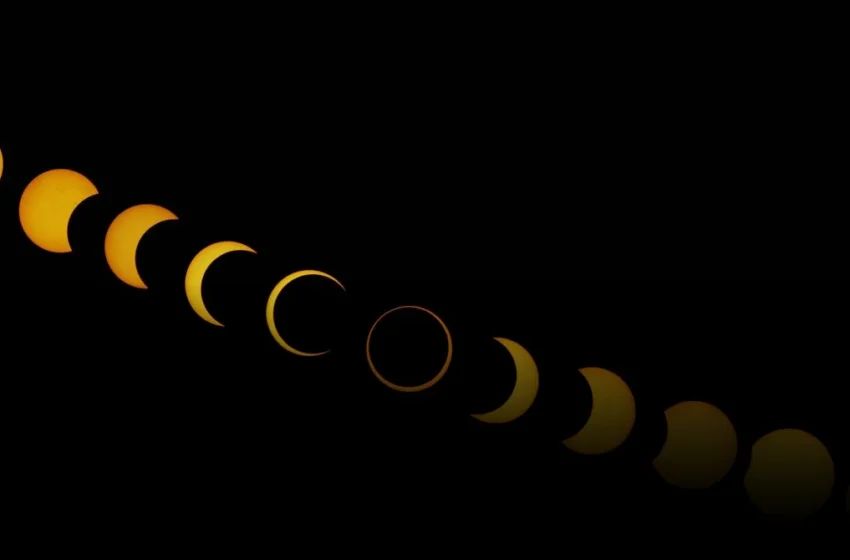
Two celestial events are slated for August 2026: a total solar eclipse on the 12th and a partial lunar eclipse on the 27th and 28th. Millions will look up, protected glasses in hand, or simply observe the moon’s subtle darkening. The wonder is immediate, raw, and seemingly natural. What almost no one considers, however, is the invisible, pervasive technological infrastructure and data science that underpins our entire collective experience of these cosmic spectacles, silently predicting, visualizing, and popularizing them long before a single shadow falls. The original story, like so many others, frames these events as pure astronomical marvels, completely missing the profound technological story unfolding concurrently.
This isn’t about some new app for tracking orbital mechanics. It’s about the decades of quiet engineering that make even the simplest viewing possible. While the public prepares for an hour of cosmic ballet — totality for the solar eclipse over Spain will last about two minutes — a complex symphony of high-performance computing, advanced simulation, and global communication networks has already choreographed the entire event. These systems crunch petabytes of data from observatories, satellites, and deep-space probes, predicting movements with astonishing precision, down to the second and the kilometer of Earth’s surface.
Consider NASA’s Scientific Visualization Studio, casually mentioned as the source of animation for the solar eclipse path. This isn’t just a graphics department; it’s a confluence of astrophysics, computational geometry, and advanced rendering pipelines. Teams of data scientists and software engineers translate raw telemetric data from missions like Lunar Reconnaissance Orbiter or the Solar Dynamics Observatory into predictive models. These models don’t just tell us *when* the moon passes between the Earth and the sun; they simulate the exact propagation of the shadow cone across the globe, defining the precise paths of visibility that viewers in places like Greenland, Iceland, and the Iberian Peninsula will experience. This level of predictive accuracy, crucial for event planning and safety, is a triumph of modern astronomical computation, yet it remains largely unexamined.
The Digital Echo Chamber: How Tech Shapes Our Shared Cosmic View
The information we consume about these eclipses — the exact times the partial phase begins in Mexico City (8:30 pm local time), or the 96 percent obscuration of the lunar disk — all originates from these same sophisticated computational models. Silicon Valley reporters often fixate on consumer-facing products or social media trends, missing the foundational tech that enables even these ‘natural’ phenomena to become global, synchronized media events. Every online map, every news graphic, every safety warning about direct solar viewing stems from algorithms meticulously calculating light propagation and planetary alignment.
This reliance on tech extends beyond mere prediction. The burgeoning market for specialized viewing equipment, from ISO-certified solar filters to advanced astrophotography gear, is directly tied to the accurate, digitally disseminated information about *when* and *where* to point one’s lens. Companies build entire product lines, anticipating demand generated by data-driven forecasts. The incentive for simplified, awe-inspiring narratives around eclipses is clear: they drive engagement, which in turn drives traffic to content and sales of accessories, subtly reinforcing a consumer culture around scientific events. The public expects instant, precise information, delivered through apps and websites, without a second thought to the gigawatts of processing power required to generate it.
And then there’s the inevitable sharing. From live streams captured by amateur astronomers to millions of smartphone photos uploaded to social media platforms, the eclipse is immediately digitized and distributed. This creates a feedback loop: advanced algorithms predict the event, digital platforms disseminate the predictions, and then the same platforms host the user-generated content, forming a global, real-time archive of a shared celestial moment. This isn’t just people looking at the sky; it’s people looking at the sky *through* a technological lens, both literal and metaphorical.
When Natural Phenomena Become Engineered Experiences
The most striking observation is how seamlessly we’ve integrated this advanced technological layer into our perception of natural events. The article notes Spain’s first full solar eclipse in over a century, a historically significant moment. Yet, the experience of it for millions will be profoundly different from their ancestors. It will be an experience curated by satellites, supercomputers, and 5G networks, rather than purely local observation. We travel to specific locations based on precise GPS coordinates derived from orbital mechanics. We consult apps for cloud cover forecasts, relying on meteorological modeling built on vast datasets.
This quiet engineering, this digital scaffolding around our cosmic experiences, goes largely unacknowledged. The narrative defaults to the romantic ideal of simply gazing at the heavens, bypassing the truth: our modern connection to the cosmos is deeply, inextricably technological. As international observers, we see this phenomenon play out across continents, where access to broadband and sophisticated mobile devices dictates the richness of the collective experience. It’s a stark reminder that even the most ancient and universal human experiences are now filtered, enhanced, and interpreted by an invisible, yet immensely powerful, global tech stack. The eclipses of August 2026 are not just astronomical events; they are profound illustrations of our twenty-first-century, tech-mediated reality, where even the heavens are subject to the algorithmic gaze.
