
The Disappearing Shoulder: A Harsh Reality Check for Predictive Health Tech
- Tech
Arjun Vedanta
- 0
- 5 minutes read
When a Joint Vanishes: The Unsettling Truth About Predictive Health
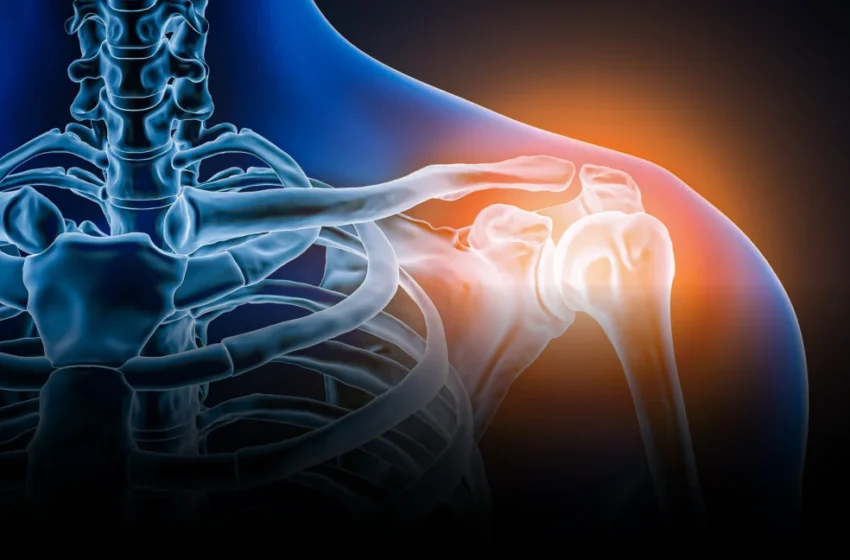
A shoulder joint, simply gone. Not trauma, not acute injury, but an insidious dissolution discovered only when a 45-year-old construction worker’s right shoulder became so swollen and painful that emergency intervention was unavoidable. The stark clinical image – an upper arm bone floating freely, its sphere-like head completely absent, major rotator cuff tendons shredded – isn’t just a medical curiosity. It is, more profoundly, a jarring indictment of how far we still are from the seamless, proactive health monitoring that much of the tech industry, particularly in Silicon Valley, perpetually promises.
For all the hype surrounding digital health and AI diagnostics, this particular case, documented in the New England Journal of Medicine for 2026, starkly illuminates a critical blind spot. We are consistently told that machine learning algorithms will soon predict ailments before symptoms emerge, that wearable sensors will track our biomechanical data with unprecedented precision, preventing catastrophic failures. Yet, here we stand, apparently in a near-future scenario, where a man’s primary upper limb articulation can vanish entirely without a prior flag in any system, leaving him with a non-functional limb and a medical mystery.
The Illusion of Early Detection in a Data-Rich World
Modern diagnostic imaging, like the X-ray and Magnetic Resonance Imaging (MRI) used to uncover this worker’s predicament, are undeniably powerful tools. They provide granular views into the human body, transforming once-invisible pathologies into clear images. But these are fundamentally reactive technologies. They diagnose conditions after they have manifested symptoms severe enough to warrant a clinical visit. The persistent narrative around AI in medicine is that it will render such diagnostic surprises obsolete, yet this case, reported for 2026, suggests otherwise; either the technology is not yet deployed effectively on a population scale, or the human element of oversight and early intervention remains critically unaddressed.
Consider the professional context: a construction worker. This is an individual whose livelihood depends on physical capability, and whose daily activities place considerable stress on musculoskeletal systems. We have IoT health devices, advanced biomechanical sensors, and even augmented reality tools for workplace safety. Why, then, are these technologies not converging to provide continuous, non-invasive monitoring for high-risk professions? The implicit assumption is that early detection is a solved problem with current medical infrastructure, but such extreme degeneration points to a systemic failure to connect the dots long before a full-thickness tear in three of four rotator cuff tendons.
Beyond the Anomaly: Structural Gaps in Health Tech Adoption
The original article, as a medical case report, naturally focuses on the clinical details of the man’s missing joint. What it doesn’t explore is the structural implication for how healthcare technology is developed, deployed, and perceived. The fact that a case this severe reached the emergency department at 45 years old, only for the entire joint to be found obliterated, speaks volumes about the disconnect between the promise of preventative health and its on-the-ground reality.
For researchers, a case this extreme presents a compelling, if rare, data point, bolstering calls for advanced imaging and possibly future AI-driven anomaly detection systems, creating a lucrative market for companies developing such diagnostic tools. But this commercial incentive often overlooks the more fundamental challenges: integrating disparate health data, ensuring accessibility, and overcoming the significant friction in user adoption for continuous monitoring, especially outside of elite athletic or wellness contexts. It’s a classic Silicon Valley blind spot: focusing on the cutting-edge without adequately addressing the practical, infrastructural gaps that persist globally, even in advanced economies.
The “2026” publication date itself is a curious detail. Is it a placeholder for a future study, or does it hint at the glacial pace at which medical breakthroughs are reported and integrated into broader public consciousness? Regardless, it underscores that even in a not-so-distant future, the medical community might still be grappling with these fundamental detection failures. This isn’t merely about developing more sophisticated algorithms; it’s about democratizing their access and ensuring they become an integral part of routine occupational and primary care, not just for the privileged few.
We often hear of AI’s potential to revolutionize diagnostics, yet a case like this suggests we are still navigating a landscape where the extraordinary slip through the cracks of ordinary medical vigilance. The focus should shift from merely developing new diagnostic modalities to understanding the ecosystem of health monitoring. This includes everything from wearable technology that tracks micro-traumas over time, to robust data analytics that can flag unusual physiological trends in high-risk populations, long before the catastrophic absence of a major anatomical component.
The ambition of precision medicine and digital therapeutics remains lofty. Yet, cases like the disappearing shoulder are a brutal reminder that the most advanced technologies are only as effective as their integration into practical, accessible, and truly preventative healthcare systems. Until that systemic integration occurs, the celebrated innovations in medical imaging and AI will continue to function more as sophisticated forensic tools than as the proactive guardians of health they aspire to be.
