
The Echo of a Sprint: Your Father’s RNA, Your Athletic Fate?
- Artificial Intelligence
Arjun Vedanta
- 0
- 7 minutes read
The Unseen Legacy of a Father’s Sweat
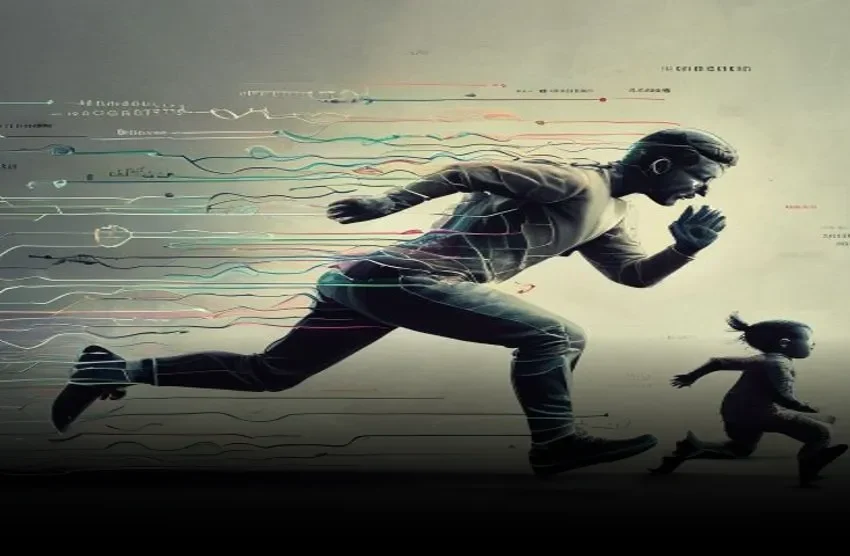
It was a quiet afternoon in Jiangsu, China, but what unfolded in Xin Yin’s lab at Nanjing University could have some surprisingly loud implications for how we think about human biology and inheritance. Picture this: a bunch of mice, specifically selected for their average genetic makeup, being put through their paces on a miniature treadmill. Nothing too dramatic, right? Except these aren’t just any mice. These are the offspring of fathers who, before conception, were subjected to a rigorous exercise regime. And these pups? They’re running farther, longer, with significantly less lactic acid buildup than their genetically identical control counterparts. Born athletes, you might say. The secret isn’t in their DNA sequence, but in something far more ephemeral, yet profoundly powerful.
“I was very surprised when I first saw the data,” Yin, a biochemist, reportedly said. And honestly, who wouldn’t be? We’ve spent decades, centuries even, fixated on genes – the double helix, the blueprint. We’ve built an entire industry, a medical paradigm, around the idea that DNA is destiny. But what Yin and his team are finding suggests that a father’s lifestyle choices, specifically his physical exertion, can literally rewrite aspects of his offspring’s physiology, not by altering genes, but by tweaking how those genes are expressed. And yes, that’s as profound and unsettling as it sounds.
Beyond the Blueprint: The RNA Revelation
Let’s be clear: this isn’t about some radical new form of genetic engineering. No CRISPR involved here, no designer babies (yet). This is about epigenetics, a field I’ve watched ebb and flow in and out of the spotlight for years, often dismissed as ‘soft inheritance’ or just complex environmental interaction. But the evidence keeps piling up, and it’s getting harder to ignore. In this case, the mechanism points directly to RNA – specifically, certain microRNAs (miRNAs) within the father’s sperm. These tiny RNA molecules, instead of coding for proteins, regulate gene expression, essentially acting as dimmer switches for various biological processes.
What the Nanjing team demonstrated is that exercise significantly alters the profile of these miRNAs in sperm. When these sperm then fertilize an egg, those altered miRNAs are passed on, influencing the embryo’s development and setting it up for enhanced athletic performance. This isn’t just about ‘nature vs. nurture’ anymore; it’s about ‘nature *plus* ancestral nurture, encoded in a non-genetic molecular whisper.’ It’s a testament to the incredible plasticity of biological systems, a stark reminder that the genome isn’t a static instruction manual but a dynamic, annotatable script.
I’ve watched companies try to capitalize on epigenetic insights before, especially in personalized medicine and diagnostics. The global epigenetics market, valued at around $1.3 billion in 2022 and projected to reach $3.6 billion by 2030, shows serious investor interest, but the journey from mouse model to human application is notoriously treacherous. We’re talking about incredibly complex regulatory networks where changing one tiny regulator can have cascading, unpredictable effects.
The Uncomfortable Implications for Humans
Ancestral echoes and personal responsibility
Now, let’s bring this home. If a father’s pre-conception exercise habits can influence his children’s athletic prowess, what else might be transmitted? Diet? Stress levels? Exposure to environmental toxins? We’ve known for a while that maternal health plays a huge role in fetal development. But the idea that paternal lifestyle, through such a precise molecular mechanism in sperm, can cast such a long shadow is, frankly, a game-changer for how we frame everything from public health initiatives to fertility counseling. Nobody’s talking about the real problem here — which is the uncomfortable truth that our individual choices might have intergenerational consequences far beyond what we conventionally understood.
Think about the societal pressures this could create. Imagine a future where fertility clinics start asking not just about genetic history, but about a prospective father’s exercise regimen and dietary habits in the months leading up to conception. What about the ethical quagmire of ‘optimizing’ future generations not through gene editing, but through lifestyle interventions that are, effectively, *germline engineering through proxy*? The potential for discrimination, for creating new strata of ‘bio-optimized’ vs. ‘unoptimized’ offspring, is not just a sci-fi trope anymore.
The data, the privacy, and the ‘Bio-Panopticon’
This kind of research also shines a light on the ever-growing appetite for biological data. Wearable tech already tracks our every step, our sleep cycles, our heart rates. What if this data, combined with advanced bioinformatics, starts to be used to predict or even influence epigenetic inheritance? Companies like 23andMe and Ancestry.com have already normalized sharing our genetic blueprints. Are we ready for a world where our lifestyle choices are scrutinized for their potential impact on our grandchildren’s health scores? The economics are brutal: if data can predict or improve health outcomes, someone will find a way to monetize it. And that brings up massive privacy concerns and the potential for a ‘Bio-Panopticon’ where our choices are under constant, algorithmic surveillance.
I’ve seen enough bio-tech hype cycles to know that the road from fascinating discovery to practical, ethical, and equitable human application is usually decades long, fraught with failures and unintended consequences. The ‘gene therapy will cure everything’ narrative of the 90s, for instance, took far longer to materialize safely and effectively than anyone predicted. This RNA-mediated inheritance, while compelling, is still in its infancy regarding human application. The sheer number of variables in human health and lifestyle makes isolating such specific effects incredibly challenging. It’s not just mice on a treadmill, after all.
A Quiet Revolution or Another Bio-Tech Blind Alley?
What I find fascinating here is not just the specific finding itself, but what it represents: a deeper, more nuanced understanding of biological inheritance. It pushes us beyond the simplistic Mendelian view and into a world where dynamic regulation, environmental interplay, and even ancestral experiences are constantly shaping who we are. It’s a quiet revolution, forcing us to re-evaluate fundamental assumptions about heredity and personal responsibility.
But let’s be honest about this. The translation from mouse to man is a massive hurdle. Human studies are complex, ethically sensitive, and incredibly expensive. The regulatory landscape for anything touching human germline cells, even indirectly, would be a minefield. While the science is compelling, the practical applications for improving human health, outside of very specific, controlled interventions, remain distant. Still, ignoring these findings would be foolish. They are a powerful reminder that our bodies, and the legacy we pass on, are far more intricate and responsive than we ever imagined. And sometimes, the most profound changes don’t come from altering the code, but from how that code is read, interpreted, and passed down through the subtlest of molecular whispers. That matters.
