
The Golden Orb and Our Planetary Blind Spot: Why Tech Looks Up, Not Down
- Tech
Arjun Vedanta
- 0
- 4 minutes read
The Allure of the Alien vs. Earth’s Underside
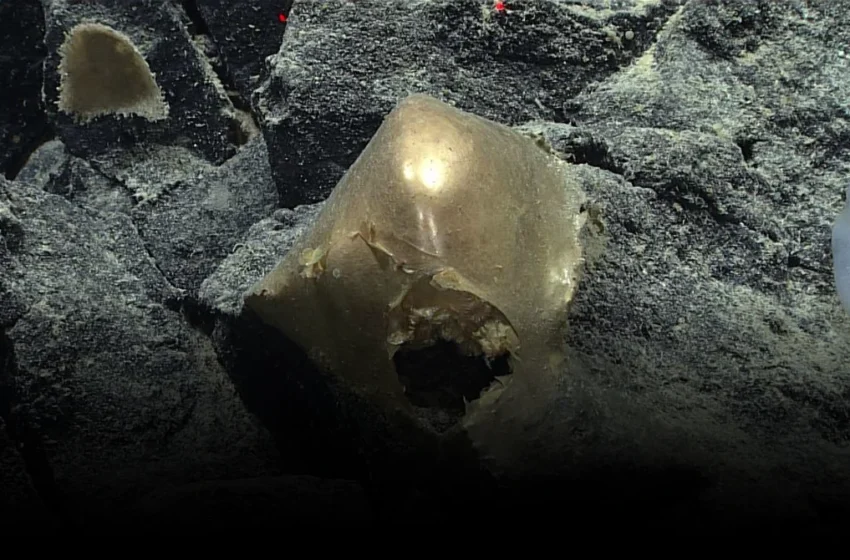
A glint of gold on the Gulf of Alaska seabed, initially speculated to be an extraterrestrial anomaly, has been definitively identified as the discarded cuticle of a deep-sea anemone. The scientific community, utilizing advanced genomic sequencing, closed a three-year mystery with a terrestrial answer. But the public fascination with an “alien object,” fueled by social media conjecture, speaks volumes about where our collective imagination, and indeed much of the technology discourse, habitually directs its gaze.
For weeks, the image of the smooth, organic sphere, retrieved by a submersible from 3,300 meters below the surface, ignited theories ranging from otherworldly eggs to unknown biofilms. This reflex to conjure the fantastical, the other, when confronted with the genuinely mysterious, often overshadows the profound, complex realities unfolding right beneath our feet. While Silicon Valley chases interstellar ambitions and metaverse horizons, over 80 percent of our own planet’s oceans remain unmapped, unobserved, and unexplored directly.
Genomic Keys to an Earthly Kingdom
The resolution to the “golden orb” enigma didn’t come from advanced warp drives or cosmic detectors, but from meticulous biological work. Researchers initially detected spirocytes – specialized cells found only in cnidarians like jellyfish and corals. This crucial biological clue shifted the investigation from speculative sci-fi to concrete zoology. The subsequent DNA sequencing, specifically of mitochondrial genomes, provided a 99.9 percent match to Relicanthus daphneae, a giant anemone already known, yet poorly understood.
What followed was a detective story involving revisiting old specimens and observing live ones to understand R. daphneae’s unique biology. The creature, capable of reaching 30 centimeters in diameter and dwelling between 1,600 and 4,000 meters deep, produces a multi-laminated, golden cuticle around its base. As it navigates the deep-sea floor, it sheds this coating, leaving behind structures that, in their detached form, appear utterly alien. This is not just a triumph of marine biology but also a quiet testament to how genomic technologies are rewriting our understanding of Earth’s biodiversity, offering a molecular telescope into the most obscure corners of life.
The Incentive to Look Outward, Not Inward
The media’s initial framing of the golden orb as an “alien object,” heavily amplified across social platforms, served a clear purpose: to capture attention and generate widespread public interest. This dynamic, where the sensational often eclipses the scientifically significant, is a powerful incentive in a competitive information landscape, potentially influencing funding and public engagement for deep-sea research. Yet, it also risks a persistent misdirection.
There’s a curious parallel in how the technology industry often operates. We celebrate AI systems that mimic human creativity or rockets pushing the boundaries of space travel, yet the sophisticated robotics and instrumentation deployed in deep-sea exploration, or the advanced bioinformatics that untangle complex genetic puzzles, often receive comparatively less fanfare. The truly contrarian observation here is that our fascination with “the next big thing” or the “unknown frontier” frequently defaults to narratives of external expansion, rather than deep internal inquiry into the vast, complex systems of our own world. It’s as if the promise of Mars colonisation is more compelling than understanding the biome of an unknown trench in our own ocean, even when the underlying technology for both is often equally advanced.
This bias isn’t merely about PR; it reflects a deeper cultural inclination. We are quick to imagine life on other planets but slow to grasp the intricate, undiscovered biology teeming in the abyssal plains of Earth. The identification of the golden orb as a shed anemone cuticle is a sharp reminder: the most profound discoveries, those that truly expand our understanding of life, might not arrive from distant galaxies but from the depths of our immediate, profoundly unexplored home. And the technology to unlock these secrets already exists, waiting for a shift in our collective focus.
