
The Silliwood Mirage: How the 90s Dream of Cinematic Gaming Limits Player Choice Today
- Tech
Arjun Vedanta
- 0
- 6 minutes read
The Ghost of Silliwood: How a 90s Dream Still Haunts Gaming
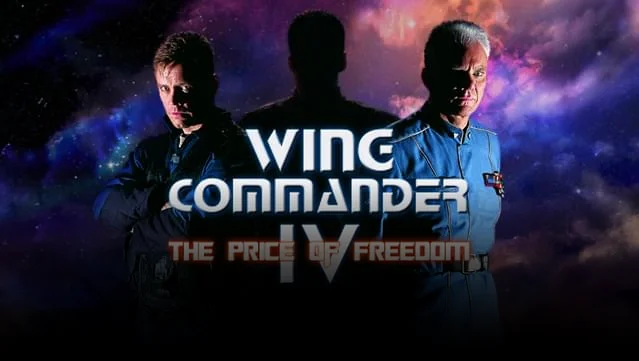
Every major new game release arrives now with an almost preordained weight of expectation: photorealistic graphics, emotionally resonant voice acting, and storylines that wouldn’t feel out of place on a streaming service. This isn’t just a byproduct of technological progress; it’s the lingering echo of a promise made over two decades ago, a vision of the “Silliwood revolution” where Hollywood and Silicon Valley would merge to create fully interactive entertainment. Back in the mid-1990s, figures like Ken and Roberta Williams and Chris Roberts genuinely believed that games like Wing Commander IV: The Price of Freedom were not just pushing boundaries, but fundamentally reshaping how we consume narrative. They were right about the spectacle, but profoundly wrong about the interactivity.
The implicit bargain of the Silliwood era was simple: games would look like movies, starring known actors, and deliver blockbuster narratives. The trade-off, though rarely articulated, was that this cinematic polish would inevitably constrain the very player agency it purported to amplify. The developers of 1996 and 1997, armed with nascent game engines and burgeoning full-motion video (FMV) technology, envisioned a future where audiences chose how films ended. Yet, what we largely received were elaborate digital corridors, albeit exquisitely rendered ones, with predetermined outcomes. The idea that player decisions would genuinely branch narratives, offering truly divergent conclusions, was mostly confined to the imagination of those tastemakers.
Today’s gaming landscape is a testament to Silliwood’s half-success. We have titles that boast budgets rivalling Hollywood productions, with intricate character models and sprawling, detailed environments. The technical prowess is undeniable, a far cry from the “lame graphics and clunky hand-drawn art” of yesteryear. But the core contradiction remains: the more effort poured into crafting a singular, meticulously directed narrative, the less room there often is for genuine player-driven divergence. The grand assembly chambers and elaborate sets from the Wing Commander era have simply been replaced by rendered equivalents, equally rigid in their purpose.
Spectacle Over Agency: The Modern Player’s Unspoken Bargain
The contemporary AAA title exemplifies this tension, presenting itself as an open world ripe for exploration while simultaneously shepherding players along a tightly scripted main quest. We are offered thousands of hours of content, but how much of it truly alters the fundamental trajectory of the story or the fate of its characters? Very little, typically. This isn’t a critique of the artistic ambition; rather, it’s an observation about the structural limitations imposed by cinematic aspirations. Building a truly reactive world where every choice branches into dozens of permutations is an exponentially more complex and expensive undertaking than crafting a single, highly polished linear experience.
The incentive for game studios is clear: producing a visually stunning, linear narrative is a more predictable, commercially viable path. It appeals to a broad audience accustomed to passive media consumption, minimizing the inherent risk of developing complex, branching narratives where players might miss significant chunks of costly content. This framing also allows for clearer marketing narratives, selling a single, compelling story rather than a multitude of possibilities. It ensures a consistent, high-fidelity experience, which is often what critics and consumers reward.
Consider the stark difference between the marketing of a game like The Last of Us Part II — lauded for its unparalleled narrative design and character development — and a more emergent gameplay experience like Death Stranding, which, despite its narrative depth, emphasizes player-driven systemic interactions. The former, for all its emotional weight, remains a largely linear journey. The latter, while still having a story, provides a much wider berth for player expression within its mechanics. The industry has largely opted for the former model, prioritizing controlled narrative arcs over the chaotic beauty of genuine player agency. It’s the equivalent of offering a deeply satisfying tasting menu, rather than an all-you-can-eat buffet where your choices might result in an unpalatable combination.
Beyond the Cutscene: Reclaiming Interactive Storytelling
The original Silliwood dream was not inherently flawed; its execution and the subsequent industry evolution simply emphasized one half of the equation. Modern game engines are certainly capable of generating vast, dynamic worlds. The challenge lies in narrative design that fully embraces this capability, rather than defaulting to cinematic conventions. We see glimmers of this potential in certain independent developers or niche titles that foreground player choice and emergent gameplay, often sacrificing graphical fidelity for systemic depth. Games like Disco Elysium or Crusader Kings III demonstrate that rich narrative experiences can emerge directly from player decisions, rather than being delivered via high-production cutscenes.
The sharpest observation one can make here is that for all the advancements in visual effects and performance capture, many modern AAA games are fundamentally less interactive than text adventures from the 1980s when it comes to narrative consequence. They offer the illusion of choice through dialogue options that often converge to the same outcome, or side quests that exist in a narrative vacuum, separate from the main plot. This isn’t true interactivity; it’s an elaborate stage play where the audience is allowed to occasionally adjust the lighting.
Moving forward, the true “Silliwood revolution” might still arrive, but it will require a different mindset from developers and a shifted expectation from players. It won’t be about making games look more like movies; it will be about creating stories that can only exist as games, leveraging their interactive nature to its fullest. This means a focus on more sophisticated player choice systems, more reactive world states, and a willingness to embrace the unpredictability that comes with genuine agency. It means designing not just characters and plots, but intricate systems that allow players to write their own, truly unique sagas within a game’s framework. The technology is here; the narrative courage is still developing.
