
The Uncomfortable Truth Behind Disney’s Scientific Ambassador
- Tech
Arjun Vedanta
- 0
- 5 minutes read
The Curious Case of Dr. Von Drake’s Pedigree
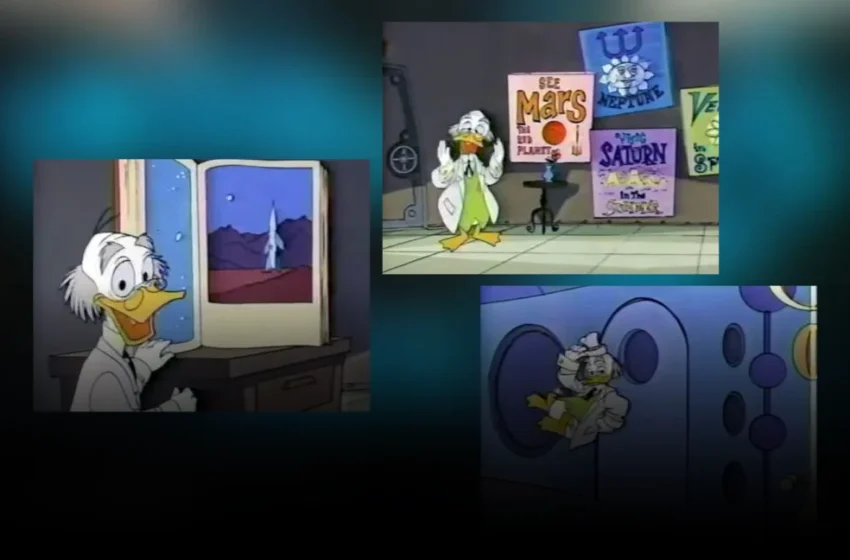
For millions, Ludwig Von Drake was the genial, if slightly bumbling, face of science. Introduced by Walt Disney on September 24, 1961, this “renowned scientist, lecturer, psychologist [and] world traveler” — and, crucially, Donald Duck’s uncle — served a vital purpose: demystifying complex scientific and technological concepts for a burgeoning television audience on Walt Disney’s Wonderful World of Color. From the intricacies of color television to the grand sweep of aviation history and the mysteries of outer space, Von Drake made science accessible, even charming.
Yet, the seemingly innocent origin story of this animated academic carries a disquieting undertone. The article reveals that Von Drake’s character was, in part, inspired by early Space Age rocket scientists. Specifically, and hinted in the very title, Wernher von Braun. This isn’t just a quirky biographical footnote; it’s a stark reminder of how public narratives are crafted, and how uncomfortable truths are often sidelined in the service of popular appeal.
Wernher von Braun was undeniably brilliant, a visionary who shepherded the American space program from its nascent stages to the lunar surface. But his journey to the pinnacle of NASA began under the Nazi regime, where he was a central figure in the development of the V-2 rocket program. This involved the use of concentration camp slave labor, leading to tens of thousands of deaths. To cast such a figure, even implicitly, as the muse for a character meant to inspire scientific curiosity in children, speaks volumes about the priorities and selective memory of a nation caught in the throes of the Cold War.
The most jarring aspect isn’t that this connection existed; it’s how effortlessly it was absorbed into a national narrative that championed scientific progress while conveniently ignoring its uncomfortable ethical baggage. This selective embrace allowed Disney to package science as benign and aspirational, neatly sidestepping the profoundly troubling moral compromises inherent in its real-world development.
Engineering Consent, Not Just Rockets
In the early 1960s, America was locked in the Space Race, a high-stakes ideological battle against the Soviet Union. The launch of Sputnik in 1957 had shattered American technological complacency, igniting a national push for scientific and engineering talent. Public understanding and support for these endeavors were paramount, and this created a powerful incentive for figures like Walt Disney to engage in what amounted to cultural engineering.
Disney, a master of public relations and narrative control, understood that educating the populace was crucial for securing the widespread buy-in needed for massive governmental spending on projects like NASA and the broader Cold War defense apparatus. Ludwig Von Drake was more than an entertainer; he was a subtle instrument of public policy, making complex scientific aspirations palatable and exciting for the average American family.
The creation of characters like Von Drake, and the implicit acceptance of their problematic inspirations, served a dual purpose: demystifying complex science for a mass audience and subtly legitimizing the very figures and institutions driving America’s post-war technological ascent, regardless of their past. This ensured public support and funding for projects deemed vital for national security and prestige, often under the shadow of Project Paperclip, which brought German scientists, including Von Braun, to the U.S.
By presenting a sanitized, almost whimsical version of scientific pursuit, Disney helped to align the public with the national agenda. The focus was on the marvels of technology and the promise of the future, effectively obscuring the darker origins of some of the minds behind these advancements. It was a calculated move to foster a pro-science, pro-tech sentiment during a critical geopolitical period.
The Legacy of Sanitized Narratives
The story of Ludwig Von Drake and his unacknowledged muse extends beyond a single cartoon character. It illustrates a recurring pattern in the history of technology and science: the tendency to simplify, sanitize, and even hero-worship figures, especially when their contributions align with national goals or commercial interests. This cultural phenomenon is particularly pronounced in public-facing roles, where a clean image is deemed more important than a complete history.
What does it mean for our collective understanding when the friendly face of science education, however indirectly, echoes a past tainted by the gravest ethical failings? It risks normalizing a dangerous detachment of scientific pursuit from ethical accountability. The genius is celebrated, while the methods or the moral context of that genius are conveniently forgotten or never taught.
Intelligent, skeptical readers of today, who track the complexities of AI ethics or the geopolitical implications of global supply chains, recognize that technology is never truly neutral. It is shaped by its creators, its funding, and its political environment. To ignore the foundational ethical compromises in the origin stories of our scientific heroes is to miss a crucial lesson about power, progress, and propaganda.
Ultimately, the Von Drake anecdote serves as a potent reminder that we must consistently apply a critical lens to the narratives presented to us, particularly those that seek to frame technological progress as inherently virtuous. The past, however uncomfortable, always informs the present, and understanding these uncomfortable truths is essential for navigating the complex ethical landscape of technology today.
