
The Wild West of AI Kids’ Toys: A Veteran’s Take on the Unregulated Frontier
- Artificial Intelligence
Arjun Vedanta
- 0
- 7 minutes read
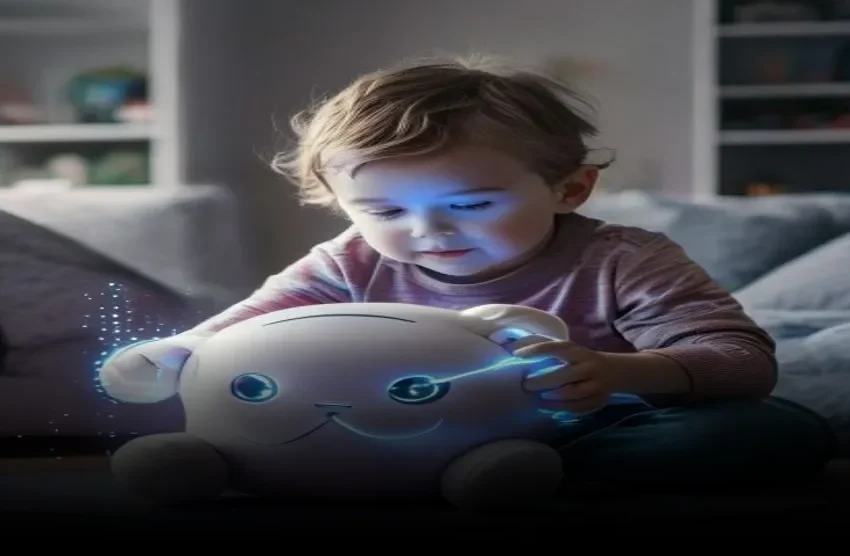
Beyond the Pixar Parody: AI Comes for Playtime
There’s a new villain in the latest Toy Story movie, I hear. A green, frog-shaped kids’ tablet named Lilypad. It’s a genius stroke of satire, really, given how omnipresent screens have become in children’s lives. But if Pixar had their ear truly to the ground, they might have skipped the tablet and gone straight for the AI companion toy. Because that, my friends, is the real boogeyman lurking in the playroom these days.
What I find fascinating here is not just the rapid acceleration, but the sheer, brazen lack of oversight. AI toys are seemingly everywhere now. They’re marketed online as friendly, educational companions for toddlers, for children as young as three. And they’re still, astonishingly, a largely unregulated category. It’s a gold rush, plain and simple.
The Rush to Market: What’s Driving the AI Toy Boom?
I’ve watched companies try this before. The connected toy trend, the IoT toys of yesteryear – remember Hello Barbie? CloudPets? That whole cycle ended with significant data breaches and a lot of uncomfortable questions about children’s privacy. We saw it coming then, and we’re seeing it again now, but with an entirely new layer of complexity. AI.
The barrier to entry for these companies has plummeted. Thanks to increasingly accessible large language model (LLM) developer programs and something being called “vibe coding” – which, let’s be honest, is a streamlined way to fine-tune a model’s personality and interaction style – spinning up an AI companion is easier than ever. It’s a templated future, but for kids.
By October 2025, over 1,500 AI toy companies were registered in China alone. Think about that number. One thousand five hundred. These aren’t just niche startups; Huawei’s Smart HanHan plush toy sold 10,000 units in China in its first week. Sharp launched its PokeTomo talking AI toy in Japan. Across the globe, players like FoloToy, Alilo, Miriat, and Miko are popping up, with Miko claiming more than 700,000 units sold globally. That matters.
It’s become the go-to trend in cheap trinkets, lining the halls of trade shows like CES, MWC, and Hong Kong’s Toys & Games Fair. Every vendor wants a piece of the AI pie, regardless of whether they understand the ingredients or the potential indigestion.
The Unseen Costs: Data, Privacy, and the Black Box
Who’s Watching the Watchers?
Nobody’s talking enough about the real problem here — which is the fundamental contradiction between an AI that learns from interaction and the absolute necessity of protecting children’s data. These toys are designed to engage, to listen, to adapt. That means collecting vast amounts of conversational data, vocal inflections, and preferences from impressionable minds. Where does that data go? Who has access to it? How long is it stored?
The economics are brutal for these companies. Running sophisticated LLMs, even smaller, fine-tuned ones, requires significant cloud compute power. Data storage isn’t free. There’s immense pressure to monetize, and if the upfront cost of the toy isn’t covering it, what’s the next revenue stream? Subscriptions for “premium” AI features? Or, worse, data?
The U.S. Children’s Online Privacy Protection Act (COPPA) is a relic in some ways, but its spirit remains vital. Yet, how many of these startups, especially those operating internationally, are truly compliant? How many parents are actually reading dense privacy policies filled with legalese about data minimization and third-party sharing? Spoiler: very few.
The Shaping of Young Minds
I’ve heard the arguments that these toys are for education, for companionship. Fine. But what kind of education are they providing? What kind of companion are they really? AI systems, by their very nature, can reflect biases present in their training data. They can generate misinformation. They can be subtly steered. For an adult, it’s a concern; for a developing child, it’s a profound ethical dilemma.
Consider the potential for platform dependency. If a child bonds deeply with an AI personality, what happens if the company goes bust, if servers are shut down, or if the “personality” is updated in a way the child dislikes? This isn’t just a gadget; it’s being sold as a relationship. That’s a different league of responsibility.
A Skeptic’s Gaze: Hype vs. Reality
Let’s be honest about this. A lot of what’s being marketed as “AI” in these toys is glorified chatbot functionality. Yes, it’s more advanced than a pull-string doll, but it’s not necessarily sentient. It’s pattern matching and sophisticated response generation. The industry loves to throw around the AI label because it sells, creating an aura of cutting-edge innovation that often outpaces actual capability. It’s always about the narrative.
The true intelligence often resides on cloud servers, not within the plush toy itself. This reliance on the cloud means constant data transmission, constant potential for interception, and constant exposure to the very companies who are making money off of your child’s interactions. It’s a Faustian bargain wrapped in cute plastic.
We’ve seen this cycle before, whether it was VR in the 90s, the early internet, or the first wave of smart home devices. Over-promise, under-deliver, then slowly (or painfully) iterate toward something useful. The problem with AI kids’ toys is that the stakes for the “under-deliver” part involve children’s developmental and privacy rights.
The Road Ahead: Regulation or Ruin?
The regulatory landscape is simply not keeping pace. Governments worldwide are struggling to legislate even basic AI transparency for adults, let alone define specific protections for children interacting with these autonomous, data-hungry systems. There’s no clear consensus on who is responsible when an AI toy gives problematic advice or reveals private information.
I don’t have a crystal ball, but I’ve seen enough tech trends crash and burn to know that ignoring these fundamental issues will lead to trouble. Big trouble. Unless industry giants and policymakers step up, we’re hurtling toward a future where the lines between play, surveillance, and corporate profit are dangerously blurred. For now, the Wild West remains very, very wild. And our children are the unwitting pioneers.
