
Titan’s Implosion: A Systemic Warning for Emerging Tech Governance
- Tech
Arjun Vedanta
- 0
- 5 minutes read
The Labyrinthine Bureaucracy and Its Blind Spots
The OceanGate Titan’s fatal implosion was not merely a marine tragedy; it was a systemic collapse of oversight, exposing a fundamental flaw in how nation-states grapple with novel, high-risk technologies that defy neat categorization. Canadian authorities, despite interacting with OceanGate across ten federal agencies, failed to establish comprehensive regulatory oversight for the experimental submersible. The problem was not a lack of rules, but a devastating lack of a coherent, centralized framework for connecting the dots across disparate mandates.
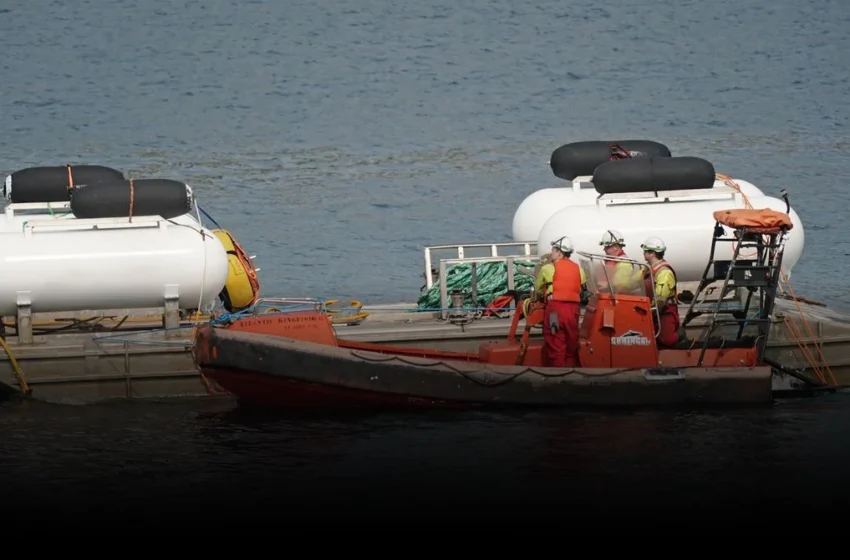
Consider the specifics: Transport Canada, the agency responsible for vessel safety, opted to classify the Titan as mere cargo carried by the support ship, the Horizon Arctic. This seemingly innocuous bureaucratic decision, highlighted by TSB investigator Jason Melvin, effectively rendered the sub exempt from vessel inspection and safety standards. Meanwhile, Canada’s Border Security Agency, in Gary Philbrick’s stark words, was “extremely intimidating” but only interested in COVID-19 paperwork and import duties, having “zero interest in the sub,” according to lawyer David Concannon. As TSB investigator Etienne Seguin-Bertrand confirmed, their mandate simply didn’t extend to the sub’s seaworthiness.
Then there’s Fisheries and Oceans Canada, which initially planned to fund OceanGate for deep-sea ecosystem research. A researcher from this very department later observed and reported that the carbon fiber Titan lacked regulatory approval, certification, and insurance. Yet, these critical concerns never reached Transport Canada’s marine safety team. This jurisdictional fragmentation, where vital intelligence dissipates between silos, illustrates a governance model utterly unprepared for technologies that cross traditional boundaries – much like autonomous vehicles, experimental biotech, or private space ventures.
Engineering Audacity Meets Regulatory Inertia
The TSB’s analysis of the Titan’s carbon fiber hull samples revealed a chilling discrepancy: while a perfectly manufactured hull might withstand “hundreds of millions” of dives to Titanic depths, the actual composite, plagued by porosity, waviness, and grinding defects, could fail in as few as 30 deep dives. The Titan imploded on its 24th mission. This stark contrast between design aspiration and real-world execution underscores a critical challenge in experimental craft: the pace of technical innovation consistently outstrips the development of robust, adaptive regulatory frameworks.
OceanGate’s approach was a masterclass in regulatory arbitrage. By operating in international waters and exploiting the ambiguities of national jurisdictions, they created a gray zone for their experimental craft. The incentive for the company was clear: bypass costly, time-consuming certification processes to accelerate deployment and maintain an image of disruptive innovation. The inherent conflict of interest in an entity self-certifying its own high-risk endeavors, particularly when carrying paying passengers at costs exceeding $100,000, was apparently lost in the bureaucratic shuffle. It’s here that the skeptical observation becomes unavoidable: regulatory bodies are often reactive, responding to disaster rather than proactively shaping an environment where such high-stakes experimentation is contained and rigorously monitored from inception.
This isn’t an isolated incident. The history of aerospace, offshore energy, and even early internet infrastructure is replete with examples where catastrophic failures prompted the very regulations that should have prevented them. What makes the Titan case particularly troubling is the sheer volume of missed opportunities and the clear signals that were either misinterpreted or simply ignored by a decentralized authority structure.
Beyond the Deep: A Warning for Emerging Tech Governance
The TSB’s recommendations — increased oversight for risky vessels, improved inter-departmental information sharing, and mandatory international construction and safety standards for human-occupied submersibles — are specific to marine safety. But their implications stretch far wider, serving as an urgent blueprint for how governments must approach the next wave of emerging technologies. The Canadian experience with OceanGate’s Titan is a microcosm of a larger global governance challenge: how do states regulate technologies that are genuinely novel, operate in new domains (like the deep ocean or orbital space), and are often developed by private entities aggressively pushing boundaries?
The current model of siloed agencies, each with a narrow mandate, is inherently ill-equipped for a future defined by convergent technologies and cross-domain innovation. Whether it’s autonomous AI systems making critical decisions, gene-editing technologies altering fundamental biology, or private companies launching space stations, the lessons from the Titan are stark. Governments cannot afford to treat novel, high-risk ventures as merely cargo or as a matter of paperwork. They must develop integrated, multidisciplinary regulatory bodies capable of understanding complex technical risks and enforcing safety across an evolving landscape of innovation.
The imperative, therefore, is to move beyond mere compliance to proactive, holistic risk assessment and governance. This requires not just new rules, but a fundamental restructuring of how states perceive and manage technological frontiers. Without such a systemic shift, the Titan’s tragedy will remain an uncomfortable harbinger for other industries where the dots remain unconnected.
