
Trump’s AI Safety Order: A Symptom of America’s Faltering Digital Sovereignty
- Artificial Intelligence
Arjun Vedanta
- 0
- 6 minutes read
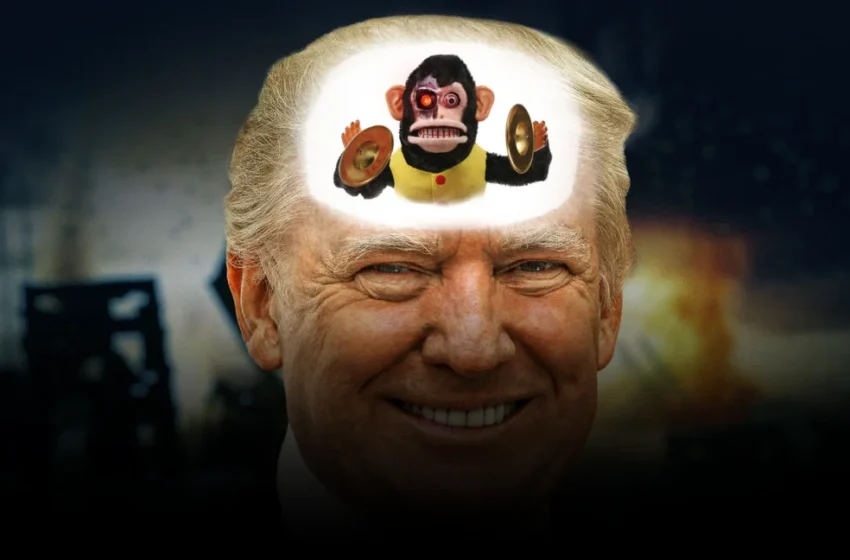
The Illusion of Oversight
Donald Trump’s latest executive order on artificial intelligence safety arrived not with a bang, but with a barely audible sigh of relief from the industry it purports to oversee. Last month, a more ambitious draft was shelved after CEOs, invited at the last minute, couldn’t attend a planned signing event, with Trump citing concerns it might “go too far and had become a ‘blocker’ impeding AI innovation.” The eventual order establishes no requirements for AI firms; instead, it promises not “to stifle this innovation with overly burdensome regulation,” opting for a collaborative, voluntary process. This framing is crucial: it positions regulation as an impedance, not a prerequisite for national security.
The core issue is not simply the voluntary nature itself, but the broader signal it sends about the state’s role in a crucial technological race. Critics are right to warn that this approach is short-sighted, offering little beyond superficial monitoring of advanced AI deployment. When the stakes involve potential algorithmic bias in critical infrastructure or autonomous weapons systems, a “voluntary collaboration” with the companies building these systems risks becoming a convenient fig leaf for inaction.
The incentive here is clear: it’s a political win that appeases an industry wary of government intervention, while allowing the administration to claim it is actively addressing AI risks. Tech giants prefer shaping their own standards, benefiting from lax oversight that allows for rapid, often opaque, deployment of powerful generative models. This approach conveniently avoids the complex, resource-intensive work of building robust regulatory frameworks and enforcement mechanisms.
Such a posture might seem economically pragmatic to some, freeing up Silicon Valley to innovate without bureaucratic drag. However, it implicitly transfers the burden of risk management from the state, which is ultimately responsible for public safety and national security, to private corporations whose primary fiduciary duty is to shareholders. This isn’t a sign of strong governance; it’s a symptom of weakening digital sovereignty.
America’s Fading Regulatory Muscle
The executive order’s journey to becoming a toothless document reveals deeper institutional pathologies. Reports of infighting within the administration, pitting cybersecurity experts against officials committed to AI deregulation, painted a vivid picture of a government struggling to define its own stance. This internal discord isn’t an isolated incident; it’s part of a worrying pattern reflecting a broader decline in technical capacity and strategic focus within the US government.
While the immediate context of “gutted by DOGE” might evoke images of crypto speculation draining talent, the underlying truth is more insidious. For years, vital government agencies have struggled to retain top technical talent, often losing out to the private sector’s allure of higher salaries and faster innovation cycles. This brain drain isn’t just about individual departures; it’s about the systemic erosion of institutional knowledge and the ability to critically assess, let alone regulate, complex adjacent technologies.
How can the US government credibly oversee “frontier AI models” when its own internal expertise is fragmented, under-resourced, and constantly battling ideological headwinds from deregulation advocates? The skeptical observation is this: even if AI firms voluntarily submitted their models for testing, a government whose own technical teams are understaffed and ideologically compromised might not possess the deep domain knowledge or consistent methodologies to conduct truly rigorous evaluations. The result is likely a superficial vetting process, ticking boxes without truly probing the profound national security implications of these technologies.
This deficit is particularly acute in areas like advanced computational infrastructure and algorithmic transparency, where understanding requires more than legal acumen — it demands deep engineering and scientific insight. Without this, any “voluntary safety testing” becomes little more than an industry self-assessment, rubber-stamped by a state that lacks the tools or the will to challenge its findings. The idea that a nation can effectively govern complex digital ecosystems solely through industry goodwill is, frankly, delusional.
A Fragmented Future for Global AI Governance
From a global perspective, the US approach to AI governance stands in stark contrast to the more assertive stances taken by other major powers. The European Union, for instance, is actively pursuing comprehensive regulatory frameworks like the AI Act, aiming to establish clear red lines and mandatory compliance for high-risk AI applications. China, too, is implementing a multi-layered regulatory strategy, albeit with different state control objectives. These nations understand that digital sovereignty demands explicit, enforceable rules, not just polite requests for collaboration.
The American strategy, or lack thereof, contributes to a fragmented global landscape of AI governance. This fragmentation creates significant geopolitical risks, particularly in areas like supply chain resilience and cybersecurity standards for AI. As each major bloc adopts different regulatory philosophies, the potential for incompatible systems, regulatory arbitrage, and a race to the bottom in safety standards becomes more pronounced.
For international technology journalists, this isn’t merely an esoteric policy debate; it’s a tangible shift in global power dynamics. When a nation as technologically advanced as the United States explicitly opts for a voluntary, industry-led approach to frontier AI safety, it cedes critical ground. It signals a reluctance to lead on establishing robust, enforceable international norms, leaving a vacuum that other, less democratically accountable, powers are eager to fill.
The ultimate implication is a future where the foundational rules governing the most transformative technology of our era are not set by democratically elected governments, but by the largest corporations, often with their own commercial agendas. This executive order, far from protecting the nation, highlights a deeper structural problem: an increasingly hollowed-out public sector struggling to keep pace with the power and speed of private tech. The consequences for national security, economic stability, and even democratic principles are far-reaching and deeply concerning.
