
Unverified Autonomous Kills: The Dangerous Narrative Shaping AI Warfare
- Artificial Intelligence
Arjun Vedanta
- 0
- 5 minutes read
The Anatomy of an Unverified Claim
A single, uncorroborated anecdote from a Ukrainian drone manufacturer’s CEO, presented at a press event in London, has painted a startling picture: fully autonomous drones, operating without human oversight, allegedly killed Russian soldiers two years ago. This claim, if definitively proven, would represent a chilling escalation in the development and deployment of Lethal Autonomous Weapon Systems, or LAWS, a prospect that has long fueled international ethical debates and policy concerns. Yet, what truly warrants deeper scrutiny isn’t just the nature of the claim itself, but the eagerness with which it can enter the global discourse on military AI, especially given its dubious provenance and the clear incentives of its purveyor.
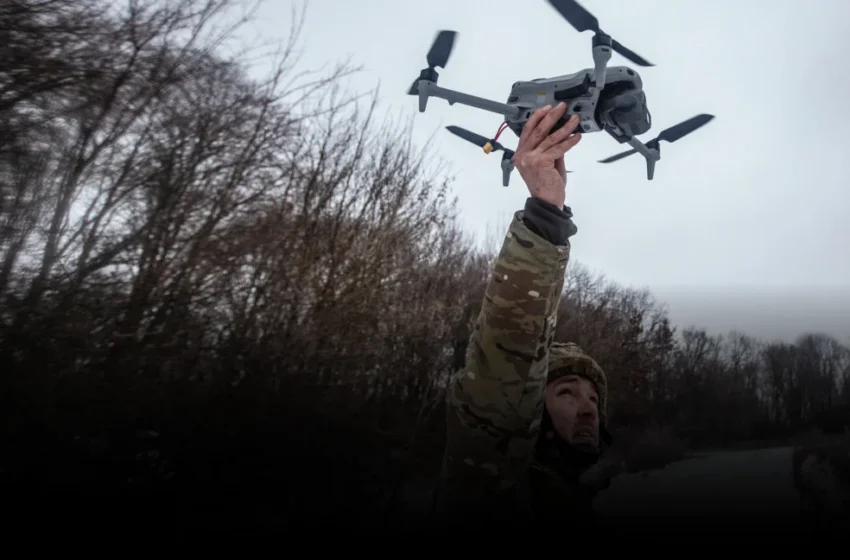
Alexander Kokhanovskyy, CEO of Aero Center, told New Scientist about a ‘one-time test’ involving quadcopter drones. These machines were supposedly preprogrammed to fly into a front-line area and activate an ‘AI-powered Terminator mode’ to identify and attack targets indiscriminately. The operational details are sparse, offering no footage, telemetry, or direct human observation of the purported kills; the conclusion that autonomous drones had killed ‘a couple’ of Russian soldiers was drawn solely from subsequent visual inspections by human-piloted drones, which discovered casualties in the designated area.
The critical omission here is verification. Unlike the rapid proliferation of semi-autonomous FPV drones or even sophisticated targeting systems that still operate with a ‘human-on-the-loop’ or ‘human-in-the-loop’ decision-making structure, fully autonomous lethal action removes the human entirely. Such a dramatic departure from established military ethics and international law, one that could set a global precedent, demands unimpeachable evidence.
Instead, we have a second-hand account, two years removed from the alleged event, delivered by the head of a defense contractor, Aero Center, at a press event hosted by the Ukrainian embassy. The immediate, jarring question is not about the technology itself, but about the timing and source of the disclosure. For a military operating under immense pressure, and for companies like Aero Center, which thrive on demonstrating technological prowess, the narrative of invincible, AI-driven weaponry can be a powerful tool for morale, recruitment, and securing investment, regardless of the granular truth. This raises the sharpest skeptical observation: the incentive to present a narrative of advanced, decisive autonomous capability, even if unverified, serves clear strategic and commercial interests in a protracted conflict.
The Global Stakes of Narrative Warfare
The conflict in Ukraine has indeed become a crucible for advanced drone warfare, pushing the boundaries of what is possible with networked systems, real-time intelligence, and rapid technological iteration. We’ve seen sophisticated electronic warfare capabilities, adaptive targeting algorithms, and the widespread deployment of off-the-shelf commercial drones modified for military purposes. However, the step from AI-assisted targeting to fully autonomous lethal engagement — where a machine, unguided by human intent in real-time, makes life-or-death decisions — is a chasm, not a mere gradient. To claim this chasm was crossed two years ago, without a shred of independent verification, risks muddying the already complex discussions around the future of algorithmic warfare.
International bodies and numerous NGOs have spent years debating the implications of LAWS. The United Nations has hosted expert groups on the topic since 2014, grappling with questions of accountability, proportionality, and the very definition of humanity in conflict. The phrase ‘Terminator mode’ evokes cinematic dystopia for a reason; it simplifies a profoundly complex ethical dilemma into a marketable, fear-inducing soundbite. When such a term is employed to describe an unconfirmed event, it serves not only to potentially misinform the public but also to derail serious efforts to establish norms and regulations for AI in weapon systems. The global perception of military AI, therefore, becomes highly susceptible to narratives that, while compelling, lack substance.
The danger is not merely in the factual discrepancy, but in the precedent this narrative establishes. If unverified claims of fully autonomous killing become accepted as fact, it cheapens the very real stakes involved in developing and deploying such technology. It creates an environment where the perceived capabilities of defense contractors or national militaries are prioritized over the ethical rigor required when debating life-and-death decisions made by machines. This is where Silicon Valley reporters, often focused on product launches and quarterly earnings, sometimes miss the subtle yet profound geopolitical and ethical dimensions that an international perspective illuminates.
Beyond the Hype: Scrutiny and Accountability for Military AI
We are navigating an era where technological advantage is paramount, and the lines between defense innovation, national security, and public relations are increasingly blurred. The revelation of this ‘Terminator mode’ drone incident underscores a critical need for rigorous journalistic and analytical standards, particularly when reporting on potentially world-altering military advancements. The absence of independent, verifiable evidence for such a pivotal claim demands skepticism, not breathless amplification.
The true story here isn’t necessarily that Ukraine deployed fully autonomous killer drones two years ago, but that the claim itself, unsupported and strategically delivered, is now part of the global conversation. This highlights the ongoing challenge of separating fact from strategic narrative in wartime, especially concerning dual-use technologies like AI. For policymakers, ethicists, and indeed, the public, the task remains to push past the headlines and demand transparency and accountability, ensuring that the critical discussions around military AI are grounded in verified reality, not speculative, self-serving assertions.
