
US Government-Funded ‘Propaganda’ Blurs Lines, Exploits Digital Reach
- Government & Policy
Arjun Vedanta
- 0
- 5 minutes read
The Blurring of Public Service and Propaganda
A recent complaint by consumer advocacy group Public Citizen underscores a disquieting shift in modern governance: the aggressive appropriation of state resources for thinly veiled political messaging. What was once confined to authoritarian regimes, or at least carefully obfuscated by PR machinery, now manifests as direct-to-citizen advertisements paid for by the U.S. government, strikingly similar to campaign material.
This isn’t merely a legalistic squabble over anti-propaganda statutes, nor is it simply about a single political figure. The central issue is the systemic normalization of using state resources for overtly partisan political communication, blurring the lines between public information and campaign material in an era of amplified, direct-to-citizen digital communication. The move by Public Citizen to file complaints with the Federal Communications Commission (FCC) and Federal Trade Commission (FTC) highlights a structural vulnerability in democratic oversight that predates any specific administration, but has certainly been exacerbated by recent executive actions.
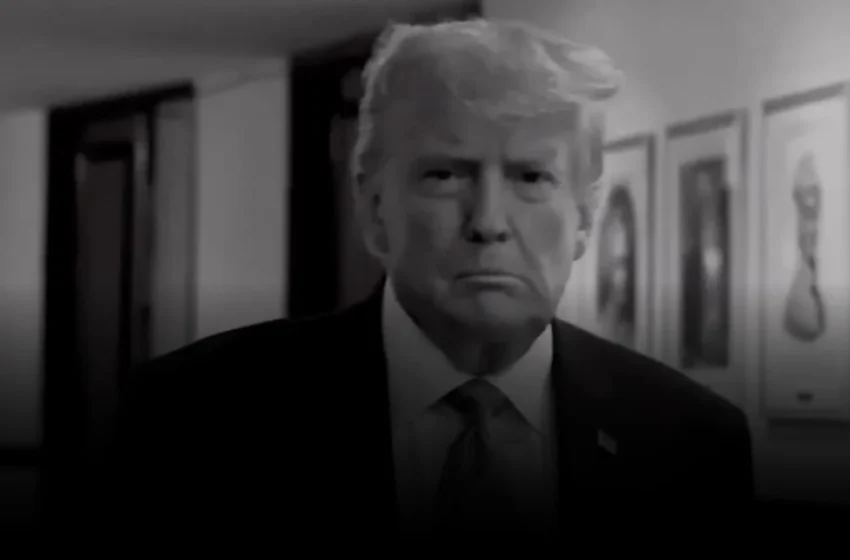
The ad in question, ‘The Final Battle,’ featuring Donald Trump, uses identical video and audio from a 2024 campaign spot. The only substantive difference: the taxpayer-funded version carries the explicit disclaimer, ‘Paid for by the US government.’ This isn’t a public service announcement about health or infrastructure; it’s a declaration of war against ‘the deep state,’ ‘warmongers,’ ‘communists, Marxists, and fascists,’ and ‘fake news media.’ The White House’s claim that these are legitimate public service announcements stretches credulity past its breaking point, betraying a cynical disregard for the spirit of laws designed to prevent state-sponsored political coercion.
Weaponizing Official Channels in the Digital Age
Governments have always engaged in public information campaigns, from wartime morale boosting to public health initiatives. But there’s a crucial distinction between informing citizens and actively campaigning against perceived internal enemies using public funds. The digital landscape has complicated this further, offering direct, unmediated channels for state actors to reach constituents, bypassing traditional journalistic gatekeepers and regulatory scrutiny that was once easier to apply to broadcast media.
Consider the architecture of modern digital AI tools for audience segmentation and content delivery. While these ads might not be explicitly micro-targeted in the way a campaign might, the inherent nature of their distribution through digital platforms means they function effectively as sophisticated AI infrastructure for political messaging. This allows a level of penetration and ideological reinforcement that traditional government PSAs never achieved. The incentives here are clear: to harness the legitimacy and funding of the state apparatus to gain a political advantage, and to do so under the guise of official communication, thereby shielding it from direct campaign finance regulations.
This strategy—leveraging the state’s resources to directly fund what is indistinguishable from partisan messaging—represents a direct challenge to the foundational principles of a fair democratic process. It’s a tactic honed not in Silicon Valley boardrooms, but in capitals where the ruling party effectively owns the airwaves and state press. The fact that it is now openly attempted in a major Western democracy should raise alarms far beyond the legalistic arguments currently being debated by Public Citizen and the regulatory bodies.
Erosion of Trust and Democratic Norms
The brazenness of these ads reveals a deeper, more worrying trend: the systematic erosion of democratic norms and public trust in institutions. When the government’s official voice becomes indistinguishable from a political campaign, the very concept of objective public information is undermined. This is not simply a matter of semantics; it has tangible impacts on how citizens perceive information, whether from official sources or the media.
The implications extend beyond the immediate political cycle. If using taxpayer money for partisan attacks becomes normalized, future administrations, regardless of their political stripe, will find it easier to justify similar actions. This sets a dangerous precedent, opening the door for a permanent government and policy infrastructure that can be co-opted for purely political ends. It effectively creates a state media apparatus by stealth, undercutting the role of independent journalism and fostering an environment where facts are perpetually contested and official narratives serve only one purpose.
For global observers who have watched similar patterns unfold in countries with less robust democratic traditions, this development in the United States is particularly unsettling. The legal challenge mounted by Public Citizen is critical, but the broader conversation must shift towards protecting the integrity of public institutions from such partisan capture. The future of a genuinely informed and sovereign citizenry depends on discerning precisely where the public interest ends and political self-interest begins.
