
US Space Command Wargames: Commercial Tech’s Perilous Integration into Orbital Warfare
- Tech
Arjun Vedanta
- 0
- 6 minutes read
The New Rules of Orbital Engagement
A new line has been drawn in orbit, not by a satellite or a debris field, but by a Pentagon invitation. US Space Command has commenced “Apollo Insight,” a series of classified wargames, initiating its run with a simulated nuclear detonation hundreds of kilometers above Earth. What makes this particular exercise notable, beyond its chilling premise, is not merely its military purview but the explicit inclusion of commercial companies. This is not simply about simulating conflict; it is about irrevocably stitching private sector assets into the fabric of national security, raising profound questions about accountability, neutrality, and the future role of commercial entities in the theatre of orbital warfare.
For decades, the demarcation between state-sponsored military operations and private enterprise, particularly in space, was relatively clear. Companies provided services or components; militaries orchestrated strategy and execution. Now, under the banner of “Apollo Insight,” commercial entities are being drawn directly into classified tabletop exercises simulating responses to catastrophic events like a nuclear blast in orbit. This isn’t a mere vendor relationship; it’s an embedding of commercial expertise into military strategic planning. The move
blurs the critical lines between civilian and combatant assets, making every commercial satellite with even tangential military utility a potential dual-use target.
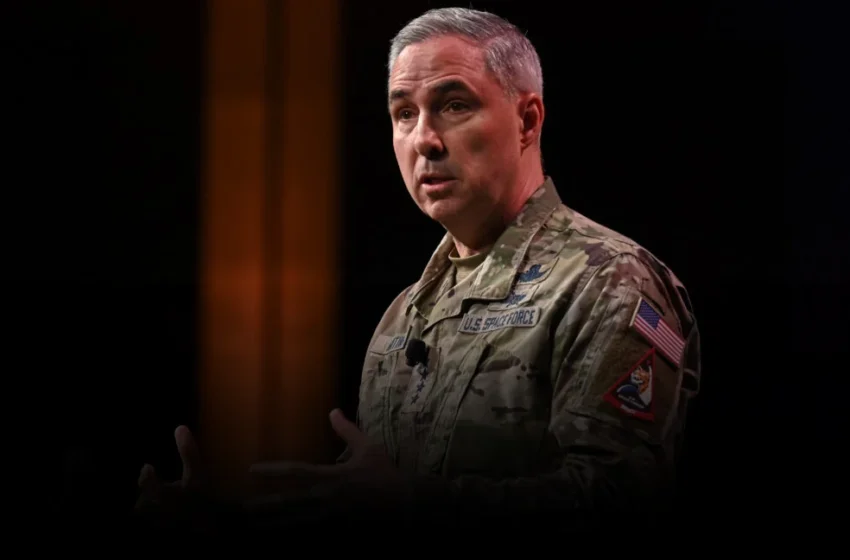
To believe that once a commercial satellite’s capabilities are integrated into a military’s warfighting strategy, it can somehow retain a pristine neutrality in the eyes of an adversary, requires a level of geopolitical naiveté few outside of Silicon Valley seem to possess. Gen. Stephen Whiting, the senior officer in charge of Space Command, noted these wargames combine military and commercial expertise to respond to simulated threats. This phrasing, while innocuous on its surface, signals a profound shift: commercial assets and personnel are now considered active participants in crafting responses to
existential space warfare scenarios, a role for which neither their shareholders nor international law are adequately prepared.
Why Washington Courts Commercial Space Partners
Washington’s embrace of commercial partners for simulations, and by extension, for potential real-world engagements, serves a clear incentive: access to cutting-edge technology and operational agility at a fraction of the traditional procurement timeline, allowing the military to project capabilities far beyond its organic reach. The commercial space sector, from satellite internet constellations to advanced sensing platforms, has far outpaced the often-lumbering pace of government acquisition and innovation. Integrating these capabilities, as Space Command aims to do with four planned Apollo Insight exercises this year, allows the US military to leverage a dynamic, rapidly evolving ecosystem.
The traditional defense industrial base, while robust, cannot compete with the sheer volume and speed of innovation seen in the broader
commercial space industry. Private companies are launching thousands of satellites, developing advanced propulsion, and pioneering on-orbit servicing at a scale and speed the Space Force — a separate entity focused on personnel and equipment for space operations — cannot match alone. By inviting these companies into its strategic planning, Space Command effectively crowdsources ingenuity, gaining a critical edge in a domain where every advantage counts. It also offloads some of the immense cost and development risk associated with building new, bespoke military capabilities.
Yet, this reliance creates a dangerous dependency. What happens when commercial interests diverge from national security imperatives? Or when a company’s global footprint, with ground stations and personnel in allied or even neutral nations, clashes with the demands of a classified US military operation? The benefits of speed and innovation are clear, but the long-term structural implications for both the Pentagon and the participating companies remain woefully underexplored. It’s a strategic choice, certainly, but one laden with unspoken caveats that could unravel under the first real-world pressure.
Geopolitical Ramifications Beyond the Orbit
The inclusion of commercial entities in classified orbital warfare simulations sends a stark message to potential adversaries like China and Russia: the United States considers all available assets, public or private, fair game in a
geopolitical space conflict. This could accelerate the weaponization of space, as these nations seek to develop countermeasures not just for traditional military satellites but for the vast and growing constellations operated by companies like SpaceX, Viasat, or Amazon. The distinction between a government satellite and a commercially operated one providing critical military support becomes academically irrelevant in the heat of a conflict. All become targets.
Furthermore, this integration complicates the already tenuous efforts towards international norms and de-escalation in space. If a commercial satellite is disabled or attacked, even if performing a military function, does that constitute an act of war against a state, or against a private entity? The ambiguity itself is a destabilizing force. Without clear international frameworks—which are currently non-existent for such scenarios—the risk of miscalculation and escalation, starting from an incident involving a seemingly innocuous
commercial payload, multiplies significantly. The international community, especially those nations with burgeoning space programs and significant commercial investment, should view these developments with deep concern.
Ultimately, the Apollo Insight wargames are more than just a simulation; they represent an explicit acknowledgement of a future where commercial space infrastructure is inextricably linked to national defense. This shift is not just about leveraging technology; it’s about fundamentally reshaping the strategic landscape of outer space, integrating commercial capabilities into military doctrine in a way that will be difficult, if not impossible, to reverse. The consequences for global stability, commercial neutrality, and the future of space as a peaceful domain are only just beginning to unfold.
