
US Tech Titans: Hostages or Negotiators in Trump’s China Summit?
- Tech
Arjun Vedanta
- 0
- 5 minutes read
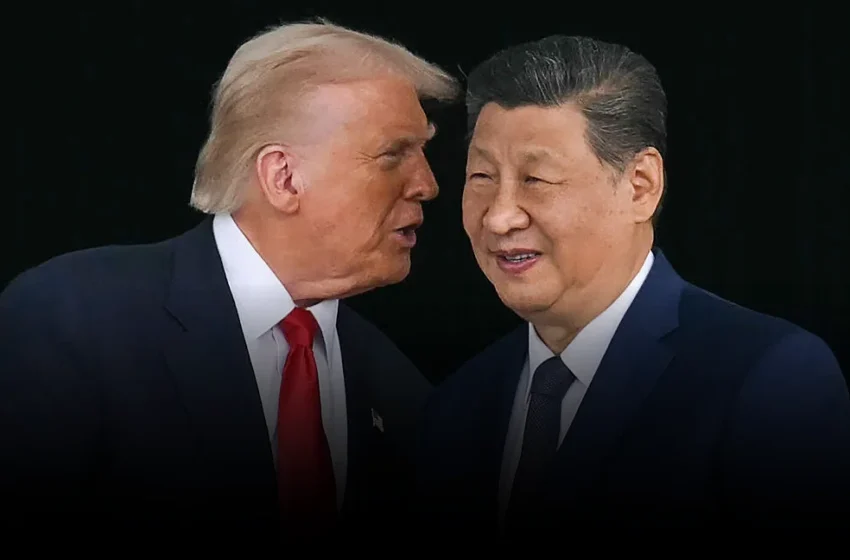
Trump’s Desperation, China’s Leverage
Donald Trump’s gambit to bring Silicon Valley’s most recognizable faces – Tim Cook, Jensen Huang, and Elon Musk – to an unprecedented summit with Xi Jinping in Beijing isn’t a show of force; it’s a public admission of a profound strategic weakness. This isn’t merely about political optics or a charming gesture of collaboration. It’s a direct response to a rapidly deteriorating geopolitical hand, one where the White House finds itself with remarkably few cards to play against a meticulously prepared Beijing.
The consensus among seasoned international observers is that Trump arrives in China with virtually no leverage. His grand plans to resolve the conflict in Ukraine, stabilize the volatile situations in Israel and Gaza, initiate a new wave of “Liberation Day” tariffs, and fundamentally diversify US supply chains have largely unraveled. Each of these objectives, if achieved, would have afforded him significant negotiating power. Instead, his administration’s escalations in Iran have only compounded Washington’s diplomatic bind, effectively handing Xi Jinping an even stronger position at the negotiating table. Beijing understands this dynamic intimately.
Bringing high-profile tech executives into this kind of political theater feels less like a strategic collaboration and more like a tactical deployment of national assets, possibly even a tacit acknowledgment of their irreplaceable role in global economic power. But why now? The incentive for this grand parade of tech luminaries is clear: to project an image of American innovation and economic vitality, hoping to offset the geopolitical shortfalls. Yet, this framing primarily benefits the administration by providing a distraction, rather than genuinely empowering the executives themselves.
The Silicon Valley Dilemma: Caught Between Geopolitics and Global Markets
The very presence of Tim Cook, Jensen Huang, and Elon Musk at such a politically charged event highlights a fundamental contradiction in US-China relations: American technological supremacy is deeply intertwined with, and often dependent on, Chinese manufacturing and markets. Apple, NVIDIA, and Tesla are not just US companies; they are global enterprises with immense investments and supply chain dependencies within China. Cook’s ‘Tim Apple’ moniker is a telling slip, a testament to his unparalleled engagement with the Chinese industrial ecosystem.
This isn’t the first time US administrations have leaned on corporate titans for diplomatic muscle. However, the current context is markedly different. The specter of a full-blown tech decoupling, or at least a significant disentanglement, looms large. For these CEOs, participating in such a high-stakes political spectacle risks transforming them from independent market leaders into unwilling proxies in a bilateral power struggle. Their companies, and by extension their shareholders, are caught in the crossfire, vulnerable to any political whims from either Washington or Beijing. One could argue their very presence inadvertently reinforces the idea that these companies are extensions of state power, rather than independent economic actors, a perception that Beijing has long cultivated about its own national champions.
The sharpest observation here is that by presenting these titans as part of a negotiating team, the Trump administration inadvertently turns them into visible markers of America’s strategic vulnerabilities, rather than its strengths. It suggests that without the market access and manufacturing might of these tech giants, the US’s economic leverage would be even weaker. This makes them not just attendees, but almost hostages to the narrative, their global business interests held captive by the immediate political imperative.
Beyond the Photo Op: A Pyrrhic Victory for American Tech?
While the immediate objective might be to secure concessions or de-escalate tensions, the long-term implications for these companies are complex. Their public association with a highly contentious political agenda could further complicate their positions in other global markets, particularly as nationalist sentiments rise across the world. European regulators, for instance, are increasingly wary of US tech dominance, and seeing these executives parade with political leaders could fuel concerns about undue influence or state-backed market manipulation.
Moreover, the summit itself offers a masterclass in asymmetrical power dynamics. China has systematically built its technological prowess, often leveraging foreign investment and know-how, while simultaneously fostering its own domestic champions. For Xi Jinping, having Cook, Huang, and Musk in Beijing is a potent propaganda victory, signaling both China’s global importance and its perceived ability to command the attention of the world’s most influential technologists. This reinforces Beijing’s narrative of being a co-equal, if not superior, technological power.
The real story here is not about a summit where American tech titans might secure specific trade deals. It’s about how Washington’s geopolitical missteps have forced its most successful private enterprises into a public display that paradoxically highlights US dependence on the very nation it seeks to constrain. The consequence is a blurring of lines between corporate autonomy and national interest, with profound implications for how future administrations will wield, or even weaponize, Silicon Valley’s immense but increasingly vulnerable global footprint.
