
Utah Data Center Debacle Exposes Global Flaws in AI Infrastructure Planning
- AI Infrastructure
Arjun Vedanta
- 0
- 5 minutes read
The Fictional Abundance of Digital Infrastructure
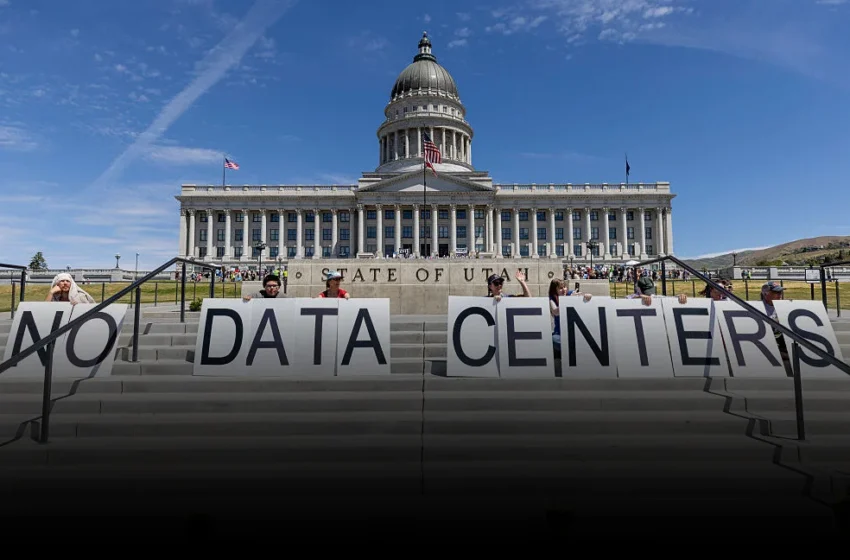
A data center project aspiring to be “nearly three times the size of Manhattan” wasn’t a Silicon Valley fantasy, but a concrete proposal for Box Elder County, Utah, now dramatically downsized. The developer, venture capitalist Kevin O’Leary, admitted, “We pissed off a lot of people,” after local opposition forced a 50% cut to his Stratos project. This isn’t merely another skirmish between developers and residents; it’s a stark preview of how the insatiable demands of artificial intelligence and cloud computing are on a direct collision course with the finite natural resources of even developed nations, forcing an urgent reckoning with the hidden costs of our digital future.
For too long, the tech industry, particularly its hyperscale data center operators, has presented its infrastructure as a clean, almost ethereal expansion. The Utah incident rips that veil away. Here, the immediate flashpoint was water: 1,900 acre-feet of it, destined for cooling servers, igniting a groundswell of local protest that saw residents pay a $15 fee just to register their comments against the transfer. This collective action, protecting the already vulnerable Great Salt Lake, signals a profound shift in public tolerance for tech’s environmental footprint.
The tech narrative often prioritizes rapid deployment and expansion, framing these projects as essential for economic growth and digital advancement. Yet, the Box Elder County setback highlights a critical blind spot. Companies like O’Leary Digital, in their pursuit of new AI compute capacity, assumed a certain passivity from local communities. O’Leary’s regret about a lack of transparency wasn’t just an admission of poor PR; it was an acknowledgment of a fundamental miscalculation in community engagement and resource planning, typical of a sector accustomed to smooth, often unchecked, expansion.
Water, Watts, and the AI Gold Rush
The Stratos project’s curtailment isn’t an isolated incident; it’s a bellwether for a global challenge that most US-centric tech reporting consistently underestimates. Across Europe and Asia, governments and utilities are already grappling with the colossal energy and water demands of digital infrastructure. Ireland, a long-standing hub for data centers, has seen its electricity grid pushed to the brink, with new projects facing increasing scrutiny and even moratoriums. Singapore, similarly, implemented a temporary moratorium on new data centers due to energy and land constraints, only recently lifting it with stringent efficiency requirements.
The current frenzy around generative AI only compounds this issue. Training large language models requires an unfathomable amount of processing power, which translates directly into astronomical electricity consumption and, crucially, massive water usage for cooling. Tech companies often tout renewable energy purchases, but this doesn’t diminish the strain on local energy grids or mitigate water scarcity in arid regions. It merely shifts the externality, often with creative accounting, rather than truly solving it. This isn’t sustainable when a single data center can consume as much water as a small city.
The incentive for developers to build these mega-projects is clear: the promise of an ever-growing market for cloud services and AI processing. The incentive for local officials, however, is a complex calculus of potential tax revenue versus inevitable environmental and social costs. This imbalance often leads to a reactive, rather than proactive, approach to regulatory hurdles, a situation perfectly illustrated by residents paying out of pocket to voice concerns rather than relying on existing oversight. It demonstrates that the current permitting and planning frameworks are often inadequate for the scale and impact of modern tech infrastructure.
Beyond Silicon Valley: A Global Reassessment of Data Geography
What the Utah situation underscores is the urgent need for a more distributed, environmentally conscious approach to digital infrastructure. The era of plopping massive, resource-intensive facilities in convenient, often remote, locations without significant local engagement is rapidly ending. Public awareness of the environmental toll of technology is rising globally, fuelled by climate change concerns and local impacts. The assumption that communities will welcome any high-tech investment, regardless of cost, is proving dangerously outdated.
The discussion must move beyond simply ‘more’ data centers to ‘smarter’ data centers. This includes exploring advanced cooling technologies that don’t rely on evaporative water, integrating data centers more deeply with urban waste heat recovery systems, and prioritizing locations with abundant, truly renewable energy sources and robust water management. Moreover, the push for digital sovereignty in many nations outside the US means that countries are increasingly demanding local data storage, but they too must confront the same resource limitations.
The Box Elder County protests reveal a critical truth: the global technology sector’s voracious appetite for processing power is now encountering the hard limits of planetary resources and local tolerance. If the industry, including its investors like Kevin O’Leary, fails to genuinely integrate environmental stewardship and community partnership into its core planning, these battles will only multiply. The choice isn’t whether to build; it’s whether we build intelligently, responsibly, and with genuine respect for the places and people whose resources we consume.
