
Viral Robot Demos: More VC Lure Than Engineering Milestone
- Robotics
Arjun Vedanta
- 0
- 5 minutes read
The Engineered Illusion of Progress
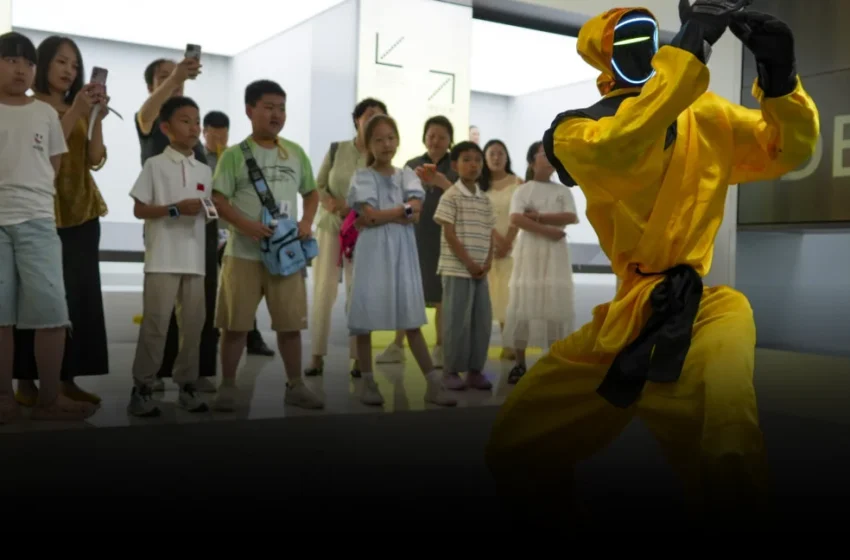
Another impossibly agile, deceptively human-like robot graces our screens, effortlessly performing a task that would challenge most people. These polished videos, showcasing everything from complex parkour to delicate object manipulation, are not merely demonstrations of engineering prowess. They are, first and foremost, masterclasses in marketing — meticulously crafted digital lures designed to capture venture capital attention, not necessarily to reflect deployable, real-world capability. This crucial distinction, often missed by those too close to the Silicon Valley echo chamber, highlights a fundamental distortion in how robotics progress is perceived and funded globally.
The human brain has a peculiar tendency to anthropomorphize, especially when confronted with a bipedal, torso-bearing machine. Jonathan Hurst, cofounder of Agility Robotics and a seasoned researcher at Oregon State University, articulated this phenomenon clearly: “People automatically extrapolate and assume that the robot that looks like a person can do all the things that a person who can dance could do—which is not true.” This inherent cognitive bias becomes a powerful tool in the hands of startups navigating a brutally competitive funding landscape. A robot arm executing a precise motion is impressive; a humanoid robot executing that same motion triggers an entirely different, and often misleading, set of assumptions about general intelligence and dexterity.
This manufactured spectacle creates a significant credibility gap. While a viral video might depict a robot gracefully handling a novel object, the painstaking engineering required to make that action repeatable, robust, and safe across millions of instances in an unpredictable environment remains largely unseen and, crucially, often undeveloped. The incentive here is stark: a captivating, shareable demonstration is far more likely to unlock a multi-million dollar investment round than an honest, technically rigorous exposition of incremental but foundational engineering breakthroughs. It benefits founders and early investors to frame aspirational visions as imminent realities.
The Global Disconnect in Robotics Investment
From Geneva to Singapore, outside the immediate gravitational pull of Sand Hill Road, the conversation around robotics sounds different. Seasoned engineers and industrial automation experts look past the choreographed stunts to the enduring challenges: power autonomy, real-time decision-making in unstructured environments, and the sheer cost of robust hardware that can withstand continuous operation. These are the unglamorous but vital hurdles that define commercial viability.
The current cycle, driven by venture capital’s enthusiasm for anything touching “AI,” risks repeating historical patterns of overhype followed by disillusionment. We saw it with early consumer VR, with a profusion of impressive demos that failed to translate into widespread utility, leading to a retrenchment. When capital flows disproportionately towards the visually spectacular rather than the industrially sound, the long-term health of the robotics ecosystem suffers. True innovation often lies in solving complex problems efficiently and reliably, not just dramatically.
Indeed, a skeptical observation reveals that many of these viral performances represent a triumph of perception management over practical engineering. The core competencies required for reliable deployment in manufacturing, logistics, or healthcare are not found in an ability to balance on one leg or stack cups once. Instead, they demand advanced perception systems, fault-tolerant mechanical design, and sophisticated control architectures that operate autonomously over extended periods without human intervention or reset. These are the bedrock achievements, yet they rarely trend on social media.
Beyond the Hype Cycle: Towards Sustainable Progress
What constitutes genuine progress in robotics, then? It is the steady, incremental advancement that allows a robot to reliably pick disparate items from a bin in a warehouse for an entire shift, or precisely assemble complex components on a factory floor day in and day out. It’s the kind of progress measured in uptime, error rates, and return on investment, not in YouTube views. Companies focused on industrial automation, surgical robotics, or critical infrastructure maintenance often operate with less fanfare but deliver concrete, measurable impact.
The challenge for the robotics industry is to foster an investment climate that values this foundational work over the immediate thrill of a viral video. The current incentive structure, which Jonathan Hurst notes allows startups to “kind of prey on that for being able to raise a lot of money,” prioritizes immediate excitement over enduring value. This risks not only burning through capital on unscalable ventures but also eroding public trust when the promised humanoid futures inevitably fail to materialize on the timeline dictated by Silicon Valley’s funding rounds. For robotics to truly move beyond the laboratory and into widespread utility, its narrative must shift from the improbable spectacle to the undeniable, if less dramatic, reality of robust, repeatable innovation.
