
West Antarctica’s Vanishing Ice: A Reckoning for Climate Models
- Special
Arjun Vedanta
- 0
- 6 minutes read
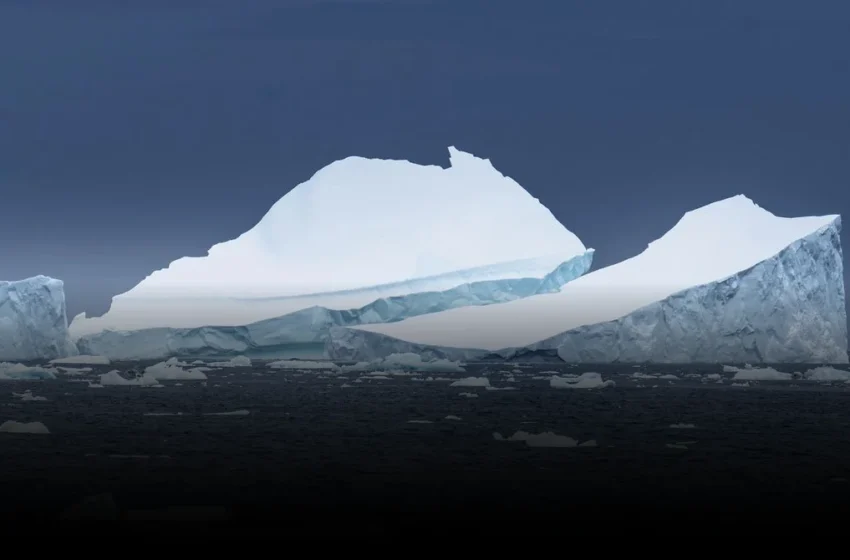
Antarctica’s Unforeseen Tipping Point
The Bellingshausen Sea isn’t just missing an expanse of winter sea ice the size of France; it is missing the bedrock assumption that climate change unfolds predictably. This rapid, localized collapse of 650,000 square kilometers of ice in West Antarctica exposes a critical flaw in our collective understanding: the planetary system isn’t merely warming, it’s demonstrating abrupt regional phase transitions that defy existing projections and accelerate global consequences. This isn’t a future scenario to be debated; it is happening right now, challenging the very models that inform our global climate strategies and suggesting a far more volatile future.
For the third time in four years, the Bellingshausen Sea — typically blanketed by ice in June — is virtually barren. Dr. Will Hobbs, an Antarctic sea ice expert, declared the situation “depressing,” adding, “I don’t think we will see sea ice there any more. It’s done.” His stark assessment underscores a pervasive dread within the scientific community as long-term averages for ice extent, derived from satellite observations between 1991 and 2020, are becoming increasingly irrelevant benchmarks for a climate behaving non-linearly. The persistent failure of ice to form is not just a data point; it’s a siren call, indicating that a critical regional ecosystem is past its breaking point.
The repercussions are immediate and dire for Antarctic ecosystems. Krill, the fundamental energy source for countless species, typically find refuge and graze beneath the winter ice. Without this protection, their populations face direct predation and diminished food supply. This disruption echoes through the food web, directly impacting species like emperor penguins, which suffered a “catastrophic breeding failure” in late 2022 due to ice loss. That single event prompted UN advisers to elevate their status to “endangered,” a reactive measure to a collapsing habitat. Dr. Peter Fretwell of the British Antarctic Survey highlights the problem: “Sea ice is forming too late and breaking up too early,” leading to reduced breeding success and longer trips for foraging.
Beyond Ice Loss: The Feedback Loop Accelerates
The implications extend far beyond local biodiversity. The Bellingshausen Sea abuts the Pine Island and Thwaites glaciers, two of Antarctica’s most significant contributors to global sea level rise. Dr. Phil Reid from Australia’s Bureau of Meteorology warns that the absence of protective sea ice for extended periods allows floating ice shelves in front of these glaciers to break up faster, thereby accelerating the loss of land-based ice into the ocean. This is where localized ecological disaster cascades into a global threat, directly impacting coastal cities and populations worldwide.
Moreover, the absence of sea ice creates a potent feedback loop for regional warming. Just this month, the Antarctic Peninsula experienced an extreme temperature spike, peaking at 15.4 degrees Celsius — more than 20 degrees Celsius above the historical average for early June. While specific attribution studies are pending, Dr. Hobbs reasonably suggested the heatwave was “made worse by the lack of sea ice.” Ordinarily, sea ice acts as a reflective blanket, deflecting solar radiation and moderating temperatures. Its absence allows the ocean to absorb more heat, intensifying atmospheric warming and creating conditions even less conducive to future ice formation.
This dynamic challenges the very notion of a gradual, predictable warming trajectory. What we are witnessing is not a slow creep but a punctuated acceleration, a series of regional shocks that ripple outwards. The incentive for scientists to publish these alarming findings now is clear: to shift the global discourse from abstract long-term climate projections to the immediate, tangible reality of collapsing systems. They are, in essence, trying to force a re-evaluation of the timeline and urgency of climate action, using real-time data as their starkest warning.
The Peril of Predictive Models in a Changing Climate
The truly unsettling implication of the Bellingshausen Sea’s plight lies in what it suggests about our predictive capabilities. For years, climate modeling, often leveraging sophisticated AI and machine learning techniques, has sought to forecast the future with increasing precision. Yet, these models, built on historical data and observed trends, struggle to account for the abrupt, non-linear shifts now occurring. The reality on the ground, or rather, on the water, seems to be outpacing even the most pessimistic projections, challenging the fundamental assumptions underpinning our understanding of glacial dynamics and ocean warming.
Consider the stark contrast between a 1991-2020 average and the current observation. The ‘average’ itself becomes a moving target, an artifact of a climate state that no longer exists. This isn’t merely an anomaly; it’s a systemic warning that our scientific frameworks, while robust, are constantly playing catch-up to an accelerating reality. The data points from places like the Esperanza base, recording unprecedented June temperatures of 15.4°C against an average of -6.2°C, are not just isolated records. They are symptoms of a broader, systemic failure to adequately account for positive feedback loops and regional tipping points in global climate modeling.
The Silicon Valley bubble often fixates on technological innovation as the ultimate solution, but the crisis in West Antarctica demands a different kind of reckoning. It’s a call to re-evaluate how we model complexity, how we interpret ‘average’ in a period of rapid change, and crucially, how we translate data into urgent, systemic action. The Bellingshausen Sea is more than just a geographic location; it’s a living laboratory demonstrating that the planet’s systems possess an unsettling capacity for rapid, unforeseen change, rendering our carefully constructed predictions increasingly tenuous. The real story here isn’t just the vanishing ice, but the vanishing predictability of our climate future.
