
Your DNA for Dissent? DHS Crosses a Line.
- Special
Arjun Vedanta
- 0
- 6 minutes read
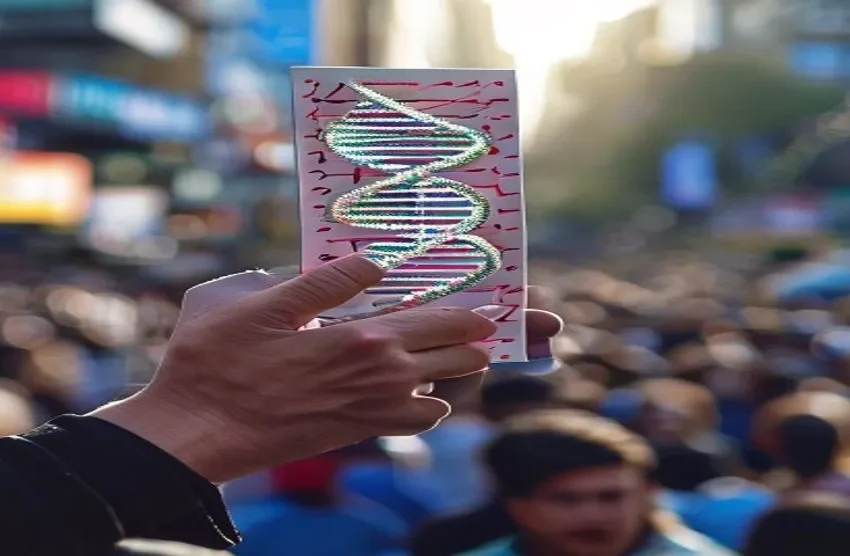
When news broke about the Department of Homeland Security (DHS) and FBI allegedly seizing DNA samples from peaceful protesters, my first thought wasn’t about the specific legal challenge. No, my mind immediately went to the bigger picture, the one we’ve been sidestepping for years: what happens when the government decides your biological identity is just another data point to be collected, stored, and cross-referenced?
This isn’t a new fight, not by a long shot. I’ve watched companies, and yes, governments, slowly chip away at privacy under the guise of security or convenience since the dial-up days. But this feels different, more invasive, and frankly, a chilling new precedent.
The Unsettling Truth of DHS DNA Collection
Let’s be brutally honest about what’s happening here. Four protesters, arrested during what’s been dubbed “Operation Midway Blitz” in Chicago, are suing to stop the federal government from taking their DNA. They’re not just accusing the feds of wrongfully arresting them; they’re shining a harsh light on the subsequent act: collecting their genetic profiles, uploading them to government databases, and storing their actual DNA samples. Permanently.
Permanently. Think about that for a second. This isn’t about fingerprints anymore; we’re talking about the very blueprint of your existence. What I find fascinating here – and by fascinating, I mean deeply troubling – is the brazenness. It’s a direct challenge to the First and Fourth Amendments, as laid out in their Illinois district court complaint. It’s an alleged violation of the Administrative Procedure Act too, but honestly, that’s just window dressing when your fundamental liberties are at stake.
I’ve watched companies try to justify every single data grab imaginable, from your browsing habits to your purchase history. The argument is always the same: security, efficiency, preventing bad actors. But who actually benefits here? And at what cost to the individual? The “peaceful protest” part of this story is not incidental; it’s the whole point. This isn’t about hardened criminals. This is about dissent.
From Biometrics to Surveillance
We’ve been dancing around the edges of a national biometric database for decades. Remember the early days of facial recognition in public spaces? Or the debates around national ID cards? Each step felt incremental, a small compromise for a perceived gain. But DNA collection from peaceful protesters? That’s not incremental; that’s a leap.
The tech itself has evolved far beyond what most people comprehend. It’s not just about identifying a match anymore. With advancements in genomics and AI, these samples could potentially be used for far more than simple identification. Predictive analytics, genealogical mapping, even susceptibility to certain conditions – the data contained within our DNA is a goldmine. And once it’s in a database, it’s rarely just ‘securely’ stored and forgotten. It’s ripe for misuse, mission creep, and, inevitably, breaches.
According to a 2023 IBM report, the average cost of a data breach hit a record $4.45 million. And that’s just the financial cost. The cost to civil liberties, to trust in government, is incalculable.
The Chilling Effect and What We’re Not Talking About
Nobody’s talking about the real problem — which is the chilling effect this has on free speech and the right to assemble. If showing up to a protest means you might have your DNA taken, potentially stored forever, how many people will think twice before exercising their constitutional rights? This isn’t just about the four individuals in Illinois; it’s about every single person who might ever feel the need to stand up and be counted.
This feels a lot like when the government pushed for sweeping surveillance powers after 9/11, promising they would only be used on the ‘bad guys.’ History teaches us a harsh lesson there: powers granted during perceived crises have a nasty habit of expanding far beyond their original intent. We saw it with the Patriot Act. We’ve seen it with police forces acquiring military-grade equipment. It never stops where it starts.
The Inevitable Data Traps
Think about the sheer volume of data involved. Every protest, every arrest, every sample adds to an ever-growing repository of highly personal information. What are the protocols for access? For deletion? For correction? What happens when this data is cross-referenced with other federal databases, or even sold off to private entities under some future legislative loophole? (And yes, that’s as scary as it sounds.)
The monetization traps are real, even if indirect. Your genetic profile, once digitized, becomes a commodity. Not in the direct sense, perhaps, but its existence in a government database has implications for everything from insurance rates to future employment prospects, depending on how regulations (or the lack thereof) evolve. The hidden costs are privacy itself, and the erosion of trust in democratic institutions.
Looking Ahead: A Battle for Biometric Freedom
This lawsuit isn’t just a legal skirmish; it’s a critical battle in the ongoing war for biometric privacy. The idea that participating in a lawful, peaceful protest could lead to the permanent collection of your DNA is an affront to the very principles of an open society. It signals a move towards a state where dissent is not just monitored, but cataloged at the deepest biological level.
I’ve seen enough hype cycles collapse, enough well-intentioned technologies weaponized, to know that this is a moment we cannot afford to ignore. The systems we build today, the precedents we set, will define the freedoms our children (and their children) inherit. We have to demand transparency, accountability, and a clear understanding of the limits of government power when it comes to our most intimate data.
Because once that data is out there, truly out there, you can’t get it back. Not ever.
