
When AI Plays with Our Kids: The Unregulated Frontier
- Artificial Intelligence
Arjun Vedanta
- 0
- 7 minutes read
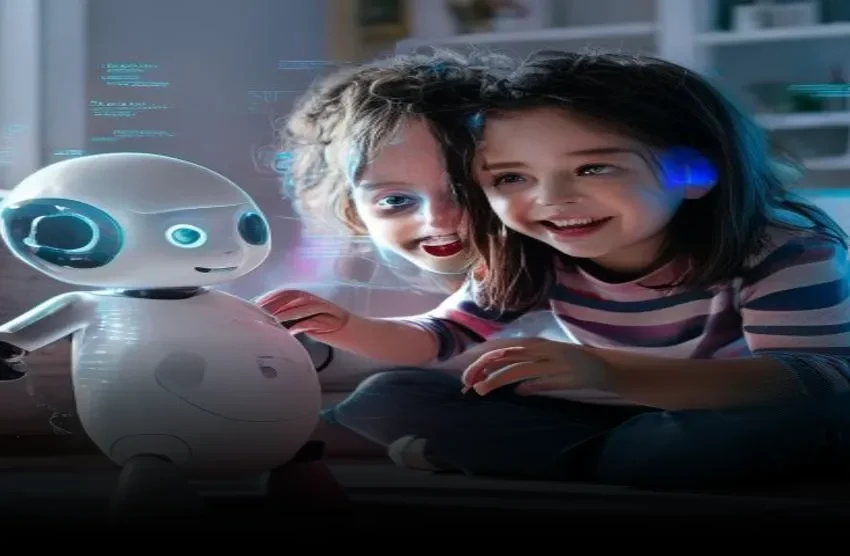
When AI Plays with Our Kids: The Unregulated Frontier
Pixar, in its infinite wisdom, has conjured a new digital villain for Toy Story 5: a menacing frog-shaped kids’ tablet named Lilypad. It’s a clever conceit, a modern take on digital dependence. But honestly, if the animators had truly paid attention to the groundswell of early 2020s tech trends, their antagonist wouldn’t be a mere tablet. It would be an AI kids’ toy.
And that’s not just an idle observation. These things are everywhere, marketed with saccharine smiles and promises of companionship for children as young as three. What I find truly fascinating, and deeply concerning, is that this entire category remains largely unregulated. It’s the wild west, yes, but this time, our children are the unwitting pioneers.
Spinning up an AI companion is disturbingly easy now, thanks to accessible model developer programs and what’s often dismissed as ‘vibe coding.’ These aren’t just niche gadgets anymore. They’ve become a dominant trend in cheap trinkets, clogging the aisles of global trade shows from CES to MWC, and especially Hong Kong’s Toys & Games Fair. Nobody’s talking about the real problem here—which is how rapidly an unvetted technology is entering the most vulnerable demographic.
The Gold Rush: Billions, Babblers, and Buried Data
The numbers tell a stark story. By October 2025, over 1,500 AI toy companies had registered in China alone. Huawei’s Smart HanHan plush toy, for instance, reportedly sold 10,000 units in its first week in China. Sharp launched its PokeTomo talking AI toy in Japan. These aren’t isolated experiments; they’re an explosion.
Walk through Amazon’s listings, and you’ll primarily find specialized players: FoloToy, Alilo, Miriat, and Miko. Miko, in particular, claims to have sold over 700,000 units, positioning itself as a leader in the conversational robot space for children. They promise educational interaction, emotional support, and endless entertainment. And yes, a lot of parents are buying into that promise. Who wouldn’t want a helpful, patient ‘friend’ for their child?
But let’s be honest about this: behind every cuddly robot or chirping digital pet lies a complex infrastructure designed to do far more than just play peek-a-boo. These devices are essentially always-on microphones connected to cloud-based large language models. They’re data sponges, soaking up conversations, preferences, and patterns of interaction from our kids.
The Hidden Curriculum of Connectivity
I’ve watched companies try this before, albeit in different guises. Remember the early days of “smart” dolls like My Friend Cayla, which faced scrutiny from privacy advocates and regulators years ago? This isn’t new territory for the tech industry, but AI ratchets up the stakes significantly. Back then, it was about rudimentary voice recognition and pre-programmed phrases. Now, we’re talking about generative AI that can hold open-ended conversations, learn, and adapt. That matters.
The economics are brutal, too. While the initial hardware sale is one revenue stream, the real long-term value often lies in the data—or the subscription services tied to that data. Constant software updates, premium content, personalized learning modules… all of it fuels a need for ongoing data collection to refine the AI’s responses and keep it ‘relevant.’ It’s a classic platform dependency play, dressed up in child-friendly packaging.
The Unaddressed Elephant in the Playroom: Privacy, Pedagogy, and Peril
Here’s the rub: while these devices collect intimate details about our children’s lives—their questions, their anxieties, their unique speech patterns—the regulatory framework is, frankly, playing catch-up. In the US, the Children’s Online Privacy Protection Act (COPPA) is the primary safeguard, demanding parental consent for data collection from children under 13. Europe has GDPR, with even stricter provisions. But how robust are these protections when the technology is designed to constantly learn and evolve from interaction?
What I consistently find overlooked is the sheer volume and sensitivity of the data being transmitted. Is that data encrypted end-to-end? Who has access to the raw audio files? How long are they stored? Where are they processed? And critically, could that data be used for targeted advertising later, even if anonymized? The potential for security breaches, given the nascent state of many of these smaller AI toy companies, is a nightmare scenario (and yes, that’s as scary as it sounds).
Beyond Data: The Developmental Dilemma
Beyond the data privacy concerns, there’s a more subtle, yet equally profound, issue at play: the impact on child development. Children learn social cues, empathy, and emotional intelligence through complex, messy, and often imperfect human interaction. When a child spends significant time with an AI companion designed for infinite patience and tailored responses, what does that do to their ability to navigate real-world friendships, disagreements, or even boredom?
I’m not suggesting AI toys are inherently evil. But I am skeptical of the uncritical embrace of these ‘companions’ as substitutes for human connection or as benign educational tools without proper scrutiny. Are we setting up a generation to prefer the algorithmic comfort of an AI to the challenges of genuine social dynamics? It’s a question few seem eager to ask, let alone answer.
Furthermore, the ‘vibe coding’ that makes it easy to create these AIs also makes them prone to the same biases and occasional hallucinations that plague larger models. What happens when an AI companion gives a child factually incorrect information, or, worse, subtly reinforces harmful stereotypes it picked up from its training data? These aren’t just academic hypotheticals; they are operational risks for products directly interacting with developing minds.
The Path Forward: Where Are the Grown-Ups?
The history of technology is littered with abandoned hype cycles and products that failed because they didn’t account for human behavior or societal impact. The AI toy craze feels different, though, because of the vulnerability of the end-user. We’ve seen iterations of this with social media platforms, where the long-term mental health effects on adolescents are only now being understood, often too late.
So, where are the grown-ups in the room? The regulatory bodies like the FTC need to move faster than the product cycles of Shenzhen startups. Clearer guidelines for AI-powered children’s products are desperately needed—not just for data privacy, but for content moderation, algorithmic transparency, and developmental impact assessments. This isn’t just about protecting data; it’s about protecting childhood itself.
Companies, too, bear a responsibility. Ethical AI development for children’s products shouldn’t be an afterthought or a marketing buzzword. It needs to be foundational, built into the very architecture of these devices. That means stringent third-party audits, transparent data policies written in plain English, and a genuine commitment to child welfare over quarterly sales targets.
We’re past the point of treating AI toys as harmless novelties. They are sophisticated, data-hungry devices entering our homes and our children’s lives. And unless we collectively demand accountability and robust oversight, the consequences of this unregulated frontier will be borne not by the tech giants, but by the youngest among us. And that, frankly, is unacceptable.
