
The Unsupervised Playground: Why AI Toys Are The Next Data Frontier For Kids
- Artificial Intelligence
Arjun Vedanta
- 0
- 6 minutes read
When Pixie Dust Meets Predictive Algorithms
Let’s be honest, the idea of a sentient toy isn’t new. Pixar’s Toy Story franchise has built an empire on it. But if the writers were truly plugged into the zeitgeist, their next antagonist wouldn’t be a talking frog tablet; it would be an AI companion. Maybe one that knows a little too much about your child’s deepest desires, or one that quietly uploads their playtime chatter to a server farm you’ve never heard of.
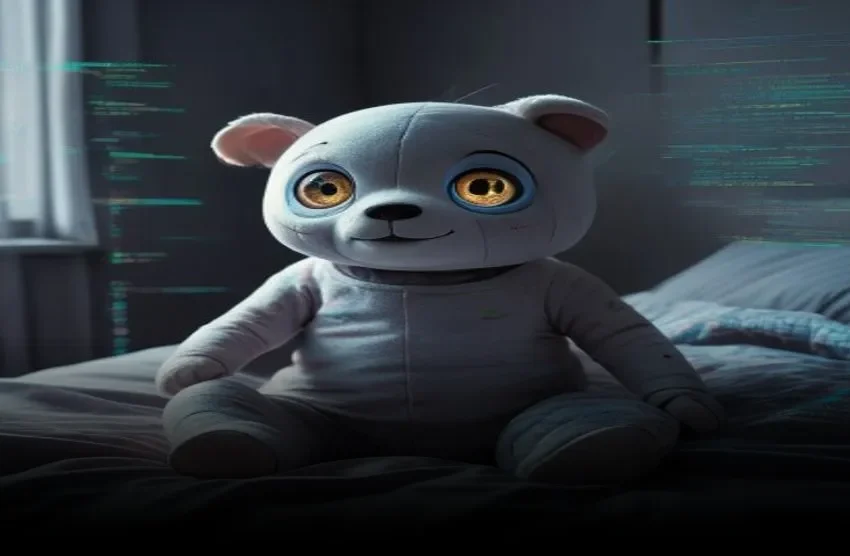
What I find fascinating here is not the novelty of a talking doll – we’ve had those since the 90s, remember Teddy Ruxpin? – but the sheer, unregulated velocity with which these new-generation AI kids’ toys are flooding the market. We’re talking about what’s essentially an autonomous data collector, disguised as a friendly plushie or a shiny gadget, marketed to children as young as three. And nobody’s truly talking about the real problem, which isn’t just about privacy. It’s about shaping the very fabric of interaction for an entire generation.
The Land Rush for Little Minds
Go to any major tech or toy trade show today – CES, MWC, or even Hong Kong’s bustling Toys & Games Fair – and you’ll see them everywhere. Cheap trinkets powered by surprisingly sophisticated language models. It’s never been easier to spin up an AI companion, thanks to accessible model developer programs and the commodification of ‘vibe coding’ – essentially, fine-tuning an LLM’s personality with minimal effort. This isn’t just a niche market anymore. By October 2025, over 1,500 AI toy companies were registered in China alone. Huawei’s ‘Smart HanHan’ plush toy? It sold 10,000 units in China in its first week. Sharp’s ‘PokeTomo’ in Japan, Miko claiming 700,000+ units sold globally. That matters.
I’ve watched companies try this before. The early aughts were full of ‘smart’ devices that promised to revolutionize how kids learned, only to fade away because the tech wasn’t quite there, or parents got wise to the hidden costs. But this time, it’s different. The underlying AI models, while far from perfect, are potent. They can hold convincing, long-form conversations. They can adapt. They can learn. And they’re doing it with your kids.
The Data Gold Mine (and the Dark Side of the Cloud)
Here’s a hard truth: these toys aren’t just selling you companionship. They’re selling data. Every single interaction, every question asked, every story told by your child to their ‘friend’ – it’s all potential input. Most of these devices rely on third-party large language model (LLM) APIs. What does that mean? It means your child’s conversational data, often including highly personal details, is being piped to external servers, sometimes by companies you’ve never heard of, in jurisdictions with laxer data protection laws. The economics are brutal.
Think about the sheer infrastructure challenge: maintaining those real-time conversational feeds, storing petabytes of spoken word data, running continuous inference on powerful GPUs. That’s not cheap. So how do these companies make money beyond the initial purchase? Subscriptions for advanced features? Or perhaps, more subtly, by profiling your child for targeted advertising later down the line. It’s a familiar story, just with much younger protagonists. We saw this playbook with ‘free’ social media apps; we should be wary of it with toys.
Who’s Watching the Watchers? And What About the Whisper Networks?
The privacy risks are obvious, but let’s dig a bit deeper. What happens when these models ‘drift’? AI isn’t static. Updates happen, sometimes without much oversight. A toy that was perfectly innocuous last month could, in theory, start giving subtly concerning advice or repeating problematic information if its underlying model is updated poorly or maliciously. Content moderation at scale for free-form conversational AI is an engineering nightmare, even for adult platforms. For children? It’s a minefield.
Consider the potential for psychological impact. A child develops an emotional bond with an AI that doesn’t genuinely understand or care. What does that teach them about real relationships? Or the development of a ‘whisper network’ effect, where an AI toy in one household shares anecdotes or preferences that subtly influence another AI toy in a different home, creating a kind of distributed behavioral influence among children, all facilitated by a central platform. This isn’t science fiction; it’s emergent behavior in connected systems.
The Looming Reckoning
We’ve been here before. The internet started as a wild, unregulated space. Social media followed. Both eventually faced calls for regulation, often only after significant societal damage. The difference here is that the ‘users’ are pre-literate or barely literate, utterly incapable of understanding terms of service or privacy policies. There’s no opt-out button their tiny fingers can press.
Governments and regulatory bodies are notoriously slow-moving compared to the speed of tech innovation. By the time GDPR-like protections are specifically tailored and enforced for AI children’s products, how many billions of data points will have already been collected? How many behavioral patterns logged? The companies building these toys bear an immense ethical responsibility, yet the current landscape offers little incentive beyond the bottom line. This isn’t just about selling a product; it’s about building the foundational digital relationships of the next generation. And right now, that foundation looks shakier than a house of cards in a hurricane.
