
Paleoproteomics: The AI Frontier Unlocking Million-Year-Old Data
- Artificial Intelligence
Arjun Vedanta
- 0
- 6 minutes read
A million years is a long time for any data to persist, let alone to be read. For decades, the timeline for retrieving meaningful genetic information from ancient remains was believed to have a hard expiry date, a point beyond which DNA degradation rendered the task impossible. Yet, an extraordinary recent breakthrough – attributing inherited Homo erectus DNA in modern humans via Denisovans – isn’t just a revelation in human history; it signifies a quiet revolution in how we approach the recovery of profoundly ancient, fragmented information.
This isn’t a story for the consumer genomics crowd. While Silicon Valley obsesses over personal ancestry kits and CRISPR gene editing, a different, more fundamental transformation is unfolding in the laboratories of paleoscience and bioinformatics. It’s about pushing the absolute limits of data retrieval from the deepest archives imaginable: the fossil record itself. The key, it turns out, lies not in DNA, but in proteins, challenging our long-held assumptions about what constitutes ‘recoverable’ biological data.
Beyond the Genetic Shelf Life: Protein’s Enduring Signal
The double helix, for all its elegance, is surprisingly fragile outside the protective warmth of a living cell. Without constant repair enzymes, the molecule fragments, its bases mutate, and information is lost to the relentless march of entropy. This biological reality has long set a practical ceiling on what paleogeneticists could achieve, limiting direct DNA sequencing to remains typically under a few hundred thousand years old, even in ideal, cold, dry conditions. Homo erectus, existing over a million years ago, always remained firmly on the far side of that hard limit for traditional genetic analysis.
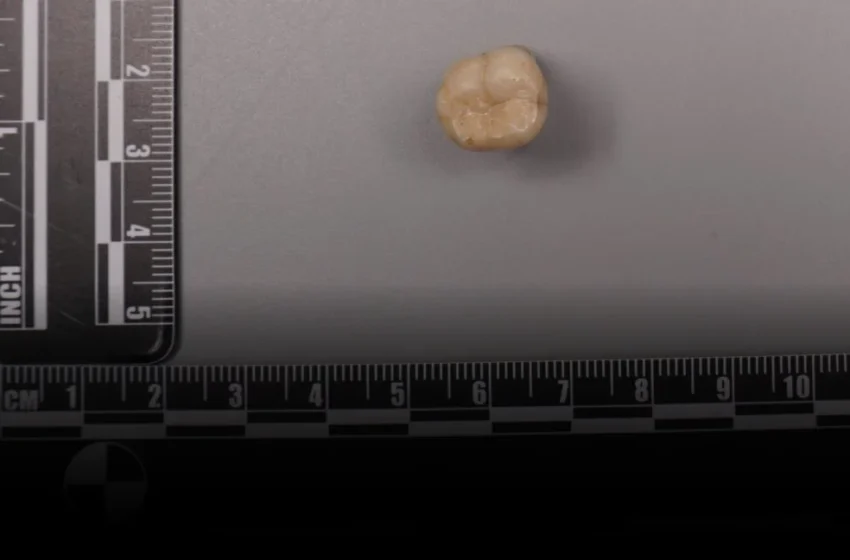
Enter paleoproteomics. While DNA buckles under the weight of millennia, proteins, particularly those embedded within mineralized tissues like tooth enamel, possess a vastly superior shelf life. These complex chains of amino acids, acting as the structural and enzymatic workhorses of life, degrade at a different, often much slower rate. They offer an alternative, complementary archive of biological information, one that persists long after the last legible strand of DNA has turned to dust. This isn’t merely a workaround; it’s a fundamental re-evaluation of data medium resilience.
The implication for data scientists and bioinformaticians should be clear: when your primary data source is too degraded, an adjacent, more robust dataset often holds the key. It’s a lesson applicable far beyond the fossil record, speaking to the broader challenge of long-term digital preservation and the necessity of redundant, diverse encoding strategies for information deemed truly vital. The scientific community’s ability to pivot from DNA to proteins demonstrates a pragmatic flexibility in data recovery that many enterprise architects could learn from.
The New Archaeology of Data: Computational Sifting
The ‘data’ locked within ancient proteins isn’t a neat sequence waiting for a scanner. Instead, it arrives as a highly fragmented, chemically altered signal, a molecular whisper across geological time. Extracting usable information – identifying specific amino acid sequences and then correlating them to specific proteins and, ultimately, to species-level distinctions – demands sophisticated mass spectrometry and, crucially, advanced bioinformatics algorithms.
This is where the quiet infrastructure of artificial intelligence truly shines. Machine learning models, trained on vast protein databases and degradation patterns, become indispensable for pattern recognition, noise reduction, and inferring original structures from partial data. Without such computational scaffolding, the analysis of ancient proteomics would remain an anachronistic curiosity, not a pathway to rewriting evolutionary textbooks. What’s often missed in the hype around such discoveries is the brute computational force required to wring coherent narratives from these molecular echoes, a challenge that makes many modern big data problems look comparatively clean. Indeed, I would argue that the ingenuity here lies less in the initial discovery and more in the sustained, intricate algorithmic work that makes such a discovery legible to us.
Consider the scale: piecing together a million-year-old genetic lineage from protein fragments is functionally similar to reconstructing a corrupted terabyte database from a handful of checksums and cached remnants. The complexity isn’t in the amount of data, but its quality and fragmentation, demanding a level of inferential power only now becoming widely available. This is less about processing sheer volume and more about intelligent, contextual reconstruction – a frontier for AI that is arguably more impactful than merely optimizing ad delivery.
The renewed global push into deep historical genomics, powered by breakthroughs in paleoproteomics, isn’t purely academic. It’s driven by the very real incentive to unlock novel biological insights, potentially for future biomedical applications, by understanding the full breadth of human and ancestral genetic diversity. This ancient information could harbor keys to disease resistance or unique biological adaptations, making the investment in advanced protein analysis a long-term strategic play for biotech industries worldwide.
A Wider Lens on Evolutionary Networks
The ability to push the informational frontier back ‘over a million years ago,’ as was the case with Homo erectus, fundamentally alters the scope of our historical inquiry. It moves us beyond mere timelines and into the intricate, messy reality of evolutionary network effects – species interbreeding, exchanging genetic information, and influencing subsequent lineages in ways previously obscured by the limits of ancient DNA. Our global tech perspective makes us keenly aware that no system, biological or digital, operates in isolation.
For readers accustomed to the fast-paced, often siloed world of modern technology, this serves as a potent reminder: our own human operating system carries legacy code from ‘earlier versions’ like Homo erectus, integrated through intermediaries like Denisovans. Understanding these deep historical interoperability layers offers a crucial, long-term perspective on resilience, adaptation, and the unexpected persistence of genetic ‘features’ across vast timescales. The tidy linear progression of evolution, much like technological advancement, proves to be a convenient fiction.
The breakthroughs in paleoproteomics are not merely adding footnotes to existing knowledge. They are enabling a truly global perspective on ancestry, connecting disparate branches of the evolutionary tree that were previously unreachable. This isn’t just about human history; it’s about the very methodologies we use to reconstruct any complex, long-degraded system, from ancient biological networks to the archived digital footprints of early internet protocols. The lessons learned here about data resilience and inferential computation will undoubtedly ripple into other domains, reinforcing the idea that the greatest data challenges often lurk in the oldest, most fragmented datasets.
