
FCC’s ‘The View’ Probe Signals Alarming Erosion of Regulatory Independence
- Tech
Arjun Vedanta
- 0
- 6 minutes read
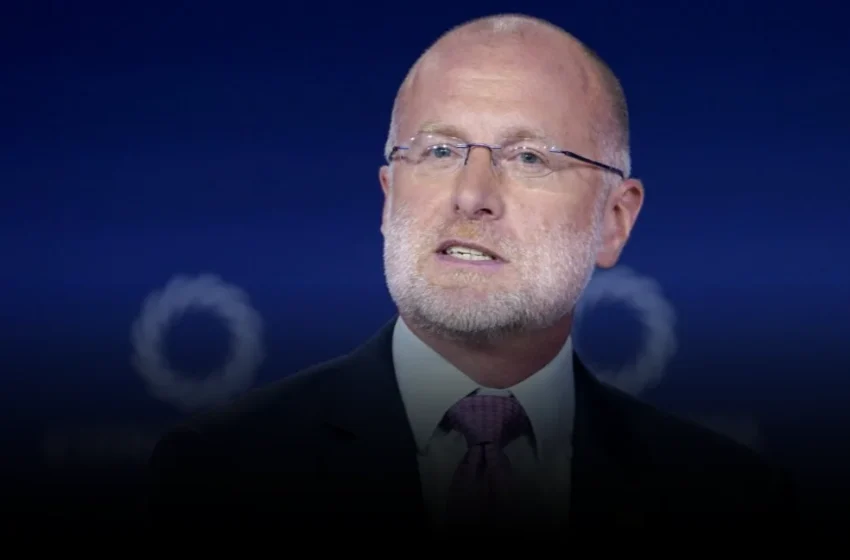
The Federal Communications Commission, a body theoretically insulated from political whims, is openly leveraging its regulatory power to investigate ABC’s talk show The View, framing the inquiry around whether it constitutes a “bona fide news interview program.” This isn’t merely a pedantic re-examination of decades-old broadcast standards; it is a stark, public declaration that a critical government agency is now a direct instrument of partisan political retribution, a shift with profound implications for media independence far beyond American shores.
The FCC Media Bureau, acting under Chairman Brendan Carr, has initiated a public comment proceeding to determine if The View qualifies for an exemption from the equal-time rule—a regulation designed to ensure equitable airtime for political candidates on non-news programming. This move openly embraces President Trump’s assertion that the FCC is no longer an independent agency, turning regulatory scrutiny into a cudgel against broadcasters perceived as disloyal. The immediate effect is a chilling message to any network that might host content critical of the administration, signaling a dangerous erosion of the institutional safeguards meant to prevent such political interference.
Beyond the ‘Equal-Time’ Charade: A New Era of Weaponized Regulation
The pretext for this investigation, the equal-time rule, is itself a relic of an earlier broadcast era, designed to prevent terrestrial television stations from unfairly influencing elections. The Media Bureau’s public notice quotes, “Decades ago, Congress made the decision to prevent covered broadcast television programs from being used to advance certain partisan political purposes,” and to “ensure that no legally qualified candidate for office is unfairly given less access to the public airwaves than their opponent.” Yet, The View, an opinion-driven talk show, has never pretended to be a hard news bulletin.
The real target here isn’t media fairness; it’s the perceived political leanings of a popular program, and by extension, its network. The incentive for this announcement is transparent: it’s an act of political payback, designed to pressure a prominent media outlet and send a clear, unequivocal warning to other broadcasters about the potential costs of dissent. This isn’t about ensuring equal access; it’s about signaling the dangers of critical commentary within the tightly controlled ecosystem of broadcast licenses and public airwaves.
This episode exposes a fundamental contradiction: an agency tasked with upholding broadcast integrity is actively undermining its own perceived impartiality. The very mechanism meant to ensure fairness is being weaponized to achieve partisan ends, making a mockery of the regulatory process and setting a precedent that future administrations, regardless of their political stripe, will undoubtedly exploit. It moves the FCC from a neutral arbiter of technical and content standards to an overt player in the political arena, a role for which it was never intended.
The Global Echo: From Independent Regulator to Political Enforcer
From Geneva to Singapore, the concept of independent regulatory bodies has been a cornerstone of stable, functioning democracies. The idea is simple: critical sectors like telecommunications, finance, or media need oversight free from immediate political pressure, allowing for rational decision-making based on expertise and public interest, not electoral cycles. What we are witnessing with the FCC’s action is a blatant attack on this foundational principle, mirroring concerning trends observed in more authoritarian states where media regulatory bodies are routinely bent to the will of the ruling party.
While Silicon Valley reporters often fixate on content moderation policies on digital platforms like Facebook or X, they sometimes miss how the fundamental structures of broadcast media regulation are being dismantled. The FCC’s move is not just a domestic squabble; it’s a global signal. It normalizes the idea that a nation’s communication infrastructure can be controlled or threatened for political ends. This structural shift is far more insidious than a single content moderation controversy, as it chips away at the institutional credibility necessary for a free press to thrive.
When an FCC Chairman openly embraces the notion that the agency is no longer independent and then uses that leverage to investigate a television program because a President “dislikes” it, the veneer of objectivity is not merely chipped; it’s shattered. This isn’t about digital privacy or antitrust; it’s about the basic integrity of a nation’s media ecosystem, placing it directly under the thumb of partisan political operatives.
A Precedent That Haunts All Media Platforms
While the equal-time rule specifically targets broadcast television, the precedent established by this FCC action will inevitably cast a long shadow over other forms of media and communication. The lines between traditional broadcast and digital platforms are increasingly blurred. As content streams across various internet protocols and applications, the willingness of a powerful regulator to intervene for overtly political motives could easily inspire similar pressures on streaming services, social media companies, and other digital content providers.
The notion that an independent commission can be openly instrumentalized to punish media outlets creates a dangerous template. Tomorrow, it might be about ‘The View,’ but the day after, it could be about a podcast network, a specific YouTube channel, or a news website. The argument will inevitably shift from “equal time” to “fairness doctrine” or “misinformation,” all weaponized to silence inconvenient voices under the guise of public service. This move sets a deeply disturbing example for how government agencies can be co-opted to serve political agendas, undermining the very premise of a pluralistic media landscape.
The true danger is not just the immediate impact on ABC or The View, but the broader signal to every media organization and indeed, every regulatory body, worldwide. It tells them that independence is negotiable, and compliance, not public interest, is the ultimate goal. This isn’t a battle over broadcast minutiae; it’s a fight for the soul of regulatory integrity itself, a battle that appears, at present, to be losing ground.
