
Blue Origin’s New Glenn Explosion: A Billionaire’s Ambition Meets Commercial Space Brutality
- Tech
Arjun Vedanta
- 0
- 4 minutes read
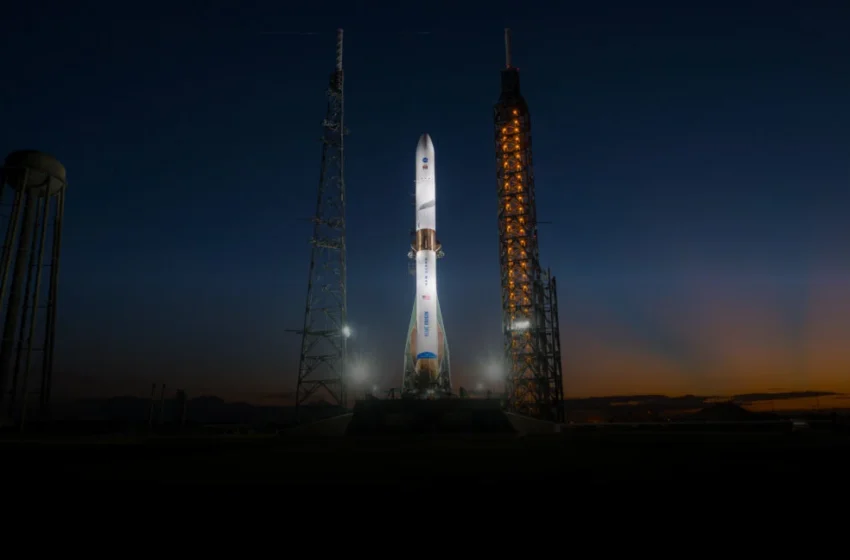
A Conflagration, But What Does It Truly Incinerate?
Thursday evening’s spectacular conflagration at Blue Origin’s LC-36A launch site was more than a mere engineering setback; it was a potent, visible symbol of the immense competitive pressure bearing down on Jeff Bezos’s space venture. When the first stage of the New Glenn rocket, fuelled with methane, ignited and then dramatically disintegrated during a static fire test, the fireball echoed across the Florida coast. This was not just a catastrophic failure of hardware; it was a strategic puncturing of an already slow-moving timeline in a space race that tolerates neither hesitation nor repeated stumbles.
The images, broadcast by NASASpaceflight.com, of the New Glenn explosion quickly drew comparisons to the Soviet Union’s N1 rocket disaster of 1969. That Cold War-era failure was shrouded in secrecy, a testament to a state-controlled monolithic ambition. Blue Origin’s incident, however, unfolded live on stream, a stark demonstration of the brutal transparency of the modern commercial space industry. This event immediately shifted from a routine test to a public reckoning for a company often criticised for its methodical, almost glacial pace.
The sheer spectacle of the New Glenn explosion, however, risks becoming a potent distraction, drawing attention away from the deeper, more insidious challenge Blue Origin truly faces. The problem isn’t just about building rockets; it’s about building them fast enough to matter in a market already being reshaped by leaner, more agile players.
The Iteration Imperative in a Crowded Launch Market
While engineers will pore over every telemetry point and charred fragment from the New Glenn incident, the larger implication is about Blue Origin’s foundational development philosophy. The commercial space sector today thrives on rapid iteration, a strategy epitomised by SpaceX’s relentless test-and-fail approach with Starship. Blue Origin, by contrast, has pursued a more traditional, deliberate path, often behind closed doors and with far less public visibility.
This slower cadence has allowed competitors to carve out significant leads. SpaceX’s Falcon Heavy and Starship are redefining heavy lift and reusability, while ULA’s Vulcan Centaur, powered by Blue Origin’s own BE-4 engines, is already securing crucial government contracts. The relentless march of commercial space milestones by rivals creates an undeniable pressure, compelling Blue Origin to push forward with tests like these, despite the inherent risks, to protect future revenue streams and justify substantial private investment.
Blue Origin’s struggle to get New Glenn, its flagship orbital launch vehicle, off the ground contrasts sharply with the market’s demand for reliable, frequent, and increasingly affordable access to space. This explosion, specifically during a static fire test for the NG-4 mission, represents not just a costly rebuild, but a further erosion of confidence in its ability to meet ambitious timelines and secure its share of the burgeoning launch market.
Bezos’s Bet: A Long Game Under Intense Scrutiny
Jeff Bezos has poured billions of his personal fortune into Blue Origin, driven by a long-term vision of humanity living and working in space. This commitment is often presented as a differentiating factor against companies beholden to quarterly earnings. Yet, even a billionaire’s deep pockets are not infinite, nor are they immune to the market’s patience. High-profile failures like this, especially after years of development, raise questions about the efficiency of that investment.
The optics of such a dramatic setback are particularly damaging for a company that has yet to achieve orbital flight with its heavy-lift vehicle. While other firms celebrate regular launches and successful payload deployments, Blue Origin continues to struggle with the very fundamentals of its primary vehicle. This is not the kind of progress that wins government contracts or attracts commercial payloads when other options are readily available and proven.
Blue Origin faces a crucial juncture. The challenge isn’t merely to fix the immediate engineering issue; it’s to fundamentally reassess its development velocity and operational transparency. Without a demonstrable shift towards a more agile, iterative approach — one that can stomach failures as learning opportunities without endless delays — Bezos’s long game risks becoming a legacy of perpetual aspiration rather than concrete achievement in the cutthroat commercial space industry.
