
Lithium’s Geopolitical Tremors: New Rock Extraction Challenges Global Energy Security
- AI Infrastructure
Arjun Vedanta
- 0
- 5 minutes read
A Quiet Tremor Beneath Global Energy Security
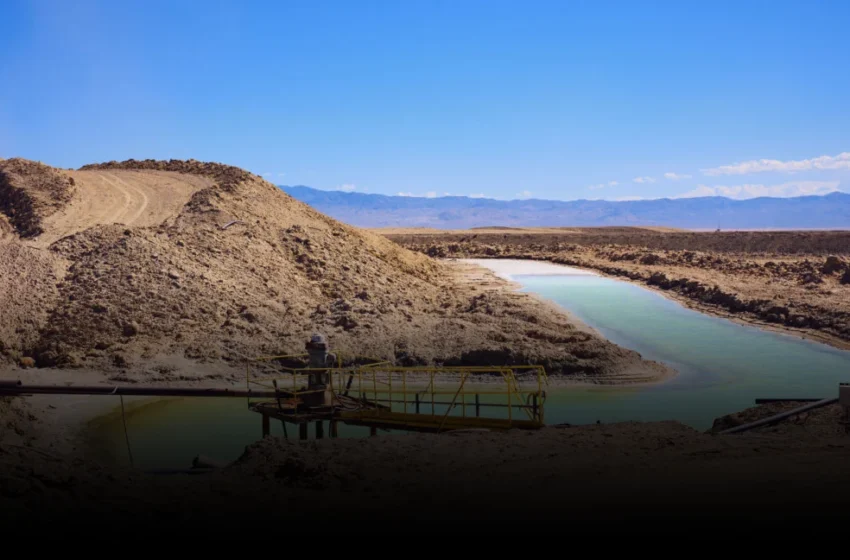
The global energy transition, for all its technological ambition, remains tethered to a handful of critical minerals. Chief among them is lithium, the indispensable backbone of virtually every modern high-capacity battery. For years, the geopolitics of this white gold have been straightforward: extract it cheaply from brines in South America—the ‘Lithium Triangle’ of Chile, Argentina, and Bolivia—then ship it to China for processing into battery-grade compounds. This established order dictates everything from electric vehicle production timelines to national industrial strategies. It is a tightly controlled choke point.
So, when a research team quietly published an account of a new, energy-efficient method for extracting lithium from rocks, the implications reach far beyond a laboratory breakthrough. This isn’t merely about finding more lithium; it’s about fundamentally reordering the global access points for a critical resource, challenging existing supply chain monopolies, and potentially accelerating the energy transition while raising new questions about localized environmental impact and resource nationalism.
For too long, the narrative around lithium supply has been one of scarcity and geographic concentration. The sheer volume of global demand, particularly for lithium-ion batteries powering everything from smartphones to electric vehicles, has cemented South American brines as the primary, most cost-effective source. Other sources, like hard-rock mines, have existed, but their higher energy demands and processing costs meant they largely played second fiddle. This new process, claiming ‘far less energy’ and the regeneration of its starting chemicals, suddenly makes previously uneconomical deposits look far more attractive.
The Great Lithium Revaluation: Geopolitical Plates Shifting
Consider the incentive behind such research: energy security. Every major economy is racing to onshore critical mineral processing and diversify supply. Nations with significant geological reserves of hard-rock lithium, previously sidelined by the economics of brine extraction, are now paying close attention. This includes countries like Australia, Canada, and even parts of Europe and the United States, all eager to reduce their reliance on the established South American-Chinese axis.
This isn’t an overnight shift, but it’s a powerful undercurrent. The existing infrastructure of the gigafactory boom is predicated on a predictable, if concentrated, supply. A more diversified, geographically dispersed source of raw lithium offers resilience, but also invites a new, possibly chaotic, scramble for control. It means new trade agreements, new mining initiatives, and crucially, new geopolitical leverage for nations previously considered marginal players in the critical minerals race.
The current framing of this as a purely scientific achievement, while accurate, somewhat obscures the underlying national strategic interests at play. Governments and industrial consortia are pouring money into these areas not just for academic curiosity, but to secure future industrial autonomy. The question isn’t whether lithium can be extracted from rocks; it’s *who* will extract it, *where*, and *at what cost* to the existing power balance.
Beyond the Brine: New Costs, New Challenges
The promise of an ‘energy-efficient’ rock extraction method sounds like a panacea, but the devil, as always, is in the industrial-scale details. Brine extraction has its own considerable environmental footprint, particularly concerning water usage in arid regions. Hard-rock mining, however, brings its own set of challenges: significant land disturbance, potentially vast tailings piles, and the need for new, heavy infrastructure. While the new process promises lower energy consumption and regenerated chemicals, the overall environmental calculus — from initial extraction to final product — requires careful scrutiny.
The phrase ‘produces byproducts that could also be sold’ hints at a potential economic upside, but this introduces complexity. What are these byproducts? Are there markets for them? The circular economy for batteries is still nascent, largely focused on battery recycling. This new extraction method changes the fundamental input stream, adding another layer of complexity to future recycling efforts. It also raises the specter of ‘resource nationalism’ in new locales, as nations seek to control newly viable domestic deposits, potentially leading to export restrictions or elevated prices.
One might observe, with a healthy dose of skepticism, that while the energy required for the chemical process itself might be reduced, the monumental effort and environmental cost of digging vast new mines, establishing new processing plants, and building the necessary transport infrastructure should also be factored into any truly ‘efficient’ assessment. This isn’t just an elegant chemical reaction; it’s a foundational shift in how we power our world, and that shift comes with a complex balance sheet of benefits and burdens, not all of them immediately apparent in a scientific journal.
