
The Sea Cucumber’s Simple Immortality Exposes Biotech’s Over-Engineered Delusion
- Tech
Arjun Vedanta
- 0
- 5 minutes read
When Nature Outsmarts Biopharma’s Best Labs
Our multi-billion-dollar quest for regenerative medicine and engineered longevity often feels like a desperate, resource-intensive scramble. Yet, deep in the North Atlantic, a sea cucumber quietly performs a biological feat that should make every Silicon Valley bioengineer pause and reconsider their entire approach.
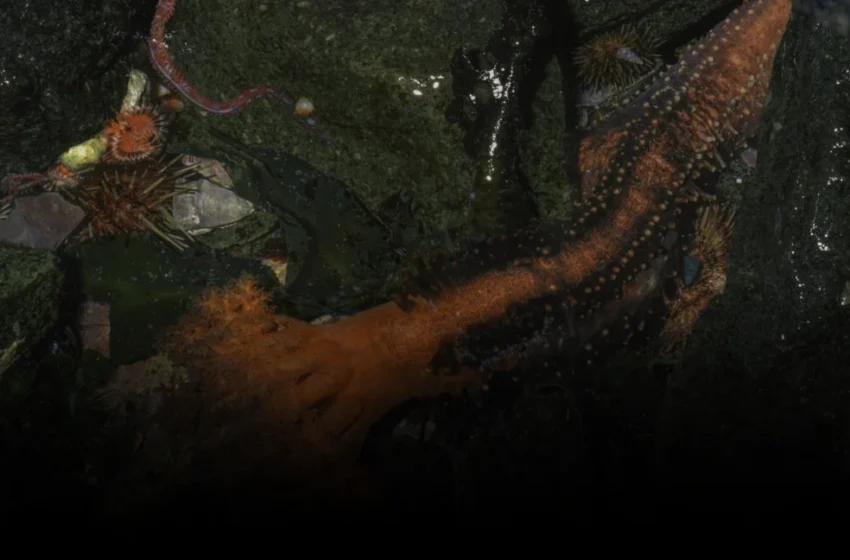
Scientists at Memorial University of Newfoundland, led by Sara Jobson, have uncovered a remarkable form of tissue immortality in the sea cucumber species Psolus fabricii. Appendages severed from these marine invertebrates don’t just survive; they persist indefinitely in nothing more than ordinary seawater. This isn’t about sterile, nutrient-rich mediums, carefully calibrated growth factors, or a prohibitively expensive clean room environment; it’s just, well, seawater.
“This is naturally occurring tissue immortality,” Jobson noted, adding that “Having tissues that survive that easily is unheard of. We’ve never seen anything like this.” This simple, elegant biological hack stands in stark relief against the prevailing ethos of the tech-driven life sciences industry, which consistently pushes towards complex, high-capital solutions for biological challenges. The biotech sector, funded by venture capitalists who demand complex, IP-protected innovations, often overlooks the elegant, open-source lessons encoded in nature itself, mistaking simplicity for lack of sophistication.
The Costly Pursuit of Engineered Life
For decades, human efforts to preserve or regenerate tissues outside the body have hinged on increasingly sophisticated and expensive technologies. Organ transplants, for instance, rely on advanced preservation techniques that, while groundbreaking, demand precise control over temperature, chemical composition, and sterility. Looking beyond, the burgeoning fields of cellular agriculture and synthetic biology are projected to reach market valuations well into the tens of billions, fueled by intricate bioreactors and proprietary cellular scaffolds designed to coax cells into forming new tissues.
Even more ambitiously, the longevity tech industry, flush with capital, pursues cryogenics, CRISPR gene editing, and the cultivation of organoids to extend or restore human life. These ventures are not just scientifically challenging; they are inherently resource-intensive, requiring vast energy inputs, specialized infrastructure, and a constant flow of highly purified materials. The drive to patent and commercialize every step in tissue engineering, from novel bioreactors to proprietary growth factors, inherently pushes the industry towards complexity and away from any solution that appears ‘too simple’ to be monetized.
This is where the sea cucumber’s lesson becomes stark. While we pour billions into developing intricate biofabrication techniques for everything from lab-grown meat to replacement organs, Psolus fabricii offers a blueprint for sustained tissue viability that requires almost nothing beyond its native environment. It’s a fundamental contradiction: humanity’s most advanced tools struggle with basic tissue persistence, while a common marine creature achieves it with apparent biological indifference.
Rethinking Regeneration: Simplicity Over Complexity
The sea cucumber’s secret won’t immediately translate into human treatments, nor should it. However, its existence compels a critical re-evaluation of the underlying assumptions guiding much of modern biotechnology and regenerative medicine. Are we consistently over-engineering solutions when nature already offers elegant, low-resource alternatives? Could the next significant breakthroughs in tissue repair or longevity come not from a more powerful supercomputer or a more complex genetic circuit, but from a deeper understanding of fundamental biological resilience?
This isn’t about abandoning high-tech research, but rather about broadening its scope. A greater emphasis on biomimicry – learning directly from nature’s millions of years of R&D – could yield more sustainable and scalable approaches to biomanufacturing and therapeutic development. Imagine a future where tissue engineering isn’t confined to exorbitant, purpose-built facilities, but can leverage simpler, environmentally harmonious conditions inspired by what a sea cucumber achieves effortlessly.
The biggest challenge for Silicon Valley often isn’t technological capability, but a perceptual blind spot. The allure of the complex, the patentable, and the disruptive often overshadows the quiet wisdom found in evolved simplicity. The Psolus fabricii is more than a biological curiosity; it is a direct challenge to the tech industry’s implicit bias towards complexity, urging a fundamental rethink of what true innovation in the life sciences might actually look like.
