
Orbital Recklessness: How China’s Space Debris Outweighs Blue Origin’s Blunder
- Tech
Arjun Vedanta
- 0
- 5 minutes read
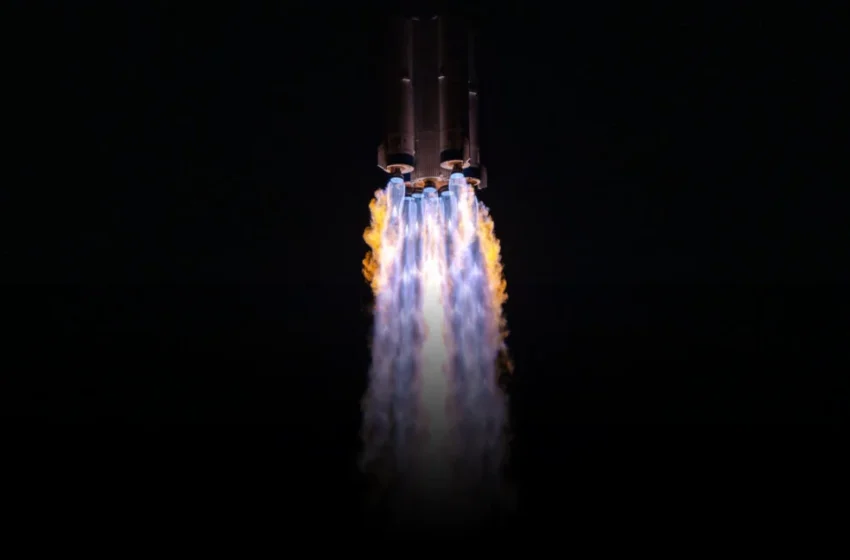
The Debris Cloud No One Is Watching
Two hundred and fifty-two metric tons of rocket bodies, silently accumulating, now orbit Earth, largely ignored while a single fiery incident captures the world’s attention. The image of Blue Origin’s New Glenn rocket exploding on its Cape Canaveral launch pad Thursday night is undeniably dramatic, a visceral reminder of the inherent risks in spaceflight. Yet, the real, systemic threat to our orbital infrastructure isn’t the occasional, spectacular failure of a Western private venture. It is the insidious, accelerating growth of space junk, spearheaded by China’s calculated departure from established international norms for managing rocket upper stages.
For the past five years, the mass of Chinese rocket bodies in long-lived orbits has soared from less than 100 metric tons to a staggering 252 metric tons. This isn’t an accident; it’s a consequence of China’s increasing launch cadence paired with a deliberate choice to eschew the propellant-intensive deorbiting maneuvers that most other spacefaring nations and commercial operators now undertake. While global media fixates on the immediate setback for Jeff Bezos’s space ambitions, the far more profound and intractable challenge is unfolding silently hundreds of kilometers above our heads, creating a minefield for future missions.
The Economics of Orbital Neglect
The practice of leaving spent rocket stages in orbit was common in the early decades of spaceflight. But as Low-Earth Orbit (LEO) became more congested, and the physics of orbital mechanics ensured that even a millimeter-sized paint chip could become a lethal projectile, the industry shifted. Responsible operators now reserve precious fuel to guide their upper stages back into the atmosphere for controlled re-entry, mitigating the risk of creating new debris. This comes at a cost, both in terms of propellant and potentially payload capacity, but it is a cost deemed essential for the long-term sustainability of space activities.
China’s burgeoning space program, however, appears to operate under a different calculus. Its rapidly expanding launch manifest, aimed at constructing its own space station and deploying vast constellations for communications and Earth observation, benefits from every gram of propellant saved by not deorbiting spent stages. This isn’t just a matter of technical choice; it’s an economic incentive. By externalizing the cost of orbital clean-up onto the collective space community, China gains an immediate competitive advantage in launch economics. The immediate beneficiaries are obvious: the Chinese state-owned enterprises that dominate its space sector, unburdened by the environmental compliance costs accepted by their international counterparts.
The consequence of this unchecked expansion of debris is not merely an aesthetic concern. Each kilogram of inert metal left in orbit increases the probability of collision, a cascading effect known as the Kessler Syndrome. This isn’t theoretical; a few years ago, a defunct Soviet satellite and a US Iridium communications satellite collided, creating thousands of new, trackable pieces of debris. A similar incident involving a Chinese rocket body and an active satellite – perhaps one crucial for global telecommunications or environmental monitoring – would have catastrophic global implications. Yet, the outrage over a private company’s spectacular but contained failure far eclipses the muted concern over a sovereign nation’s systemic pollution of the ultimate shared commons.
Beyond the Blaze: Reassessing Space Stewardship
The Cape Canaveral explosion is a setback, undoubtedly. Blue Origin’s engineers will dissect telemetry, rewrite protocols, and eventually return to flight. That’s how commercial space exploration advances. The grounding of the New Glenn rocket for an extended period, perhaps weeks, months, or even years, is a painful lesson, but it is one learned through a system designed, however imperfectly, for accountability and iterative improvement. The impact, while significant for Blue Origin, remains largely contained to its operational timeline and financial spreadsheets.
The problem of Chinese space debris, conversely, is diffuse, growing, and far more challenging to address. Unlike a launch pad incident that demands immediate, public investigation, the slow accumulation of orbital junk lacks a single, galvanizing event. There are no dramatic photos, no immediate casualties to mourn. But the long-term implications for everything from global GPS functionality to meteorological data collection, not to mention the burgeoning satellite internet industry, are profound. The international community, focused on the immediate dramas of commercial spaceflight and geopolitical tensions, has largely failed to establish robust enforcement mechanisms for orbital sustainability. The existing space law and voluntary guidelines are proving insufficient against a nation prioritizing rapid expansion over shared responsibility.
The actual impact of this negligence extends beyond mere collision risk; it fundamentally alters the long-term accessibility and cost of operating in LEO for all actors, including crucial climate monitoring and defense assets. Every additional piece of debris forces greater reliance on expensive orbital tracking, necessitates more evasive maneuvers, and ultimately shortens the viable lifespan of active satellites. This is not just a technology problem; it is a global governance failure unfolding in the quiet vacuum of space. The spectacle of a rocket failure is a reminder of engineering challenges; the quiet accumulation of junk, however, underscores a far graver challenge to humanity’s collective future in orbit.
