
Nvidia’s RTX Spark Ignites a New Arm PC Battle, Redefining the ‘AI PC’
- Artificial Intelligence
Arjun Vedanta
- 0
- 4 minutes read
Nvidia’s Strategic Pivot: Embedding AI at the Client Edge
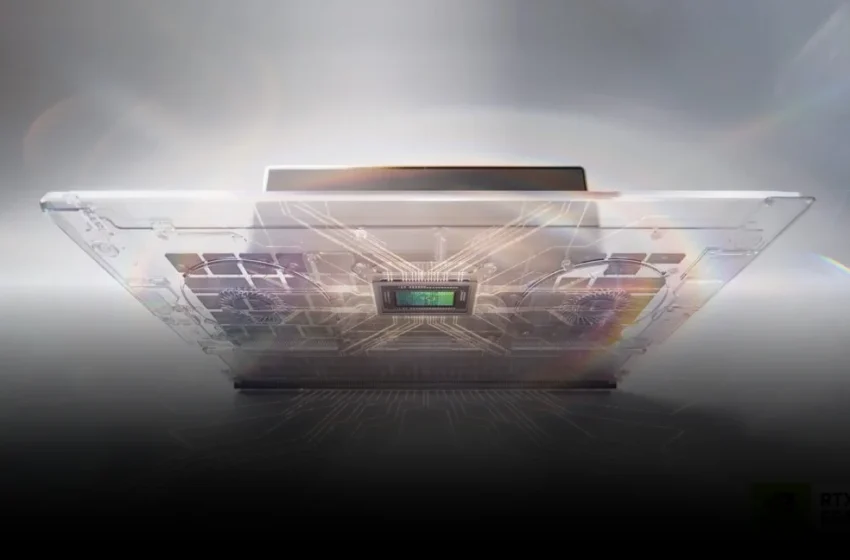
The quiet announcement of Nvidia’s RTX Spark chip for Windows PCs—an Arm-based system-on-a-chip boasting a 20-core Grace CPU, up to 6,144 Blackwell-based GPU cores, and a staggering 128GB of unified LPDDR5x memory—is far more than a simple product launch. While the Silicon Valley echo chamber might view it as Nvidia dipping a toe back into a consumer market often overshadowed by its hyperscale data center ambitions, those watching from outside the immediate orbit of NVIDIA GTC see a critical strategic maneuver. This isn’t merely about offering another option for ‘slim Windows laptops with all-day battery life’; it’s about Nvidia’s assertive play to redefine the very architecture of the client-side AI PC, wresting control from emerging narratives and entrenched players.
For years, Nvidia’s consumer-facing efforts, beyond its high-end discrete GPUs, have felt like a legacy operation. Its core identity has shifted decisively to AI infrastructure, to the point where its data center revenue often eclipses gaming. Yet, the RTX Spark reveals a clear incentive: to extend its AI dominance beyond server racks and into the everyday devices that will increasingly run sophisticated AI models locally. By combining its cutting-edge Blackwell GPU architecture with an Arm CPU co-developed with MediaTek, Nvidia aims to deliver unparalleled AI acceleration directly onto the desktop and laptop, bypassing the current generation of relatively low-power neural processing units (NPUs) and establishing a new standard for on-device AI capability.
The Fierce Battle for the Arm Windows Ecosystem
This isn’t Nvidia’s first rodeo with Arm-based Windows devices, and that’s precisely why skepticism is warranted. Earlier forays with the Tegra series, notably in the short-lived Windows RT tablets, ended in market indifference. Modern Arm-based Windows 10 and 11 PCs have, until now, been almost exclusively the domain of Qualcomm, with its Snapdragon X Elite line positioning itself as the de facto platform for Microsoft’s Arm ambitions. Nvidia’s re-entry with RTX Spark is a direct challenge to this nascent hegemony, potentially splitting the ecosystem and forcing Microsoft to accommodate another powerful player.
The current market framing of the ‘AI PC’ often centers around an NPU delivering a modest TOPS (trillions of operations per second) for basic on-device AI tasks. Nvidia, however, brings the full might of its GPU expertise—the same Blackwell architecture powering its H200 and upcoming B200 data center accelerators—to the client. This move fundamentally reframes the conversation: an ‘AI PC’ from Nvidia isn’t just about running lightweight models efficiently; it’s about desktop-class AI inference and development, potentially even local fine-tuning of larger models. This aggressive push will likely compel Qualcomm to accelerate its own GPU capabilities and NPU performance roadmaps significantly, creating a much-needed competitive dynamic that benefits end-users.
Beyond the Specs: A Test of Nvidia’s Client Ambitions
The success of RTX Spark will hinge on more than raw silicon power. Nvidia faces the critical task of convincing developers to target its CUDA platform on Arm, despite Microsoft’s increasing focus on broader compatibility layers like Windows on Arm’s emulation capabilities. The company’s historic struggles to build a robust software ecosystem beyond gaming on its Tegra chips underscore the scale of this challenge. While Nvidia’s data center AI success has nurtured a vast developer community around CUDA, porting that expertise seamlessly to a new client platform for Windows on Arm is a different beast entirely. The true test isn’t whether RTX Spark can perform, but whether anyone will genuinely build for it outside of Nvidia’s immediate influence.
Partners including Asus, Dell, HP, Lenovo, and Microsoft itself are slated to release devices ‘this fall,’ offering both ‘slim Windows laptops’ and ‘compact desktop PCs.’ Yet, details on pricing remain conspicuously absent, which suggests a premium proposition. This aggressive push by Nvidia, leveraging its unparalleled AI expertise, isn’t just about selling more chips; it’s about shaping the future definition of client computing by making the GPU, not just the NPU or CPU, the central nervous system of the AI PC. It’s a bold bet that could either solidify Nvidia’s end-to-end control of the AI stack or echo its past client-side missteps.
