
Mapping Earth’s Fungal Internet: A Reality Check for Human Tech Solutions
- Artificial Intelligence
Arjun Vedanta
- 0
- 4 minutes read
Quantifying Nature’s Unseen Infrastructure
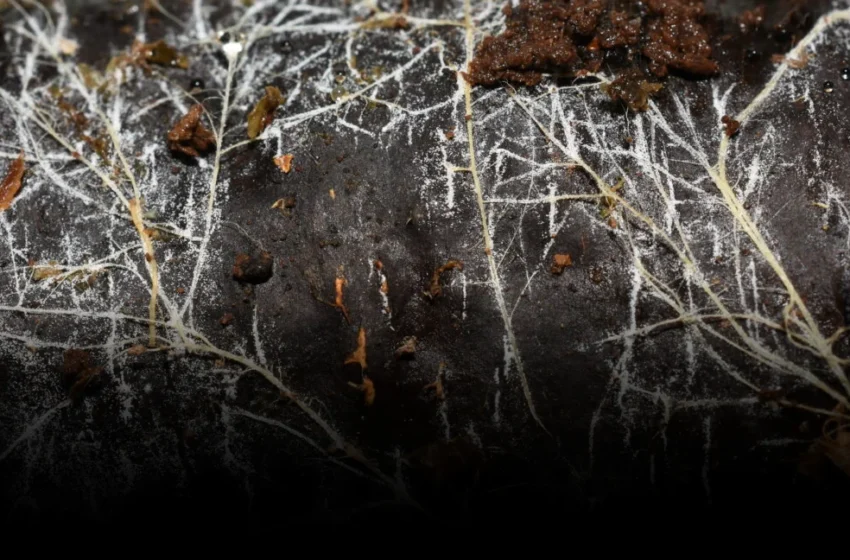
Deep beneath our feet, an organic network of staggering complexity and scale operates largely out of sight, yet it dictates much of the planet’s ecological stability. Scientists, leveraging advanced machine learning, have finally begun to chart this hidden infrastructure: 110 quadrillion kilometers of arbuscular mycorrhizal fungal networks, a web of biological threads that could wrap around the sun nearly a billion times. This isn’t just a scientific marvel; it’s a profound, if implicit, critique of humanity’s often-blinkered approach to technological innovation and environmental solutions.
The Society for the Protection of Underground Networks (SPUN), leading research published in Science, has used a combination of literature review, extensive soil sampling, and laboratory analysis to construct the first global map of these vast subterranean systems. Their findings underscore a reality: while we obsess over our digital networks and smart grids, nature has been running the ultimate distributed, self-optimizing system for eons. These fungal communities are not passive; they are active, indispensable partners to plants, trading vital phosphorus and nitrogen for carbon – a staggering 1 billion tons of which they annually sequester, preventing it from warming our atmosphere.
The Carbon Paradox: Silicon Valley’s Blind Spot
For all the breathless innovation emanating from Silicon Valley, fixated on AI, virtual reality, and ever-more complex computational frameworks, the fungal internet offers a stark reminder of what truly efficient, sustainable technology looks like. We are building energy-intensive direct air capture plants and discussing geoengineering, while a silent, global bio-machine operates with elegant simplicity, entirely self-powered and self-repairing. The enthusiasm around quantifying this natural marvel often overshadows the unsettling truth: our most ambitious ‘green’ tech initiatives, from direct air capture to geoengineering, look almost comically provincial next to nature’s millennia-old, silently optimized solutions.
The current global imperative for climate action, coupled with the burgeoning market for verifiable carbon credits, makes the timing of SPUN’s mapping project anything but coincidental. As nations scramble for demonstrable climate solutions, a detailed map of Earth’s most prolific, natural carbon sink suddenly becomes a strategic asset, not just a scientific curiosity. This data offers unprecedented insight into Earth’s vital life support systems, but also opens doors to new forms of ecological engineering or even carbon accounting that could reshape economic and political landscapes.
Understanding such a vast system requires sophisticated tools, and it is here that human technology finds its humble place. Machine learning algorithms, trained on diverse global datasets, were essential for extrapolating localized soil samples into a planetary-scale map. This fusion of cutting-edge geospatial analytics with fundamental biological discovery reveals a recurring pattern: our most potent technological advancements are often those that enable us to better perceive, rather than merely manipulate, the world around us. Yet, the challenge remains to move beyond mere measurement to true integration.
Beyond Measurement: Emulating Nature’s Design
The implications of this mapping extend far beyond academic papers. Imagine the shift in land use policy if policymakers fully grasped the critical infrastructure beneath agricultural fields or managed forests. This isn’t merely about protecting biodiversity; it’s about preserving a foundational global utility. The data could inform targeted conservation efforts, optimize agricultural practices for enhanced carbon capture, or even inspire new forms of bio-mimicry in materials science and distributed computing, moving away from centralized, energy-hogging systems towards something more akin to a truly resilient, self-organizing network.
The true test for our technology community now is whether we can leverage this profound understanding to move beyond just calculating nature’s efficacy. Can we design agricultural systems that actively cultivate and integrate these fungal networks, rather than disrupting them with chemical inputs? Can our urban planning recognize and support these unseen partners? The critical question isn’t just how much carbon nature sequesters, but how humanity can finally learn to align its technological ambition with nature’s inherent wisdom, recognizing that the planet’s most powerful, distributed systems already exist and are working tirelessly for us. Our challenge is to build tech that complements, rather than competes with, this silent, subterranean intelligence.
