
Orbital Debris Crisis: China’s Rocket Breakup and the Global Space Governance Void
- Tech
Arjun Vedanta
- 0
- 5 minutes read
A Crowded Commons, a Fragmented Future
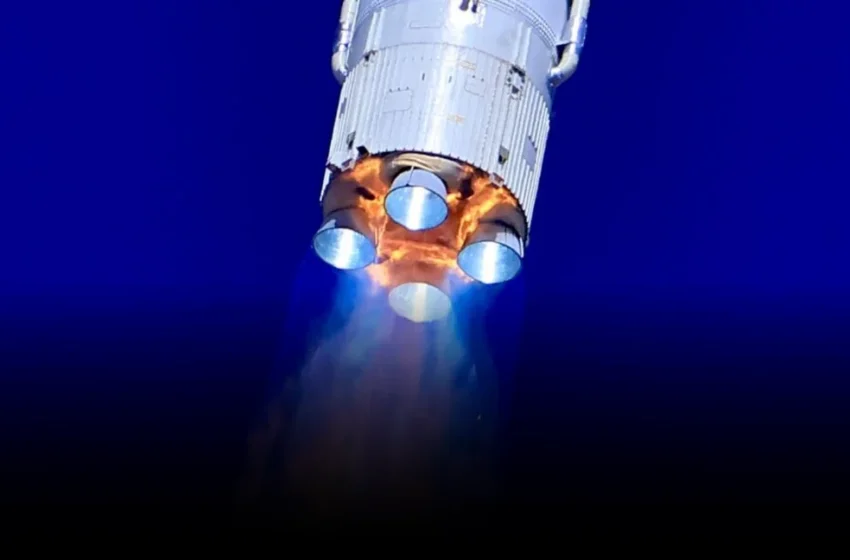
Another commercial rocket stage just fragmented in low-Earth orbit, adding thousands of untrackable shards to an already perilously cluttered cosmic junkyard. This particular incident, involving the upper stage of a Chinese Zhuque-2E rocket launched last week, is not merely a technical mishap; it’s a stark, blinking warning about the perilous trajectory of the global space economy and the gaping holes in its collective oversight. These fresh fragments now drift through the same orbital highways traversed by the International Space Station and a significant portion of SpaceX’s crucial Starlink broadband constellation, elevating the risk of collision for assets critical to both scientific research and global connectivity.
The US Space Force quickly confirmed the breakup, announcing via space-track.org that the new pieces are being incorporated into routine conjunction assessments. While their advisory assures ‘no threats to human spaceflight’ currently, the casual acceptance of such events as ‘routine’ belies a deeper, more troubling reality. Every new piece of debris, regardless of origin, exacerbates the threat of a cascading collision scenario – the dreaded Kessler Syndrome – where one impact begets another, rendering vast swathes of LEO unusable for generations. The immediate safety assessment offers a thin veneer of reassurance over a rapidly deteriorating environmental problem in space.
This incident isn’t an isolated anomaly; it’s the predictable outcome of an international space ecosystem where ambition outpaces responsibility. Nations and private companies alike are rushing to deploy ever-larger satellite constellations for everything from Earth observation to global broadband, without a commensurate global framework for managing the inevitable byproduct: orbital debris. We are effectively privatizing the profits of space access while socializing its environmental costs across every actor operating in LEO. The irony is sharp: the very infrastructure intended to connect us globally faces existential threat from the debris created by its own expansion.
The Cost of Commercial Ambition Without Accountability
China’s burgeoning commercial space sector, spearheaded by entities like LandSpace – the developer of the Zhuque-2E – represents a critical, yet often overlooked, dimension of Beijing’s broader strategic ambitions. These firms are not just building rockets; they are extending China’s technological reach, bolstering its national security capabilities, and positioning it as a formidable competitor to established Western players. The rapid cadence of these launches, sometimes with less transparency regarding post-mission disposal plans, benefits China by allowing it to quickly iterate on designs and gain market share in the global launch industry.
The underlying incentive is clear: establish technological leadership and market dominance in a strategic domain. This drive, however, often sidesteps the more difficult, and expensive, questions of long-term space sustainability. Proper deorbiting burns or end-of-life disposal strategies require fuel, time, and precise execution – all factors that add to launch costs and operational complexity. When such a critical stage breaks apart, whether due to design flaw, operational error, or inadequate disposal planning, the global community bears the fallout in increased collision risk and the collective burden of tracking new fragments.
Consider the contrast: while companies like SpaceX publicly commit to deorbiting plans for their Starlink satellites, and agencies like NASA meticulously track objects, the broader international enforcement mechanisms are toothless. There’s no global space police, no international court for orbital debris violations, and certainly no binding treaties with real penalties for irresponsible behavior. The current system relies on good faith, yet good faith is increasingly a luxury we cannot afford in a domain critical to global connectivity and national security, particularly when major spacefaring nations prioritize domestic industrial advantage over international environmental stewardship. This is the critical vulnerability that Silicon Valley reporters, focused on launch manifests and funding rounds, often miss.
Navigating a Debris Field of Geopolitics
The incident with the Zhuque-2E rocket is more than just a technical problem; it’s a geopolitical flashpoint. With the US and its allies increasingly relying on space for military intelligence and secure communications, and China rapidly expanding its own capabilities, incidents like this heighten tensions. Each new piece of debris, even if unintentional, adds friction to an already complex geopolitical landscape, blurring the lines between accident and potential aggression in an increasingly weaponized domain. The lack of standardized, enforced international norms for debris mitigation leaves too much room for interpretation and, crucially, for blame.
The situation demands urgent attention to developing robust international space traffic management protocols and liability frameworks. Current guidelines, such as those from the Inter-Agency Space Debris Coordination Committee (IADC), are voluntary and lack enforcement teeth. A global consensus, perhaps under the auspices of the United Nations Committee on the Peaceful Uses of Outer Space (COPUOS), is desperately needed to transition from aspirational guidelines to binding regulations. This would include mandatory end-of-life disposal plans, standardized reporting, and clear mechanisms for attributing responsibility and liability for debris-generating events.
Without such a framework, every nation operating in space is inadvertently complicit in undermining the long-term viability of LEO. The financial costs of operating in an increasingly hazardous environment—from shielding satellites to increased maneuvering for collision avoidance—will only escalate, impacting the nascent LEO economy before it can fully mature. This Chinese rocket’s fragmentation is not just a warning for Starlink, or for the ISS; it’s a profound, urgent indictment of our collective failure to govern the last great commons, threatening to turn our celestial backyard into an impassable cosmic junkyard, suffocating the very innovation it aims to enable.
