
Porsche’s NACS Switch: A Strategic Retreat for the 800V Taycan?
- Tech
Arjun Vedanta
- 0
- 4 minutes read
The Illusion of Universal Convenience
A charging port switch for a luxury EV might seem like a straightforward upgrade, but Porsche’s recent decision to adopt the North American Charging Standard (NACS) for the 2027 Taycan in the US market reveals a far more complex calculus. While ostensibly a move towards seamless convenience, it inadvertently highlights a critical disconnect: the vast majority of the established NACS infrastructure cannot deliver the premium 800V fast-charging experience luxury EV owners expect, revealing a strategic trade-off where broad access is prioritized over peak performance.
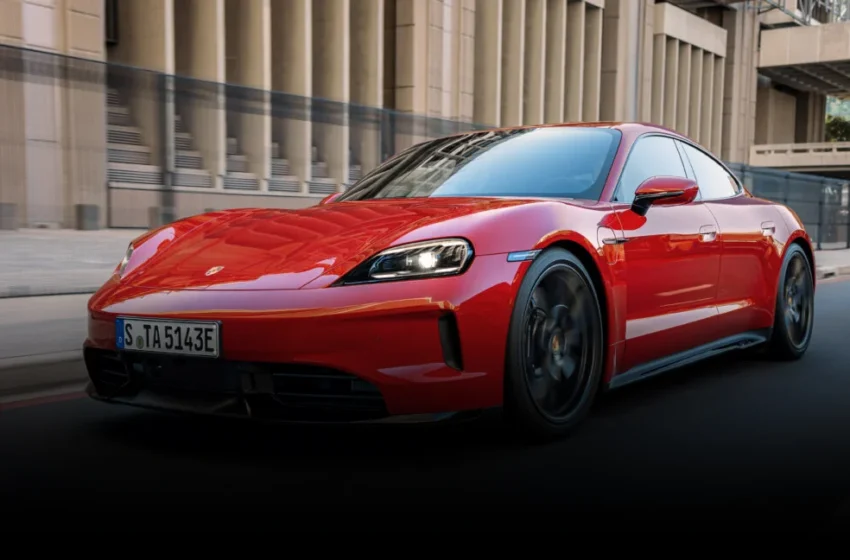
For Model Year 2027, the Taycan — which starts at $111,900 — will standardize its 105 kWh performance battery, capable of charging at up to 320 kW with an 800 V DC fast charger. The new native NACS port means Taycan owners can connect directly to Tesla’s vast network of Superchargers without an adapter. However, the fine print here is crucial: only a small percentage of those thousands of Tesla Superchargers currently operate at sufficient voltage to charge anywhere near the Taycan’s limit.
This disparity means that a flagship 800V architecture, designed for rapid energy replenishment, will frequently be bottlenecked by an older generation of 400V charging infrastructure. Calling this a seamless ‘Supercharger experience’ for a premium 800V vehicle is like equipping a fighter jet with bicycle pedals for better road access. The promise of widespread access rings hollow if the underlying technology cannot match the vehicle’s inherent capabilities.
Strategic Gambit or Compromised Luxury?
So, why would Porsche, a brand synonymous with uncompromising performance, make such a move? The incentive is clear: market access and consumer perception in the critical US market. Taycan sales had already begun to slip even before the arrival of the smaller, more affordable Macan EV, suggesting a need to broaden its appeal beyond early adopters.
By embracing NACS, Porsche aims to alleviate range anxiety and simplify the charging process for potential buyers, tapping into the ubiquity of Tesla’s network. This is not about optimizing performance for the Taycan’s current owners as much as it is about eliminating perceived friction for the next wave of luxury EV entrants. The messaging focuses on compatibility, not capability.
Yet, Porsche also tacitly acknowledges the limitations. The company will provide a CCS1 adapter, ensuring Taycan owners can still utilize high-power 800V chargers from networks like Electrify America, and crucially, future 400 kW IONNA stations that are also NACS-native. This dual-port strategy highlights a transitional phase, where the ‘standard’ connector doesn’t yet guarantee ‘standard’ premium performance across all points.
The Unspoken Hierarchy of EV Charging
Porsche’s NACS adoption is more than just a brand-specific update; it signals a wider inflection point for the entire luxury EV segment. Automakers like Lucid, Hyundai, and Kia, with their own 800V platforms (e.g., E-GMP), face a similar dilemma: how to balance the need for broad charging access with the promise of ultra-fast charging that defines their premium offering. The NACS connector is just a plug; the actual charging experience is dictated by the voltage and amperage delivered by the station itself.
This creates an unspoken hierarchy within the expanding NACS ecosystem. There will be the older, prevalent 400V Superchargers offering convenient but slower charging, and a nascent network of true 800V NACS stations, like those planned by IONNA, capable of exploiting the full potential of vehicles like the Taycan. For the discerning buyer of a $100,000+ electric vehicle, this distinction matters profoundly.
The real standard the industry needs isn’t just a unified physical plug, but a guarantee of consistent, high-power delivery that matches the vehicle’s engineered capacity. Until then, premium EV owners will continue to navigate a fragmented charging landscape, even with a seemingly universal connector, making the promise of effortless electric travel remain tantalizingly out of reach for a truly uncompromised experience.
