
Spider-Man’s Brand New Day: Commodifying Digital Anxiety for Franchise Renewal
- Tech
Arjun Vedanta
- 0
- 6 minutes read
The Architected Erasure of Digital Identity
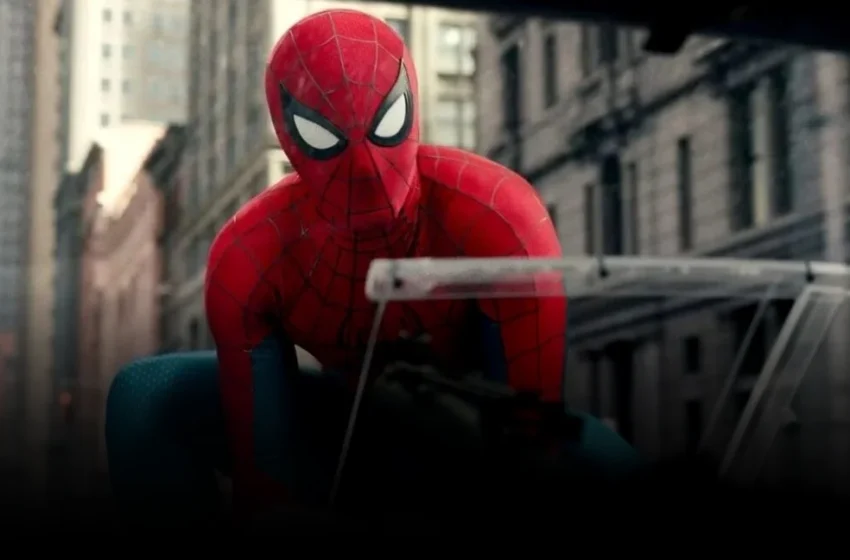
Four years removed from the devastating conclusion of No Way Home, Peter Parker finds himself in a new New York, one where his existence has been surgically excised from the collective memory. This isn’t merely a plot device for Spider-Man: Brand New Day; it is a meticulously crafted narrative choice that speaks volumes about Sony Pictures’ strategy to re-engage a superhero audience increasingly fatigued by an intricate web of interconnected continuities. The upcoming film, arriving July 31, 2026, positions its hero as an unmoored specter, a consequence of an act of universal digital self-deletion, grappling with a mutating physical form and a world that has forgotten him entirely.
This radical narrative pivot – from a universally beloved figure to a solitary, unremembered vigilante – isn’t just about character development. It’s an explicit attempt to capitalize on a pervasive societal unease surrounding digital identity and the fragility of personal data. Peter Parker’s forgotten past, even by MJ and Ned Leeds, mirrors anxieties about data breaches, the impermanence of digital records, and the chilling prospect of one’s entire online persona being erased or rewritten without consent. His physical mutation, which Bruce Banner deems “enormously dangerous,” underscores a deeper fear: that even our biological selves are susceptible to unseen forces, echoing the vulnerabilities exposed by an ever-present digital ecosystem.
The announcement of Jon Bernthal’s Punisher and Mark Ruffalo’s Hulk joining the fray, alongside Charlie Cox’s Daredevil, signals a broader industry trend of intellectual property consolidation. Yet, the core conceit remains the same: a protagonist isolated and struggling against an invisible threat, with no established support network. This deliberate isolation functions as a powerful, albeit cynical, mechanism to force emotional investment. If Spider-Man is truly alone, every punch, every sacrifice, feels heavier, stripped of the comforting safety net of a multi-billion dollar shared universe.
Franchise Fatigue and the Anxiety Market
The superhero genre, once a reliable engine for Hollywood, shows undeniable signs of strain. The constant churn of sequels, prequels, and spin-offs across multiple platforms has led to a noticeable decline in audience enthusiasm for what feels like an endless homework assignment. Studios like Sony are now tasked with the delicate balancing act of sustaining interest in valuable intellectual property without alienating a fanbase overwhelmed by years of lore. The notion that mass amnesia provides a ‘brand new day’ is not a reset; it’s a narrative admission that studios have painted themselves into a corner with over-extended continuities.
This narrative pivot, however, is not a sudden artistic impulse; it’s a meticulously engineered move designed to reignite a decelerating franchise by tapping into a pervasive societal unease with diminishing personal agency in a world drowning in digital history. The studio isn’t just selling escapism; it’s selling resonance with the existential dread of being forgotten, misunderstood, or fundamentally altered by forces beyond one’s control – a compelling hook for an audience saturated with news of algorithmic bias, deepfakes, and the surveillance economy. We are, after all, living in an era where our digital footprints define us, and the idea of that footprint being wiped clean, for better or worse, is profoundly unsettling.
Consider the shrewdness of Peter asking Banner if he can keep the “good parts” of his mutation, only to be met with the philosophical retort: “How would you decide what parts of nature are good or bad?” This dialogue isn’t just about superpowers; it’s a commentary on the irreversible changes wrought by technological advancement and our often-futile attempts to curate its benefits while discarding its dangers. It’s a question many ask when contemplating their data privacy settings, or the selective retention of digital memories. The film frames Peter’s plight as a struggle for control over his own evolving data – his very essence – resonating with a generation accustomed to endless terms and conditions.
The Perilous Path of Cinematic Universes
The cinematic universe model, once celebrated for its expansive storytelling and cross-promotional synergy, now faces a critical inflection point. As audience attention fragments across streaming platforms and competing franchises, the pressure to deliver novel, high-impact narratives intensifies. Sony’s choice to position Spider-Man as the ‘only one who can sense’ the new threat, immune to whatever unseen power is affecting everyone else, elevates his uniqueness while simultaneously underscoring his isolation. It’s a classic hero trope, but given the preceding five years of silence on the big screen, and the abrupt memory wipe, it feels less like organic storytelling and more like a hard reboot with familiar faces.
The deliberate emotional manipulation, epitomized by Peter’s chance to save an MJ who doesn’t remember him, is a calculated gamble. It preys on the audience’s residual emotional attachment from No Way Home, transforming it into a fresh source of narrative tension rather than relying on new relationships. This is less about building a ‘brand new day’ for the characters and more about creating a new engagement model for the franchise itself. The film is not just a sequel; it’s an attempt to recalibrate the audience’s relationship with a character that, frankly, has been through everything and still needs to sell tickets.
What this signals for the broader entertainment industry, particularly those heavily invested in vast interconnected narratives, is a potential shift away from endless expansion toward more self-contained, high-stakes emotional arcs. If a character as globally recognized as Spider-Man needs a radical memory wipe and a battle with his own biology to stay relevant, what does that say for properties with less cultural cachet? The tacit acknowledgement here is that perpetual growth of lore ultimately leads to stagnation. Sometimes, to move forward, you must pretend the past never happened, even if the digital ghosts linger in the audience’s collective memory.
