
Taiwan’s Drone Ambition: Beyond Defense to a Global Export Powerhouse
- Artificial Intelligence
Arjun Vedanta
- 0
- 3 minutes read
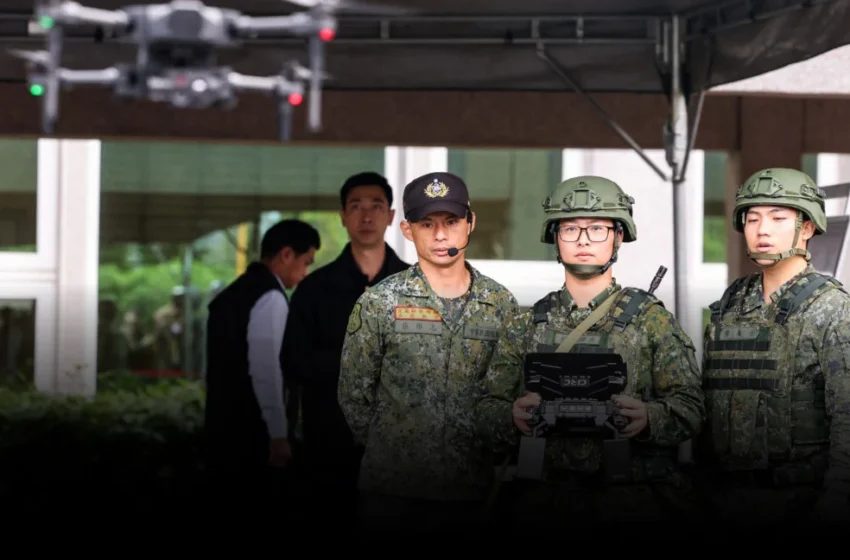
The Forge of Deterrence, The Cradle of Export
A proposed $6.6 billion over six years isn’t merely a defense budget; it’s an industrial declaration. Taiwan’s Ministry of National Defense is not just seeking to arm itself with 208,000 new coastal attack drones and thousands more reconnaissance units by 2031; it’s meticulously constructing the foundation for a new, powerful economic pillar. This scale suggests an ambition that extends far beyond domestic protection, signaling a calculated pivot towards becoming a significant global exporter of military drone technology.
The plan to acquire more than 208,000 coastal attack drones, alongside over 1,400 coastal reconnaissance drones and 1,320 uncrewed surface vessels, is a direct response to the looming threat from China’s military. Yet, the accompanying push for Taiwanese companies to form international partnerships to sell these systems to the US military and other overseas buyers transforms a defensive necessity into a strategic economic opportunity. This move provides a critical military deterrent while simultaneously carving out a new, diversified economic future, reducing the island’s perilous over-reliance on semiconductor manufacturing.
From Silicon to Steel — A New Economic Pillar?
Taiwan’s global identity is inextricably linked to advanced semiconductor manufacturing, a dominance epitomized by TSMC. This drone strategy represents a deliberate effort to diversify that identity, positioning Taiwan as a key player in the rapidly expanding defense technology market. The logistical and industrial undertaking required to produce 208,000 attack drones over five years will forge deep expertise in advanced robotics, autonomous systems, and supply chain resilience for defense-grade components.
For all the international applause regarding Taiwan’s defensive resolve, few in Western capitals publicly ponder the geopolitical tremors if a de facto sovereign nation, under constant threat, becomes a significant global arms dealer. This shift is not just about safeguarding Taiwan; it’s about redefining its industrial capabilities and leveraging its technological prowess for broader strategic advantage. While the immediate goal is to enhance military capabilities — as seen with Taiwanese soldiers firing US-made Altius-600 loitering munition drones from Anduril Industries subsidiaries in recent exercises — the long-term play is much larger.
The Unspoken Stakes of Strategic Diversification
The geopolitical implications of Taiwan becoming a major drone exporter are vast and complex. How will Beijing react to its contested territory not just fortifying its defenses, but actively competing in the global arms market, potentially even supplying adversaries? This move elevates Taiwan’s geopolitical leverage beyond its existing semiconductor chokehold, inserting it directly into the intricate dynamics of global security and arms control.
This strategic diversification moves Taiwan from a critical component supplier to a significant player in integrated defense systems, potentially impacting regional arms races and the proliferation of advanced military hardware. The capabilities developed for coastal attack and reconnaissance drones inevitably overlap with sophisticated *dual-use technology*, raising questions about future technology transfer. Taiwan is not simply buying time; it is buying a seat at a different global table, with consequences that will resonate far beyond its immediate shores.
