
Google Finance App: Why Google’s AI-Powered Re-Entry is Decades Late
- Artificial Intelligence
Arjun Vedanta
- 0
- 6 minutes read
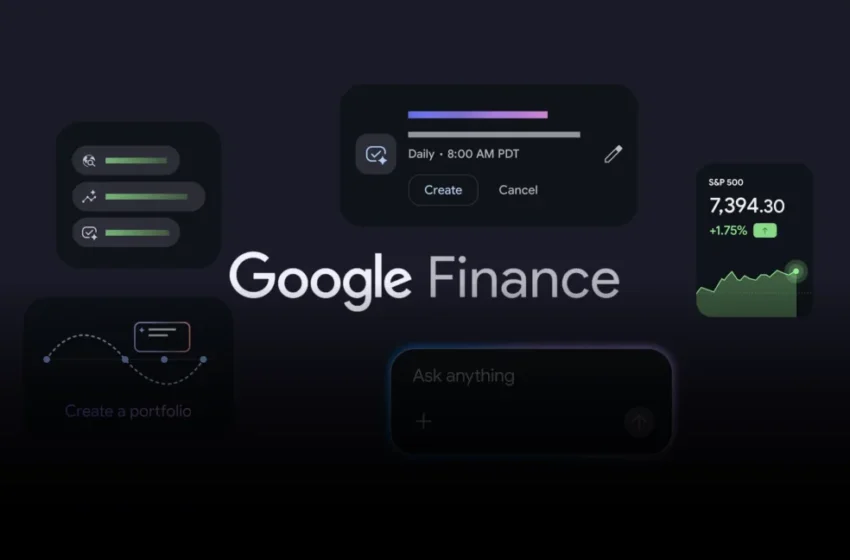
Google Finance: Two Decades Late, Calling It “AI”
In 2024, a peculiar event unfolds: Google, the company that brought us Android and built an empire on organizing information, has just released its first dedicated mobile app for Google Finance. This isn’t a groundbreaking new service; Google Finance has been a web presence for two decades, initially relying on Flash for its charts. The launch, first for Android and bafflingly scheduled for iOS in 2026, feels less like innovation and more like an admission of profound, prolonged neglect for a critical user touchpoint. The question immediately arises: what took so long for a company with unparalleled resources to offer a basic mobile experience, and why is “AI” now the convenient wrapper for what should have been table stakes years ago?
The core news event, a standalone app, is presented as if it’s a technological leap. But consider the context: dedicated financial tools from Bloomberg to Yahoo Finance have had robust, feature-rich mobile applications for well over a decade. Even nimble fintech startups have outpaced Google in delivering seamless, real-time data aggregation to the palm of your hand. Google’s play here, grafting generative AI onto an existing web product and finally shipping an Android app, looks less like a strategic advance and more like a reactive sprint to fill a glaring hole in its own ecosystem. It’s an attempt to leverage its current AI narrative to justify a product release that, without the AI buzz, would be considered embarrassingly tardy.
The Belated “Innovation” and Google’s Vertical Blind Spot
The introduction of AI-powered “key moments” to explain stock performance shifts, a feature launched on the web in May and now in the app, is framed as a significant user benefit. While useful, this is a feature that many sophisticated investment platforms already offer in various forms, often driven by proprietary analytics engines, not just large language models summarizing news feeds. The real innovation isn’t the AI’s ability to contextualize data, but Google’s astounding delay in bringing any mobile experience to its financial tracking service. For twenty years, a global information powerhouse allowed its users to meticulously track their portfolios on a desktop browser, but not on the very mobile devices it champions globally.
The incentive behind this announcement now is hardly about pioneering a new frontier in financial technology; it’s about relevance. Google faces intensifying competition not just from traditional financial news outlets, but from a new wave of AI-first data aggregators and personalized investment tools. As the general search landscape shifts, with users increasingly seeking direct answers from conversational AI rather than sifting through ten blue links, Google needs to demonstrate its AI prowess in specific, high-value verticals. This Google Finance update, with its “AI makeover,” is less about solving a pressing user problem that Google just discovered, and more about showcasing its AI capabilities where it has traditionally underperformed against specialized competitors. It’s a calculated move to reinforce its AI narrative across its diverse product portfolio, even if the underlying product is playing catch-up.
This reveals a persistent structural challenge within Google. Despite its massive engineering talent and vast data repositories, the company often struggles with internal prioritization and sustained focus on non-core products. Google Finance, much like many of Google’s niche offerings, has languished, updated sporadically and always feeling like a secondary thought. This isn’t a unique phenomenon; Google’s graveyard of products is well-documented. But for a product that touches fundamental aspects of personal finance and market analytics, such neglect is particularly striking, especially given the company’s stated mission to make information accessible and useful.
What Google Finance Signifies for the Broader Market
The truly critical implication of this launch isn’t the app itself, but what it says about Google’s approach to vertical markets in the age of AI. For years, Google’s strategy in areas like travel, shopping, and finance has been to direct users back to its core search engine, or offer basic tools that don’t aggressively compete with established players. This has allowed highly specialized platforms, from Robinhood to Refinitiv, to carve out substantial market share with deep-dive features and superior user experiences.
Google’s belated entry, armed with generative AI, signals a pivot. It suggests a recognition that its universal search is no longer sufficient to maintain dominance when users increasingly demand curated, intelligent insights for specific domains. Yet, even with AI, the question remains: can Google truly innovate and become a leader in these specialized areas, or will it remain an “also-ran,” merely integrating AI to patch over years of product stagnation? The notion that simply slapping “AI-powered” onto a long-neglected service magically transforms it into a competitive offering is perhaps the most audacious claim Silicon Valley continues to make.
The market for real-time data and actionable financial intelligence is fiercely competitive. Existing players offer everything from advanced charting and technical analysis to social trading features and highly personalized financial advisors. Google Finance, even with its new AI features, still offers a relatively standard set of capabilities: watchlists, market data, and news. Its core value proposition, beyond the “AI moments,” doesn’t significantly differentiate it from mature alternatives that have been refining their platforms for years. This belated re-entry, while leveraging Google’s brand recognition, struggles to overcome the inertia of established user habits and the deep feature sets offered by dedicated fintech solutions. It highlights a recurring pattern: Google often excels at foundational technology, but struggles to translate that into compelling, sustained product leadership in fragmented, competitive vertical markets, especially when its focus is so broadly distributed.
