
Beyond Stargazing: Asteroid 1997 NC1 and the Silent Triumph of Planetary Defense Tech
- Tech
Arjun Vedanta
- 0
- 4 minutes read
The Public Spectacle of Routine Celestial Surveillance
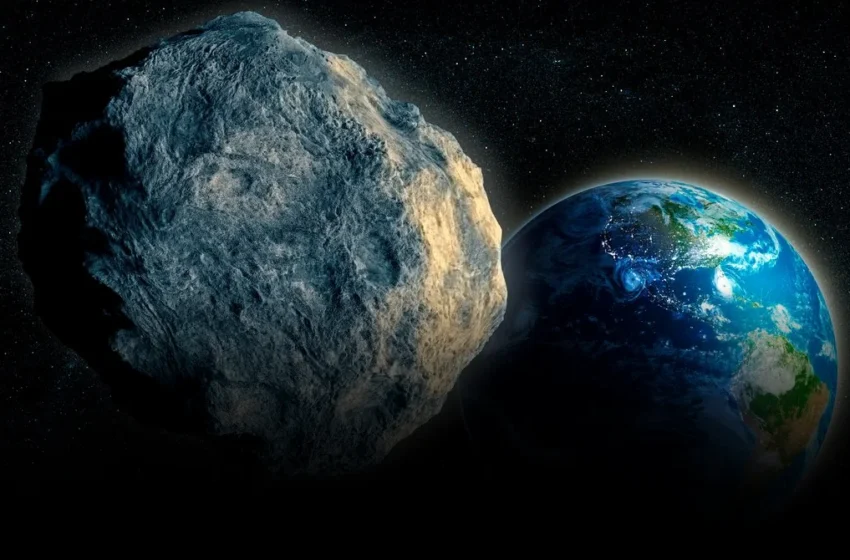
This weekend, asteroid (152637) 1997 NC1 will make its closest pass by Earth in four centuries, a mere 2.56 million kilometers away — a distance roughly 6.6 times that separating us from the Moon. While the European Space Agency (ESA) assures us there is no risk of impact, the true story isn’t the rock itself, but the remarkable technological infrastructure that turns what could once have been an unknown, or even fear-inducing, flyby into a global, live-streamed viewing opportunity. This isn’t just about spotting a faint point of light; it’s a testament to the quiet, persistent maturation of global space situational awareness and planetary defense capabilities.
For decades, humanity’s relationship with Near-Earth Objects (NEOs) was largely reactive, often driven by the discovery of an object only after it had passed, or worse, after an impact. Yet, the current public guidance on 1997 NC1 — detailing its precise trajectory, brightness (magnitude 10, like Neptune), and optimal viewing times across continents — underscores a fundamental shift. We are no longer simply observers; we are actively monitoring, predicting, and preparing. The ability to precisely forecast an object’s path until 2133 for an object with a diameter between 700 meters and 1.6 kilometers is not trivial. It represents a significant leap in astrometric precision and data processing that has transformed celestial mechanics from esoteric science into a publicly accessible, even commercialized, event.
The Commodification of Cosmic Events
The detailed instructions for viewing 1997 NC1 — from recommended commercial telescopes with 100-200mm apertures to specific astronomical binoculars like 15×70 or 20×80 — highlight a burgeoning market around cosmic observation. Apps such as Stellarium, Sky Tonight, and SkySafari are not merely scientific tools; they are consumer products that facilitate public engagement with astronomy. Even for those without access to specialized gear, the Virtual Telescope Project’s livestreams on June 26 and 27 offer a digital window to the cosmos. This framing of the asteroid’s approach as a shared public event, complete with readily available tools and platforms, serves multiple incentives.
Space agencies like the ESA, along with academic initiatives and commercial entities, directly benefit from these high-profile flybys. They generate public interest in STEM fields, justify continued funding for planetary defense programs, and drive sales for astronomical equipment and software. It’s a clever symbiosis: the perceived threat provides the impetus, and the advanced technology provides the harmless spectacle, effectively creating a self-sustaining cycle of interest and investment. This current announcement, therefore, is as much about public engagement and validation of expensive infrastructure as it is about a minor astronomical event.
Invisible Infrastructure, Visible Impact
The casualness with which we now discuss an asteroid passing within a few million kilometers belies the complex, globally distributed infrastructure operating silently in the background. It involves an intricate network of ground-based telescopes, space-based observatories, and sophisticated data analysis algorithms that continuously scan the skies for NEOs. This global collaboration ensures that objects like 1997 NC1 are cataloged, tracked, and their orbits precisely modeled years, if not decades, in advance.
What the Silicon Valley press often misses, being too fixated on new apps or processing speeds, is the slow, painstaking accretion of scientific and engineering capability in fields like space situational awareness. This isn’t a flashy AI launch, but a culmination of persistent international efforts in radar astronomy, optical tracking, and computational physics. The very fact that an asteroid, forty times fainter than the dimmest stars visible to the human eye, can be pinpointed for global observation, even against the light pollution of a nearly full moon, is not a stroke of luck. It is the result of dedicated investment in robust, real-time data integration and predictive modeling. The true meaning of 1997 NC1’s flyby is not in its fleeting visibility, but in the enduring, invisible technological ecosystem that makes such visibility – and our assured safety – possible.
