
Michigan’s Political Earthquake: Local Autonomy Vs. AI’s Infrastructure Demands
- Artificial Intelligence
Arjun Vedanta
- 0
- 5 minutes read
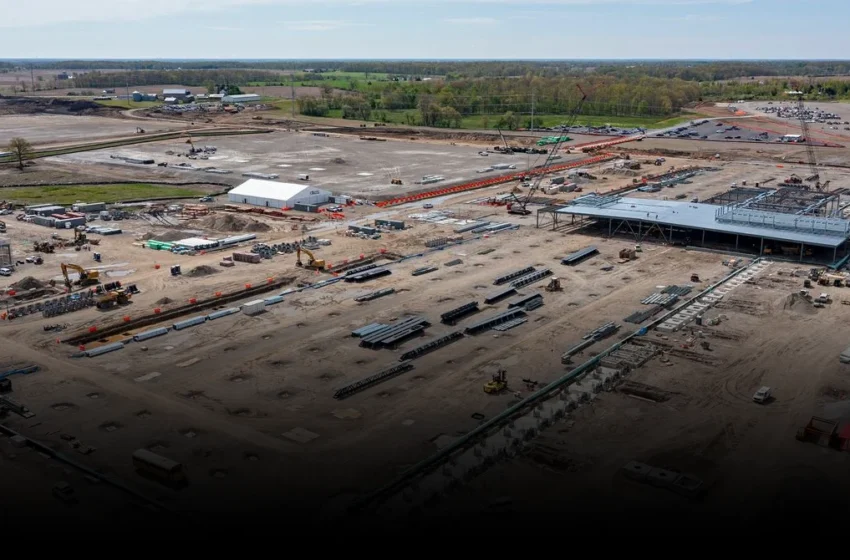
The Local Backlash Against AI’s Physical Footprint
In Michigan, a candidate for a swing congressional district is winning primary polls not on traditional economic platforms, but by railing against server farms. This isn’t just a quirky local story; it’s a stark indicator of a deeper rupture between the architects of the digital economy and the communities expected to host its physical manifestations. Will Lawrence, a co-founder of the environmental group Sunrise Movement, has unexpectedly leveraged an anti-data center stance into a powerful campaign narrative in the 7th district, demonstrating that the environmental and social costs of cloud infrastructure are becoming potent political weapons.
Lawrence’s campaign, endorsed by figures like Senator Bernie Sanders, has found an unlikely wellspring of support. Internal polling by Data for Progress showed over 40 percent of likely Democratic primary voters were “much more likely” to back a candidate opposing data centers, a figure that soared to nearly 80 percent among younger voters under 45. This isn’t merely about NIMBYism; it’s about a profound sense of disenfranchisement. The sentiment, as Lawrence describes, is that “People feel like they’re being utterly disrespected by the companies and the local officials who are welcoming them into town.” This points to a foundational problem for big tech: its grand visions for Artificial Intelligence demand massive computational power and energy, but the physical infrastructure for this vision is increasingly seen as a burden, not a boon, by host communities.
Consider the stark juxtaposition: Governor Gretchen Whitmer, a potential 2028 presidential contender, was recently photographed smiling alongside OpenAI’s Sam Altman at the opening of a new $16 billion Oracle data center. This photo-op, meant to signal Michigan’s economic competitiveness, was immediately condemned by local democracy advocates like Christy McGillivray as a significant political misstep. While state leaders court investment and jobs, rural residents see their concerns dismissed, their land appropriated, and their energy grids strained for projects whose direct benefits feel abstract at best. This is the incentive driving the current state-corporate push: maintaining a perceived competitive edge in the AI race and securing significant capital investment, often overriding local environmental and community impact assessments.
The Shared Grievance: Data Centers and Renewable Energy
The truly fascinating aspect of this Michigan narrative is how the anti-data center sentiment aligns with, and helps explain, resistance to large-scale renewable energy projects. Michigan is, remarkably, a hotbed of local opposition to wind and solar; more than 60 local governments passed ordinances or moratoriums between 2011 and 2024, stalling at least 28 projects. In 2023, Governor Whitmer signed a law to bypass these local ordinances, triggering further backlash and lawsuits from dozens of townships, some of whom lamented that these developments “threaten to turn our fertile soil into wastelands.”
Lawrence, despite supporting renewable energy, observes a common thread: “The pattern that I see that is similar with the data center issue is people don’t feel that they have control over the future of their own community.” This insight cuts directly to the core of the issue. Both data centers and utility-scale solar farms represent immense, often remote-controlled, industrial developments that require vast tracts of land, substantial energy resources, and altered local landscapes. For rural communities, the specific technology — be it server racks humming with data or acres of photovoltaic panels — matters less than the perceived erosion of local autonomy and the imposition of a top-down vision of progress.
It reveals a pervasive, almost willful ignorance within the technology sector, particularly among its Silicon Valley architects. As Democratic strategist Cooper Teboe bluntly put it, “Ninety-nine percent of the tech executives think that of course people will love these things. They cannot conceive of a world where the first thought someone has upon seeing a data center in their community isn’t ‘Wow, the future is amazing,’ but is ‘What the f*** are you doing in my backyard?’” The industry’s hubris, projecting its abstract notion of ‘progress’ onto communities without genuine engagement or respect for local concerns, is creating this volatile political landscape.
The Unacknowledged Costs of Digital Expansion
This struggle in Michigan serves as a crucial, underreported bellwether for the global expansion of digital infrastructure. As the world pushes for ever-increasing computational power for AI, blockchain, and other advanced technologies, the physical footprint—and the corresponding energy consumption—becomes impossible to ignore. A single hyperscale data center can draw as much electricity as a small city, placing immense strain on local power grids and often necessitating new power generation, which frequently comes from fossil fuels despite any greenwashing efforts. The narrative of infinite, clean digital growth is increasingly colliding with the finite realities of land, water, and energy resources.
The tech industry’s reliance on legal battles, like Oracle’s lawsuit against a Michigan township that voted against its data center, further entrenches the perception of powerful corporations trampling over local democratic processes. This approach might secure permits in the short term, but it actively corrodes public trust and fuels long-term political resistance. This isn’t just about localized environmental concerns; it’s a systemic challenge to how we prioritize technological advancement against community sovereignty and genuine sustainability. The ongoing friction suggests that without a profound shift in how these massive gigafactories of the digital age are sited and integrated, the political costs for proponents of this ‘progress’ will continue to escalate, far beyond the borders of a single swing district in Michigan.
