
Beyond Encryption: State Cyber Attacks Target Humanity, Not Code
- Cybersecurity
Arjun Vedanta
- 0
- 5 minutes read
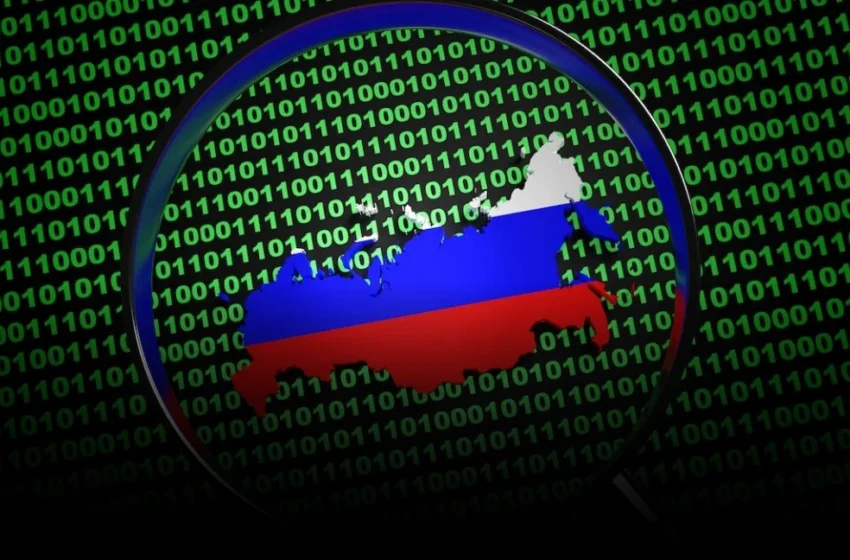
The $10 Million Admission of a Shifting Battleground
A $10 million bounty hangs in the digital air, offered by the United States for information on a Russian state cyber group. This isn’t merely a reward for intelligence; it’s a stark public admission that the digital battleground has fundamentally shifted, exposing a critical vulnerability far older than the internet itself. For months, this unnamed group, linked to Russian intelligence services, has systematically compromised thousands of accounts on Signal and WhatsApp – platforms celebrated globally for their robust end-to-end encryption.
This isn’t about advanced cryptographic breakthroughs by state actors. It is about a targeted, sophisticated campaign of social engineering against high-value targets: investigative journalists and US government employees. The attacks, active since at least March, according to an FBI advisory, exploit the most unpredictable element in any security chain: the human user. Automated messages, masquerading as legitimate support, trick individuals into clicking malicious links or divulging verification codes, thereby linking an attacker’s device or seizing control of their account entirely.
The bounty, therefore, serves a dual purpose. On one level, it’s a desperate attempt to gain intelligence on an adversary proving difficult to track through conventional means. More profoundly, however, it’s a public acknowledgment that traditional digital defenses, even those reinforced by the strongest encryption, are being sidestepped by adversaries who understand that the most advanced code is only as strong as the least vigilant human. This is a crucial distinction that too many Silicon Valley narratives, obsessed with technical wizardry, routinely miss.
When End-to-End Encryption Meets Human Fallibility
For years, Signal and WhatsApp have been championed as bastions of privacy, their end-to-end encryption (E2EE) providing a seemingly impenetrable shield against eavesdropping. Activists, dissidents, and confidential sources worldwide have relied on these tools precisely because their communications are theoretically unreadable by anyone but the sender and intended recipient. The protocol, in this case, isn’t the weakness; it’s the interface between the protocol and human judgment that fails.
The mechanism is classic phishing, elevated to a nation-state level of precision and persistence. It bypasses the encryption entirely by compromising the user’s access before the encrypted tunnel is established or by tricking them into authorizing an unauthorized device. This widespread compromise of “thousands” of accounts suggests a level of operational sophistication and resource allocation that far exceeds opportunistic cybercrime. It points to a deliberate strategic investment in targeting the “wetware layer” — the human brain — rather than brute-forcing cryptographic algorithms.
Consider the implications for trust. If platforms synonymous with digital privacy can be systematically breached through social engineering, what does it mean for the very concept of secure digital communication? The message is clear: even the strongest digital lock is useless if you hand the key over willingly, however unwittingly. The implicit admission here is that governments are increasingly outmatched by agile, state-backed groups who operate in the grey zones of attribution and exploit human psychology at scale. This shifts the cybersecurity arms race from who has the best algorithms to who has the most effective psychologists and social engineers.
The Global Ripple Effect on Digital Trust and Geopolitics
The choice of targets – investigative reporters and government employees – is not arbitrary. These individuals possess sensitive information, access to classified networks, and the power to influence public narratives. Compromising their communication channels grants state actors invaluable intelligence, potential leverage for disinformation campaigns, and a means to track dissent or counter-espionage efforts. It’s a precision strike against critical infrastructure, not of data centers, but of information flow and trust.
This announcement, offering a public bounty, serves less as a direct intelligence-gathering tool and more as a powerful deterrent and a public acknowledgment of the adversary’s effectiveness, subtly pressuring states to rein in their cyber proxies. Such a move signals the difficulty of conventional responses to such pervasive, attribution-resistant cyber operations. In a world increasingly reliant on encrypted messaging for both personal and professional communication, these incidents erode confidence globally, not just in specific platforms, but in the fundamental promise of digital security itself.
As the internet fragments into geopolitical blocs and cyber espionage intensifies, the lessons from these Signal and WhatsApp breaches are stark. User education, while crucial, often struggles to keep pace with the evolving tactics of well-funded state actors. The security perimeter has effectively dissolved from the network edge, moving inward to the individual user’s device and, more critically, their judgment. This presents an enduring challenge for developers, policymakers, and users alike: how to build resilient systems when the weakest link can always be found in human nature.
