
South Korea’s Trillion-Dollar AI Push: Reshaping Global Labor and Tech Hegemony
- Artificial Intelligence
Arjun Vedanta
- 0
- 5 minutes read
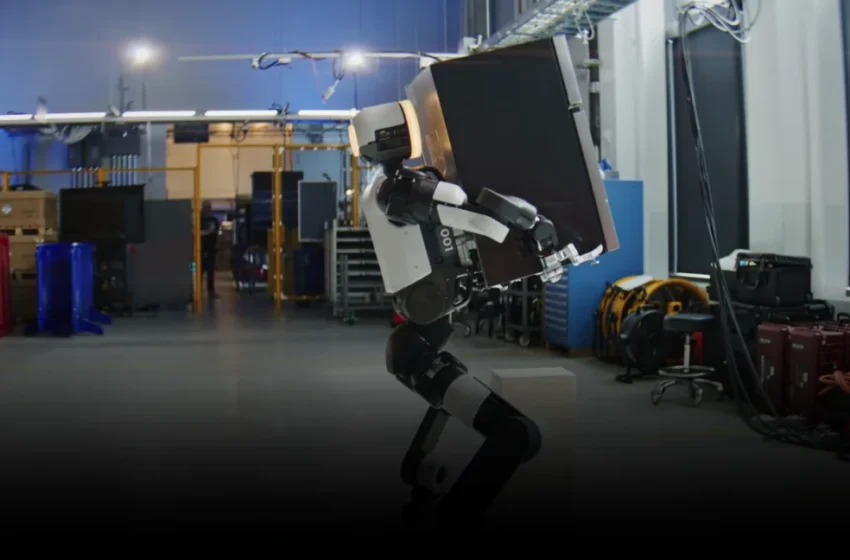
South Korea’s $1 trillion commitment to AI, memory chips, and humanoid robotics by 2028 is not merely an ambitious industrial policy; it is a calculated, aggressive move to reshape global technological dependencies and labor markets. While the immediate headlines focus on bolstering semiconductor supply amidst AI demand, the quiet revolution brewing in Seoul is far more profound, aiming to leverage physical AI to fundamentally alter manufacturing and, by extension, employment structures worldwide. This isn’t just about meeting a demand; it’s about dictating terms.
The explicit focus on “semiconductors, physical AI, and AI data centers” as a triple axis, as articulated by President Lee Jae Myung, reveals a comprehensive strategy. It’s a direct response to the unprecedented demand for specialized memory chips — the kind that has driven record profits for domestic giants like Samsung and SK Hynix. These companies have benefited immensely from the AI industry’s insatiable hunger for processing power, simultaneously exposing vulnerabilities in the global supply chain, which then cascade into higher prices for consumer electronics. But framing this investment solely as a response to chip shortages misses the true geopolitical ambition.
Seoul’s Industrial Policy Rewrites Supply Chain Narratives
The conventional narrative often positions South Korea as a reactive player, responding to global chip demand. This interpretation ignores the proactive, long-game strategy at play. While securing semiconductor supply is a critical component, the scale of this $1 trillion investment—an astronomical figure for a single nation’s technology push—points to a far more dominant aspiration. It aims to solidify South Korea’s position not just as a supplier, but as a controller of foundational AI infrastructure, from the silicon itself to the physical manifestations of AI via robotics.
Consider the ongoing global scramble for AI supremacy, often debated in terms of data centers and large language models. South Korea is moving beyond this, directly targeting the bottlenecks. By pouring capital into new memory chip fabrication facilities and massive AI data centers, Seoul is systematically reducing its, and by extension, the world’s, reliance on a fragmented supply chain. This is a deliberate, state-backed effort to build redundancy and resilience within its own borders, a stark contrast to the distributed, often vulnerable supply networks that define modern technology. It’s a strategic pivot from being an essential cog to becoming an indispensable engine.
Humanoid Robots: The Overlooked Geopolitical Weapon
The most radical, and least discussed, aspect of this investment is the drive towards the commercial deployment of humanoid robots by 2028, with Hyundai Motor Company and its subsidiary, Boston Dynamics, at the forefront. This isn’t just an R&D push; it’s a commitment to mass manufacturing robotic workers designed to take over laborious tasks in automotive factories and other workplaces. The implications here stretch far beyond South Korean shores, setting a precedent that could disrupt global labor markets on an unprecedented scale.
When a major industrial power explicitly targets the replacement of human labor with advanced physical AI, the conversation shifts from incremental automation to systemic workforce transformation. This is the clearest signal yet from a G20 economy that labor automation is not a matter of if, but when and how quickly, across entire industrial sectors. The incentive for this aggressive timeline is clear: whoever masters the mass production and deployment of versatile humanoid robotics first will gain an enormous competitive advantage in manufacturing efficiency and cost reduction, dictating future production standards and potentially influencing global trade balances. Other nations are still debating the ethics; South Korea is building the factories.
The Global Ripple Effect of South Korean AI Hegemony
This investment isn’t just about boosting national GDP; it’s about establishing a new form of technological hegemony. If South Korea successfully corners significant portions of the advanced memory chip market and leads in mass-produced humanoid robotics, it will wield immense power over global manufacturing capabilities and the broader AI ecosystem. The implications for nations reliant on either South Korean chip supply or those seeking to industrialize through human labor are profound. Developing economies, particularly those in Southeast Asia and Africa, which have historically relied on competitive labor costs to attract manufacturing, face an existential threat to their economic models.
The global tech press, often fixated on the latest LLM iterations or venture capital funding rounds in Silicon Valley, tends to overlook these deep structural shifts until they are already in motion. South Korea’s move, while presented as a national imperative, effectively weaponizes automation and semiconductor dominance simultaneously. It’s a powerful double helix of control: the brains of AI and the brawn to execute its will in the physical world. This is not just a leap forward for South Korea; it is a clear challenge to the existing global industrial order, with reverberations that will echo across every major economy by the end of this decade.
