
Illinois vs. Kalshi: A Regulatory Clash Redefining Prediction Markets and Sports Betting
- Software
Arjun Vedanta
- 0
- 5 minutes read
The Illusion of Information Markets
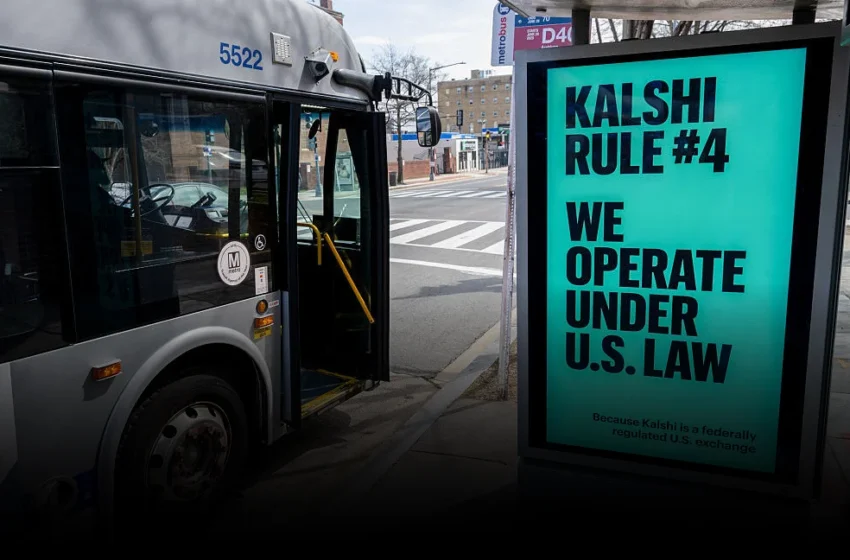
The state of Illinois is not simply chasing tax revenue; it is drawing a clear line in the sand, directly challenging the regulatory framework that has allowed platforms like Kalshi to operate in an increasingly lucrative grey area. By classifying Kalshi and other prediction markets as unlicensed sports wagering operators, Illinois Attorney General Kwame Raoul and Governor J.B. Pritzker are effectively arguing that a bet on whether LeBron James will score more than 25 points is gambling, regardless of whether it’s framed as an ‘event contract’ or a ‘future on an outcome.’ This isn’t a technicality; it’s a direct assault on the core premise that distinguishes prediction markets from traditional sportsbooks.
Prediction markets, in theory, are meant to aggregate dispersed information, allowing participants to ‘trade’ on the likelihood of future events. When used for anything from political elections to economic indicators, the Commodity Futures Trading Commission (CFTC) has historically overseen them as legitimate derivatives markets. Kalshi, as a CFTC-regulated entity, has leveraged this distinction to offer contracts that, on their surface, appear to track real-world events. However, the burgeoning popularity of these platforms for sporting outcomes — exemplified by Kalshi’s recent “biggest week ever” amidst the NBA Finals, World Cup, and Stanley Cup — has exposed the inherent contradiction: if the outcome is solely determined by a sporting event, and users are speculating money on it, what precisely makes it different from DraftKings or FanDuel?
The legal battle in Illinois, where Kalshi could face felony charges and unique state taxes if the ruling stands, isn’t just about one state’s coffers. It’s about the very definition of a wager, and whether the federal government’s classification of these platforms as commodity exchanges can truly withstand the increasingly sophisticated scrutiny of state-level gaming regulators.
Regulatory Arbitrage Reaches its Limit
For years, prediction markets have enjoyed a form of regulatory arbitrage, operating under the lighter touch of the CFTC compared to the heavily taxed and meticulously licensed world of state-regulated sports betting. This has allowed them to offer different types of bets, often with more granular outcomes, and crucially, without the significant tax burdens and consumer protection mandates that apply to sportsbooks. The incentive for platforms like Kalshi to maintain this distinction is obvious: lower operational costs and broader market reach. For states like Illinois, the incentive to challenge it is equally clear: protect their established gambling revenue streams and ensure a level playing ground for licensed operators.
The current legal challenge is a harbinger of a wider reclassification that could ripple across the entire prediction market industry. If Illinois succeeds, it creates a precedent for other states to pursue similar actions, forcing these platforms to either withdraw sports-related contracts or submit to state-by-state gambling regulations. This would fundamentally alter their business model, transforming a federally-supervised market into a patchwork of state-regulated gaming entities. One might even argue that the industry’s rapid expansion into easily digestible, sports-related contracts was always going to invite this kind of regulatory blowback, tempting states with the lure of untapped tax revenue. The argument that these are information markets rather than speculative entertainment begins to fray when the underlying events are consistently professional sports.
This isn’t merely a squabble over jurisdiction; it’s a structural implication for how we define and regulate speculation. Are these truly tools for aggregating foresight, or are they just elegantly disguised casinos operating on a different regulatory ledger? The current framing benefits the platforms by minimizing regulatory overhead and maximizing innovation flexibility. However, for consumers, it means a potentially less protected environment compared to the robust safeguards mandated for licensed sports betting, particularly around responsible gaming.
The Looming Threat to an Emerging Industry
The Kalshi lawsuit isn’t an isolated incident; it’s part of a growing trend where regulators, both state and federal, are struggling to keep pace with rapid technological and financial innovation. Similar challenges have been mounted against other prediction market platforms, albeit perhaps not with the same financial stakes or aggressive classification. This legal action highlights a critical vulnerability for an emerging industry that has largely operated at the seams of existing regulatory frameworks. The very innovation that allows for nuanced event contracts—from election outcomes to sports statistics—is now its greatest liability, as those same nuances increasingly resemble regulated activities.
The irony is profound: by expanding their offerings to attract a mass market, particularly with the universally understood language of sports, prediction markets have inadvertently drawn the attention of the very state-level gaming commissions they sought to bypass. The sharpest observation here is that the commodification of sports outcomes, while financially appealing, risks stripping prediction markets of their unique, quasi-academic status, ultimately forcing them into direct competition and regulatory alignment with traditional sports betting giants. This clash reveals a fundamental tension: does an innovative financial product’s regulatory status derive from its underlying mechanism or its perceived use case? Illinois firmly opts for the latter, and if their stance holds, the days of operating prediction markets for sports under federal commodity rules may be numbered across the country.
