
FAA’s Supersonic Flight Reversal: A Noise Standard or a Market Mirage?
- Tech
Arjun Vedanta
- 0
- 4 minutes read
The Echo of Policy: A 53-Year Ban Crumbles
The US Federal Aviation Administration (FAA) announced a new rule on June 30, 2026, proposing to lift the country’s 53-year ban on commercial supersonic flights over land. This isn’t the open sky innovators envision, but a regulatory runway with an invisible, almost certainly insurmountable, economic chasm.
For decades, the skies above the United States have been silent to commercial supersonic travel, a prohibition instituted in 1973 following disruptive military tests over cities like Oklahoma City and Chicago in the 1960s. The new FAA proposal aims to replace this blanket ban with a performance-based standard, specifically targeting ground-level sonic booms.
A proposed overpressure limit of 0.11 pounds per square foot is the new hurdle for any aspiring supersonic airliner. This specific technical benchmark is a direct result of political will; the Trump administration championed the repeal, culminating in an executive order on June 6, 2025, that set this regulatory shift in motion.
Beyond the Boom: Engineering a Niche Market
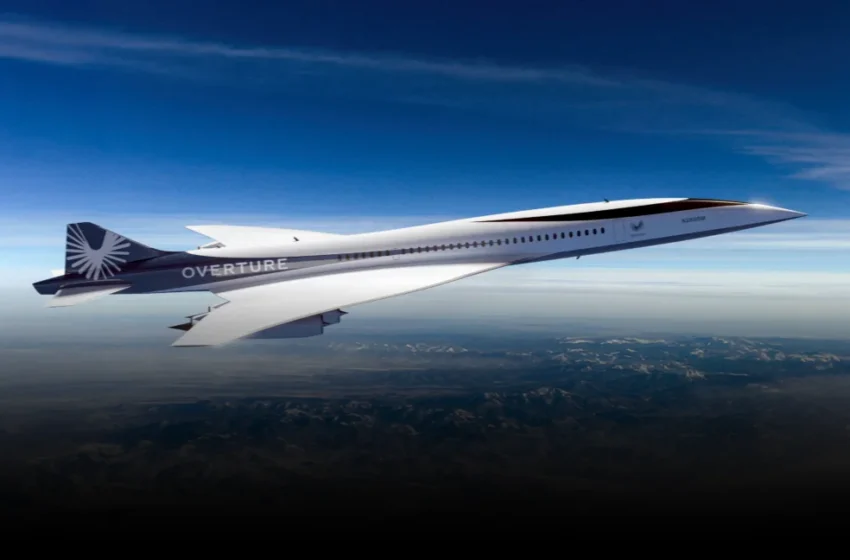
The FAA’s proposed standard explicitly references demonstrations by Colorado-based startup Boom Supersonic, which showcased “quiet Mach cutoff flights” with its XB-1 aircraft. This technique involves flying just beyond supersonic speeds at higher altitudes, harnessing specific atmospheric conditions to refract shockwaves upward, away from the ground.
While impressive in a controlled demonstration, the viability of scaling “quiet Mach cutoff” flights for routine commercial operations across diverse atmospheric conditions and flight profiles remains an open, and deeply skeptical, question. This isn’t about opening the skies; it’s about defining the impossibility of a broad commercial market for overland supersonic flight through hyper-specific, likely cost-prohibitive, technical constraints.
The engineering challenge alone is immense: maintaining optimal atmospheric conditions for shockwave refraction is not a guaranteed feature of every flight path or time of day. This significantly limits routing flexibility and operational windows, pushing even the most optimistic projections for supersonic travel into an ultra-niche market reserved for specific point-to-point flights rather than widespread adoption.
The timing of the FAA’s action, closely following a previous administration’s executive order, suggests less a groundbreaking technological leap and more a politically motivated fulfillment of a past directive, benefiting a handful of high-profile startups hoping to secure early-mover advantages and investor capital.
A Global Sky, Uneven Rules: What Silicon Valley Misses
From Geneva to Singapore, the conversation around supersonic flight has always understood the critical distinction between technical possibility and economic reality. Silicon Valley often focuses on the “how” — the engineering feats — while downplaying the “for whom” and “at what cost.” The initial market for a hypothetical overland supersonic jet under these strictures would be astronomically small, likely catering only to ultra-high-net-worth individuals or specific corporate charters.
Consider the broader context: traditional airlines already operate on razor-thin margins, constantly optimizing for fuel efficiency, passenger capacity, and operational costs. Introducing an aircraft that requires such precise atmospheric navigation, consumes fuel at supersonic rates, and can only serve limited routes due to noise restrictions, strains every established economic model in aviation.
The global regulatory landscape is equally fragmented. While the US may be moving towards conditional overland supersonic flight, other major airspaces, particularly over densely populated Europe and Asia, maintain stringent noise regulations that may not align with the FAA’s proposed 0.11 psf standard. This creates a patchwork of rules, making truly global supersonic routes challenging to execute without significant detours over oceans.
The Concorde, for all its technological marvel, ultimately succumbed to economic pressures, high operational costs, and environmental concerns, despite its transatlantic success. The new FAA rule, rather than clearing a path for a successor, appears to carve out an incredibly narrow and expensive one. It frames a future where supersonic overland flight is technically permissible, yet practically infeasible for the mainstream, leaving it an expensive curiosity for the few rather than a widespread return to a faster era of travel.
