
Beyond Torque: Bentley’s Torcal Confronts Electric Luxury’s Future
- Electric Mobility
Arjun Vedanta
- 0
- 5 minutes read
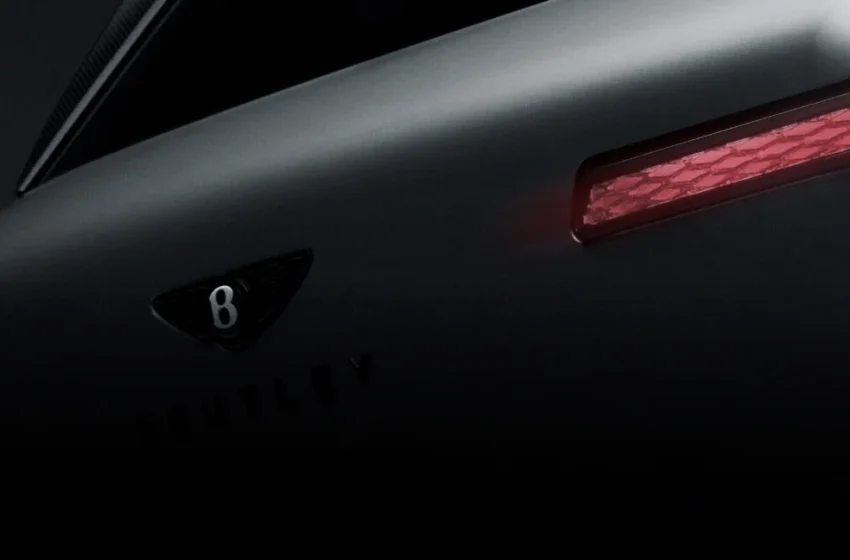
The Quiet Demolition of Automotive Prestige
The grand theater of ultra-luxury motoring is quietly dismantling its most cherished sets. Bentley’s decision to name its first all-electric vehicle the Torcal, following a tradition of drawing from majestic natural landmarks, barely scratches the surface of the profound shift underway. This isn’t just about a new model, or even a new powertrain; it’s about a fundamental re-evaluation of what makes an exclusive automobile *exclusive* when the very metrics of performance are being democratized at an unprecedented pace.
For decades, Bentley, much like its storied rivals, built its formidable brand heritage around the thunderous authority of a bespoke internal combustion engine. The meticulous craftsmanship, the scent of Connolly leather, and the unique aural signature of a W12 or V8 engine were not merely features; they were the emotional core, the visceral differentiator that justified astronomical price tags. The Torcal, spotted testing from the Arctic Circle to the Nürburgring, marks Bentley’s definitive pivot, a fourth pillar in its lineup after the Bentayga, Bacalar, and Batur, pushing electrification forward.
Yet, the implied promise of “immense amounts of effortless torque,” derived from the Latin “torquere,” exposes the central dilemma. Effortless torque is now a commodity across the entire electric vehicle spectrum, from a Tesla Model 3 to a Rimac Nevera. When raw acceleration and instantaneous power delivery cease to be distinguishing characteristics of the ultra-premium segment, how do brands like Bentley continue to command their unique position and allure?
Redefining Exclusivity in an Electrified World
The naming strategy for the Torcal attempts to bridge this gap, invoking both natural grandeur and raw power. But for a brand that has long sold the visceral symphony of a W12 or V8 engine, ‘effortless torque’ feels like anodyne corporate speak, a feature list item rather than an emotional hook. This isn’t just a challenge for marketing departments; it’s an existential question for the engineers and designers who must now create a new kind of magic. The tactile experience, the meticulous attention to detail in materials and bespoke finishes, and the sheer presence of a Bentley will remain paramount. However, these elements alone, while crucial, must now carry even more weight without the traditional halo effect of a singularly powerful and complex engine.
Consider the competitive landscape. While *Car and Driver* speculated about a “Barnato” name referencing Bentley racing legend Woolf Barnato, the company chose the geographical route. This is telling. The romanticism of racing heritage, intrinsically linked to combustion engine prowess, is harder to transfer seamlessly into the EV narrative. Competitors like Rolls-Royce, with its Spectre EV, or even Porsche, with the Taycan, are also navigating these waters, each attempting to translate their own brand DNA into an electrified future. The Spectre, for instance, leans heavily into the “magic carpet ride” and silent luxury, attributes that electric powertrains naturally enhance.
The incentive behind Bentley’s specific framing of the Torcal — emphasizing its Latin root and the resulting torque — is clear: to proactively define its electric future not as a radical break, but as an evolution of existing strengths. This serves to reassure a loyal, often conservative, customer base and maintain confidence in the brand’s performance credentials even as it undergoes a significant technological pivot. It’s a strategic maneuver to control the narrative, ensuring that the transition feels less like an abrupt departure and more like a natural progression of power and luxury.
The Future of Driving Dynamics and Brand Identity
The real differentiation for ultra-luxury EVs will lie not just in raw numbers, but in the nuanced refinement of driving dynamics. How does Bentley engineer the Torcal to feel unequivocally like a Bentley, even without the engine note? This involves sophisticated chassis tuning, bespoke suspension systems, and a curated acoustic environment that replaces the engine roar with something equally compelling, perhaps a carefully crafted silence or an entirely new sonic identity.
The extensive testing at the Nürburgring and in the Arctic Circle hints at a rigorous development process focused on maintaining the brand’s reputation for robust performance and refinement under extreme conditions.
The challenge for Bentley, and others in the premium segment, is to avoid becoming generic high-performance electric platforms clad in expensive skins. The inherent characteristics of an EV — silent operation, instant torque, heavy battery packs — can homogenize the driving experience if not meticulously sculpted. Bentley must leverage its expertise in material science, interior architecture, and even digital interfaces to forge an electric vehicle that feels profoundly different, profoundly superior, and uniquely ‘Bentley.’ This isn’t just about selling cars; it’s about selling an idea of luxury that transcends the motor, an idea that is increasingly difficult to articulate in a world where silicon, not cylinder count, defines power.
