
Czinger 21C: A Swan Song for the Hyper-Combustion Era, Not a Blueprint for the Future
- Electric Mobility
Arjun Vedanta
- 0
- 5 minutes read
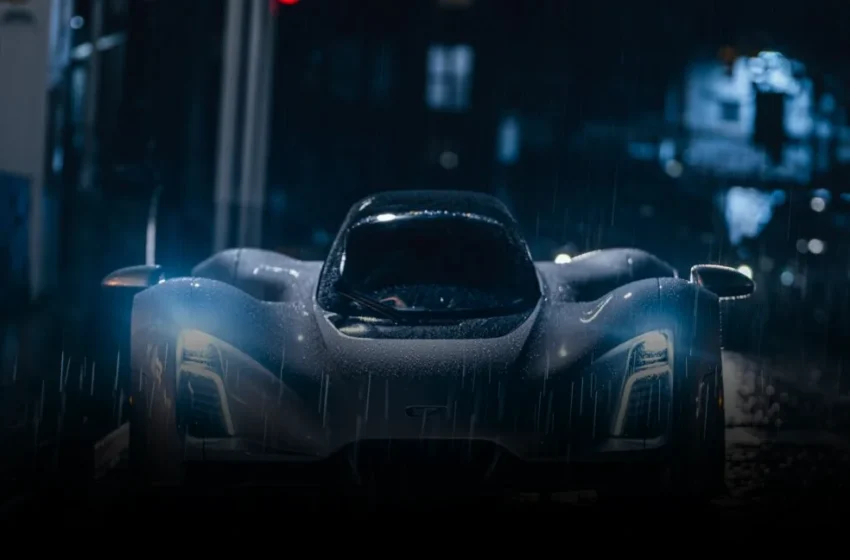
The Echo Chamber of Extreme Engineering
The numbers scream for attention: 1,250 horsepower, a 2.88-liter V8 engine redlining at 11,000 rpm, and a brutal 1.92 seconds to reach 60 mph. Czinger’s 21C, by all conventional measures of automotive exhilaration, is an astonishing feat of engineering, a carbon-fiber-bodied testament to what happens when financial and technical constraints are seemingly cast aside. Its recent lap records at five different California racetracks, set during a thousand-mile road trip, cement its status as a performance monster.
This bespoke hybrid hypercar deploys a seven-speed automated manual transaxle chosen for its low mass and ability to handle immense torque, demonstrating an unwavering commitment to mechanical purity and outright speed. The entire package, tipping the scales at under 3,700 lbs, is a dazzling display of kinetic energy harnessed, a symphony of internal combustion pushing physical limits. It’s easy to get lost in the sheer audacity of these specifications, to marvel at the relentless pursuit of fractional gains in acceleration and top speed, a tradition perfected by brands like Koenigsegg and Bugatti over decades.
Yet, away from the track, a sharp observation cuts through the roar: such vehicles, while undeniably impressive as technical showpieces, increasingly exist in a cultural and regulatory vacuum, catering to a microscopic elite while the vast majority of the automotive industry faces existential questions of sustainability and accessibility. This is not innovation for the broader world; it is hyper-optimisation for an increasingly anachronistic niche, a celebration of peak ICE performance when the world demands peak efficiency.
A Fading Roar in an Electric World
Building a 1,250 hp V8 hybrid, even with its modest electric assist, feels less like a step forward and more like a defiant last stand. The global automotive landscape is irrevocably shifting, driven by stringent emissions regulations, consumer demand for electrification, and massive investments in charging infrastructure. Major players, from Stuttgart to Tokyo, are committing billions to developing scalable electric vehicles (EVs) and battery technologies, wrestling with the complex economics of mass production and environmental impact. Companies like Porsche and Ferrari, once bastions of ICE performance, are now aggressively pivoting their portfolios.
Governments, particularly in Europe and Asia, are pushing aggressive timelines for phasing out internal combustion engine (ICE) sales, transforming the very definition of automotive progress. Against this backdrop, the Czinger 21C’s prodigious output, incredible as it is, represents a curious detachment from the prevailing market dynamics. One must ask what the true incentive is for such an announcement now, beyond a final, glorious flex of traditional automotive engineering muscle, perhaps to establish brand cachet that might later translate into more sustainable ventures. This framing often benefits the engineering team’s ego more than it informs a viable business strategy, signaling a brand’s technical prowess, regardless of market direction.
The current conversation around automotive innovation is dominated by range, charging speed, and sustainable supply chains, not by 0-60 times for cars few will ever see, let alone drive. Even the definition of a hypercar is evolving, with electric contenders like Rimac and Lucid Air now routinely eclipsing the performance figures that once defined this exclusive club. Czinger’s machine offers a temporary escape into a glorious past, but it does little to prepare us for the future that major OEMs are racing to build.
The True Cost of Exclusivity
The engineering involved in the 21C is astounding; there is no denying the intellectual capital poured into its bespoke components. The low mass seven-speed automated manual transaxle, specifically chosen over a dual-clutch system for packaging and weight, speaks volumes about the meticulous attention to detail. However, this level of customisation and performance comes at an astronomical price, limiting production to a handful of ultra-wealthy collectors for whom such vehicles are luxury commodities, not transportation solutions.
While every leap in technology can trace its lineage back to niche applications, the pathway from a Czinger 21C to widespread automotive benefit is increasingly tenuous. The breakthroughs in engine efficiency, lightweighting, or hybrid integration are highly specific to this extreme application, often involving exotic materials and manufacturing processes that defy mass scalability. There is little potential for economies of scale or direct trickle-down to consumer vehicles grappling with issues like battery degradation, cost reduction, or efficient urban mobility. This is automotive art, a celebration of what’s possible at the extreme edge, not a blueprint for tomorrow’s commute or even tomorrow’s accessible performance sedan.
The real structural implication here is that the pursuit of peak internal combustion performance, once the guiding star of automotive advancement, has become a high-dollar, low-impact exercise. The innovations that truly matter, that address global challenges and redefine mobility for millions, are happening elsewhere—in battery chemistry labs, advanced semiconductor development, software-defined vehicle architectures, and gigafactories. These are the arenas where real progress, with tangible societal and environmental benefits, is forged. The Czinger 21C is a magnificent, roaring anomaly, a nostalgic echo of a bygone era, but an anomaly nonetheless.
